The Siege of Vicksburg Ends: A Turning Point in the American Civil War
1863 · Vicksburg, United States
The Siege of Vicksburg ends with a Union victory, a turning point in the American Civil War.
January 11, 1863
The Battle of Arkansas Post (or Fort Hindman) took place during the American Civil War. Union forces captured the confederate fort, gaining control of the Mississippi River.
Arkansas Post, United States | Union Army
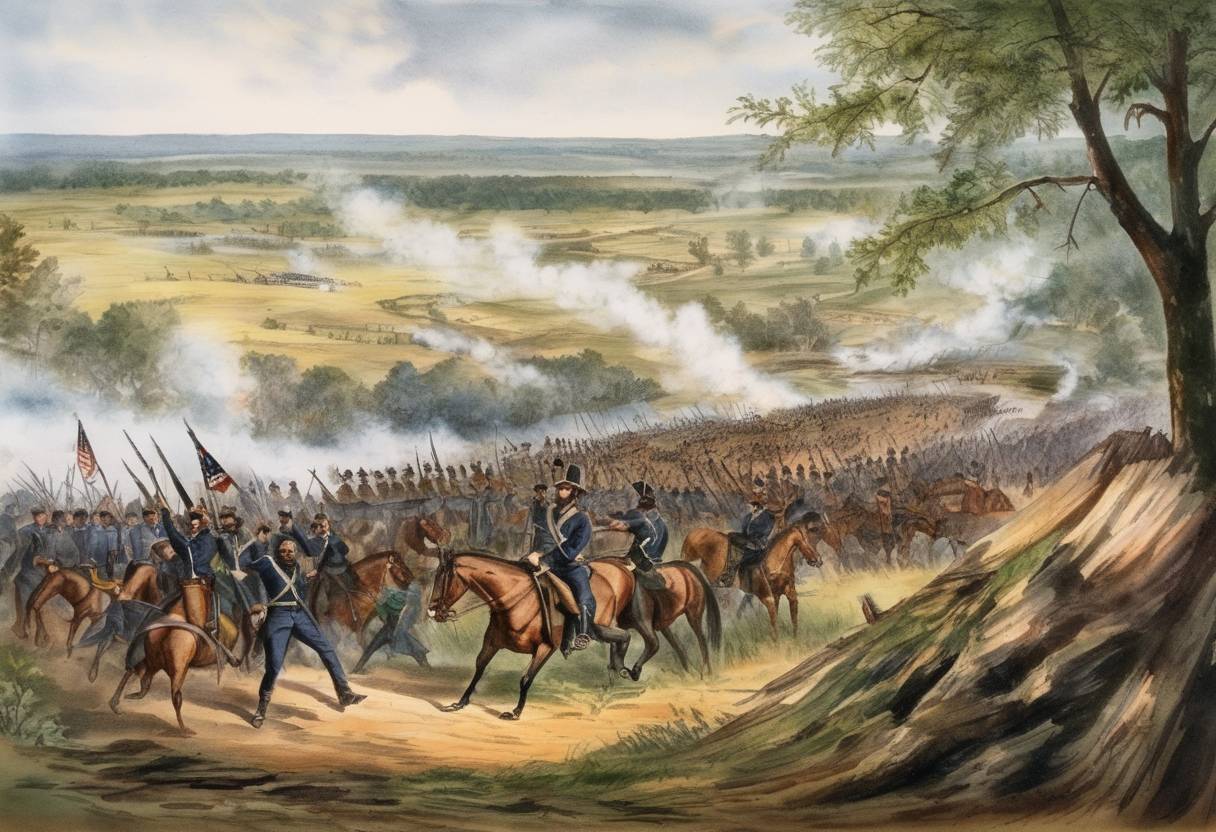
The Battle of Arkansas Post, also known as the Battle of Fort Hindman, occurred on January 11, 1863, during the American Civil War. This conflict was a part of the Union’s campaign to exert control over the vital waterways in the Confederate South, particularly the Mississippi River, and to secure strategic points that disrupted Confederate operations and supply lines.
In the larger scope of the Union’s western strategy, known as the Anaconda Plan, controlling the Mississippi River was crucial. Following their victory at the Battle of Vicksburg, Union forces sought to eliminate any remaining Confederate strongholds along the river. Fort Hindman, located at Arkansas Post on the Arkansas River, was a significant Confederate fortification. The Union leadership considered its capture essential to open navigation along this waterway.
Union Major General John A. McClernand led the land forces, with Rear Admiral David D. Porter commanding the naval operations. The Confederate forces at Fort Hindman were commanded by Brigadier General Thomas J. Churchill.
The Battle of Arkansas Post was indicative of the ongoing Union strategy to split the Confederacy and control critical supply lines and transportation routes during the Civil War.
Source: www.britannica.com