The Battle of Spotsylvania Court House: Conclusion
1864 · Spotsylvania County, United States
The Battle of Spotsylvania Court House, one of the American Civil War battles, ended.
June 1, 1862
The Battle of Seven Pines (or Battle of Fair Oaks) continues during the American Civil War, resulting in inconclusive results and significant casualties for both Confederate and Union forces.
Henrico County, USA | Confederate Army and Union Army
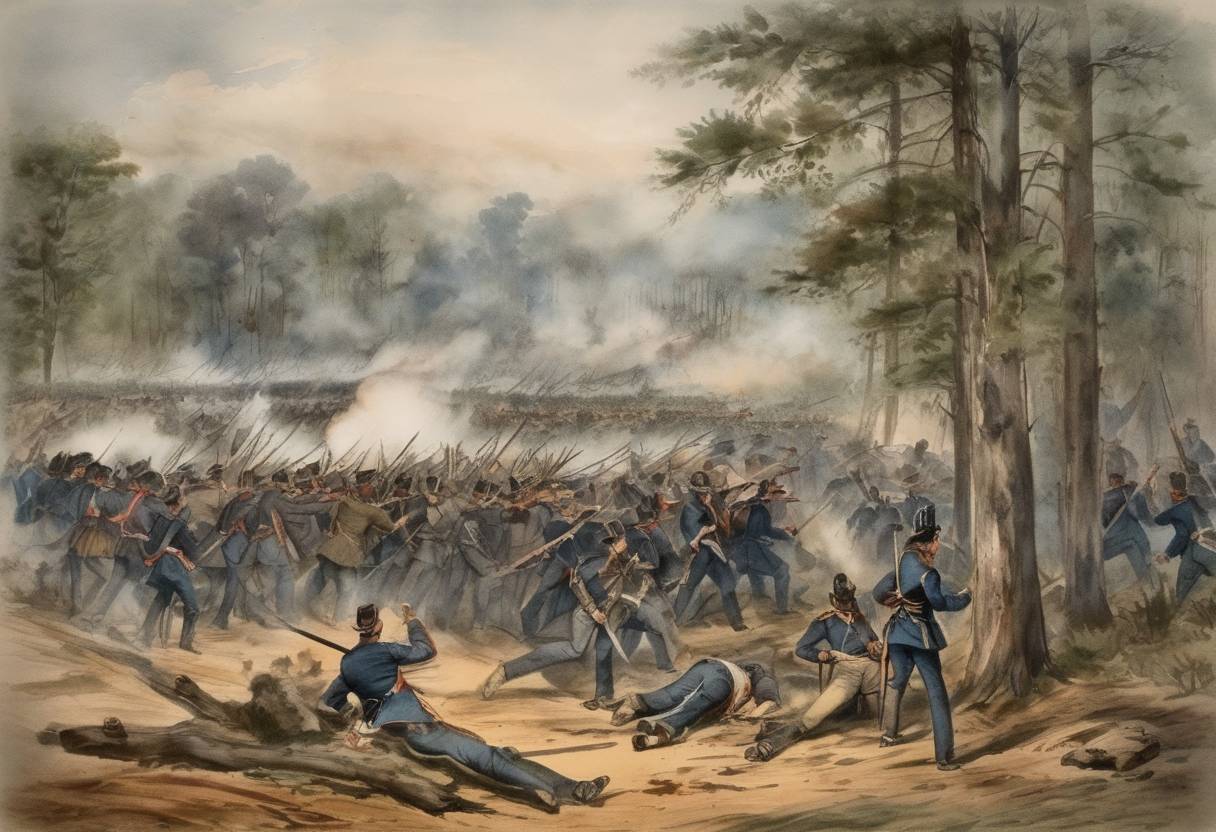
The Battle of Seven Pines, also known as the Battle of Fair Oaks, was a pivotal encounter during the American Civil War. It took place over the span of May 31 and June 1, 1862, near Richmond, Virginia, and was part of the Peninsula Campaign.
The Peninsula Campaign was a major Union operation launched in southeastern Virginia from March through July 1862. Under the command of Major General George B. McClellan, Union forces aimed to capture the Confederate capital of Richmond by advancing up the Virginia Peninsula. As part of this effort, McClellan’s Army of the Potomac approached Richmond in the spring of 1862, hoping to force a decisive engagement.
The battle occurred near the unincorporated area of Seven Pines and Fair Oaks Station, adjacent to the Chickahominy River. The Confederate commander, General Joseph E. Johnston, sought to take advantage of the divided Union army, which was stretched along the river. Johnston aimed to strike Union forces before they could consolidate their position.
The battle that extended into June 1 saw continued fighting as both sides realigned their forces following the initial assaults the day prior. On the second day, reinforcements arrived for both armies. Union forces, under Generals Edwin V. Sumner and John Sedgwick, helped stabilize their defensive lines. The Confederates attempted to renew their offensive but faced strong resistance from the Union defense, failing to make substantial gains.
The battle concluded without a decisive victory for either side but with significant casualties. The Union army suffered approximately 5,000 to 6,000 casualties, while Confederate casualties numbered similarly, with around 6,000. The high toll in lives marked the battle, and the strategic objectives of gaining ground remained largely unmet for the Confederates.
Though the battle was tactically inconclusive, it had notable strategic consequences. General Johnston was seriously wounded during the fighting on May 31, leading to a change in Confederate leadership, with General Robert E. Lee taking command of the Confederate Army of Northern Virginia. This marked a significant turning point in the Eastern Theater, as Lee would become one of the most renowned Confederate generals, eventually leading to a series of aggressive operations that changed the course of the campaign.
The outcome at Seven Pines also highlighted the challenges of communication and coordination in battle, particularly in difficult terrain and adverse weather, both of which hampered Confederate efforts. The events at Seven Pines set the stage for further engagements in the vicinity of Richmond, ultimately leading to the Seven Days Battles later in June 1862.
In historical hindsight, the Battle of Seven Pines was a critical moment that influenced leadership and tactical strategies in the Eastern Theater of the Civil War.
Source: www.britannica.com