Iowa's Admission as the 29th State of the United States
1846 · Washington D.C., United States
Iowa was admitted as the 29th state of the United States.
November 2, 1852
Franklin Pierce was elected the 14th President of the United States.
Washington D.C., United States | United States Government
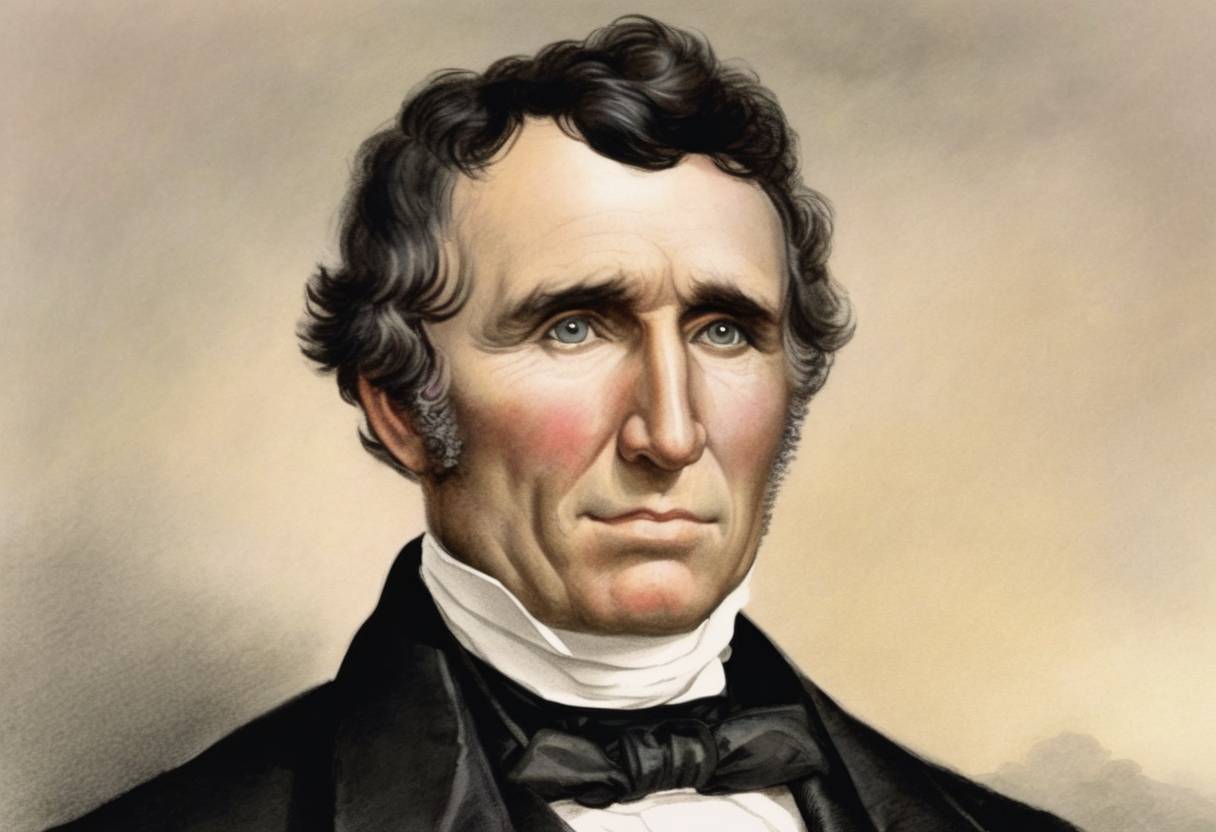
On November 2, 1852, Franklin Pierce was elected as the 14th President of the United States. This election is notable for its significant implications on the political landscape of the time, particularly in terms of sectional tensions and party dynamics.
Franklin Pierce, a Democrat from New Hampshire, emerged as a compromise candidate during the Democratic National Convention in June 1852. Initially a “dark horse” candidate, Pierce gained the nomination after 49 ballots, due in part to his lack of strong opposition stances that might alienate factions within the party. His military service in the Mexican-American War and political experience as a senator also bolstered his candidacy.
The election occurred in the context of growing sectional tensions over slavery, which were marked by the controversy following the Compromise of 1850. The Democratic Party emphasized the Union’s preservation while maintaining a pro-slavery stance for the Southern states.
Pierce’s opponent was Whig candidate Winfield Scott, another veteran of the Mexican-American War. The Whigs were divided internally over slavery issues, weakening their ability to mount a cohesive campaign. This division contrasted sharply with the Democratic Party’s more unified approach under Pierce.
Pierce campaigned on a platform supporting the Compromise of 1850 and emphasizing national unity. His relatively moderate views on slavery appealed to voters distressed by the intensifying regional conflicts.
In the election, Franklin Pierce won decisively, securing 254 electoral votes to Scott’s 42. Pierce’s victory was marked by his success in both Northern and Southern states, showcasing the widespread appeal of the Democratic platform at the time.
Pierce’s presidency, beginning in March 1853, would subsequently face significant challenges. Although initially seen as a unifying figure, his administration struggled to address the rising tensions over slavery. His support for the Kansas-Nebraska Act in 1854, which allowed states to choose their stance on slavery, further inflamed sectional conflicts leading towards the Civil War. Pierce’s inability to curb the division contributed to the decline of the Democratic Party’s national dominance, ultimately paving the way for the emergence of the Republican Party in the late 1850s.
Thus, Franklin Pierce’s election as president is an important event that not only shaped his administration’s course but also contributed to the unfolding political dramas of pre-Civil War America.
Source: www.whitehouse.gov