King Charles VI Grants Monopoly for Roquefort Cheese Ripening
1411 · Roquefort-sur-Soulzon, France
King Charles VI of France grants a monopoly for the ripening of Roquefort cheese to the people of Roquefort-sur-Soulzon.
June 4, 1070
Roquefort cheese is first mentioned in historical records, marking its origin in the caves of Roquefort-sur-Soulzon, France.
Roquefort-sur-Soulzon, France
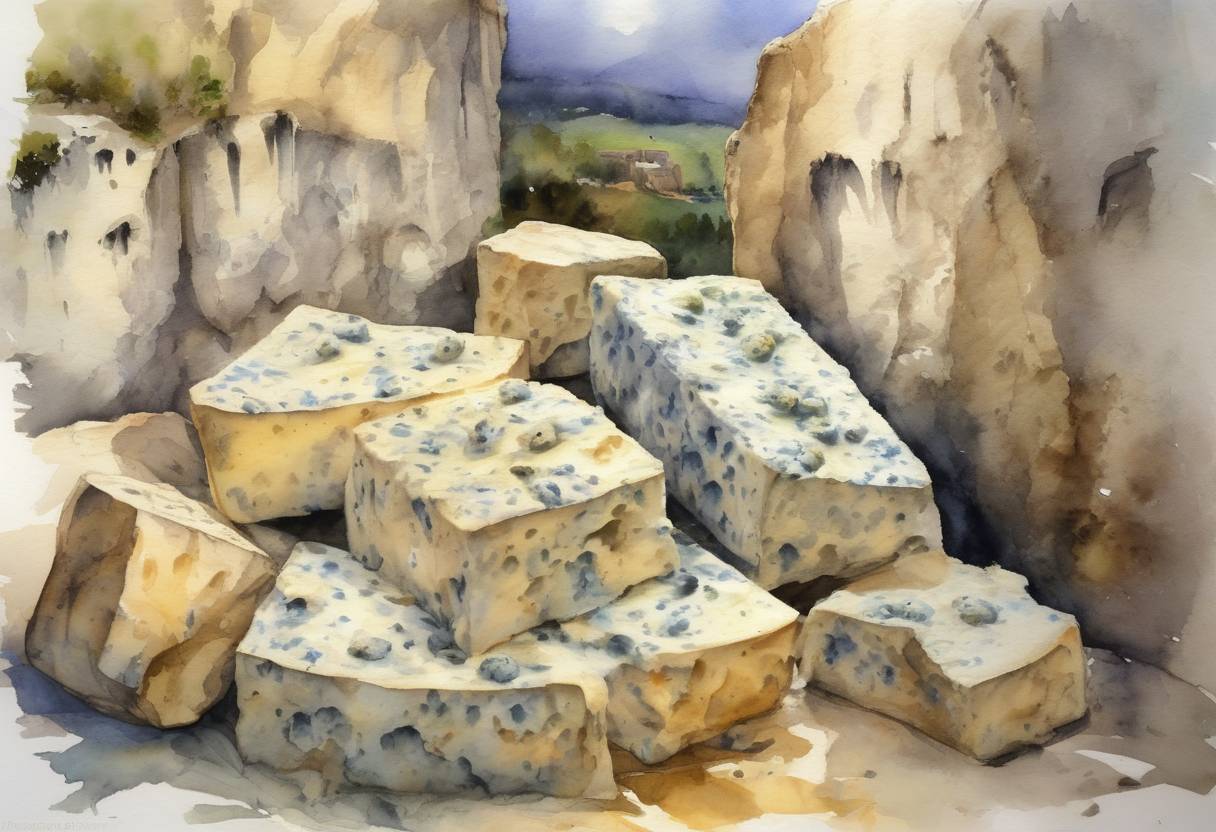
Roquefort cheese, renowned for its distinct flavor and texture, is one of the most celebrated blue cheeses in the world. Its origins are deeply rooted in the region of Roquefort-sur-Soulzon in France. The first historical mention of Roquefort cheese dates back to June 4, 1070, marking a significant moment in the history of this iconic cheese.
Geographical Significance: Roquefort-sur-Soulzon is located in the Aveyron department in southern France. The region’s unique limestone caves provide the perfect environment for the maturation of Roquefort cheese, thanks to their consistent temperature and humidity.
Cultural Importance: Cheese-making has been a part of European culinary traditions for centuries. By the 11th century, cheese had become an essential component of the diet in many parts of Europe, including France.
Documented Reference: The earliest known reference to Roquefort cheese appears in a charter dated June 4, 1070. This document highlights the cheese’s production in the caves of Roquefort-sur-Soulzon, indicating its established presence and significance in the region.
Monastic Influence: During this period, monasteries played a crucial role in the development and documentation of agricultural and culinary practices. Monks often recorded local customs and products, contributing to the preservation and dissemination of cheese-making techniques.
Unique Process: Roquefort cheese is made from the milk of Lacaune sheep. The cheese is aged in the natural caves of Roquefort-sur-Soulzon, where it develops its characteristic blue veins from the Penicillium roqueforti mold.
Flavor Profile: Known for its creamy texture and tangy, sharp flavor, Roquefort cheese has a distinct taste that sets it apart from other blue cheeses.
Culinary Heritage: The mention of Roquefort cheese in 1070 underscores its long-standing role in French culinary heritage. It highlights the early appreciation and recognition of the cheese’s unique qualities.
Protected Designation: In modern times, Roquefort cheese has been granted the Appellation d’Origine Contrôlée (AOC) status, ensuring that only cheese matured in the natural caves of Roquefort-sur-Soulzon can bear the name “Roquefort.”
The first historical mention of Roquefort cheese on June 4, 1070, marks the beginning of its storied legacy. This date signifies not only the cheese’s origins but also its enduring cultural and gastronomic significance. Over the centuries, Roquefort has maintained its reputation as a symbol of French culinary excellence, cherished by cheese enthusiasts worldwide.
Source: en.wikipedia.org