First Diesel-Engine Automobile Trip Completion
1930 · New York City, United States
The first diesel-engine automobile trip is completed, from Indianapolis to New York City.
July 7, 1928
Sliced bread is sold for the first time by the Chillicothe Baking Company of Chillicothe, Missouri.
Chillicothe, United States | Chillicothe Baking Company
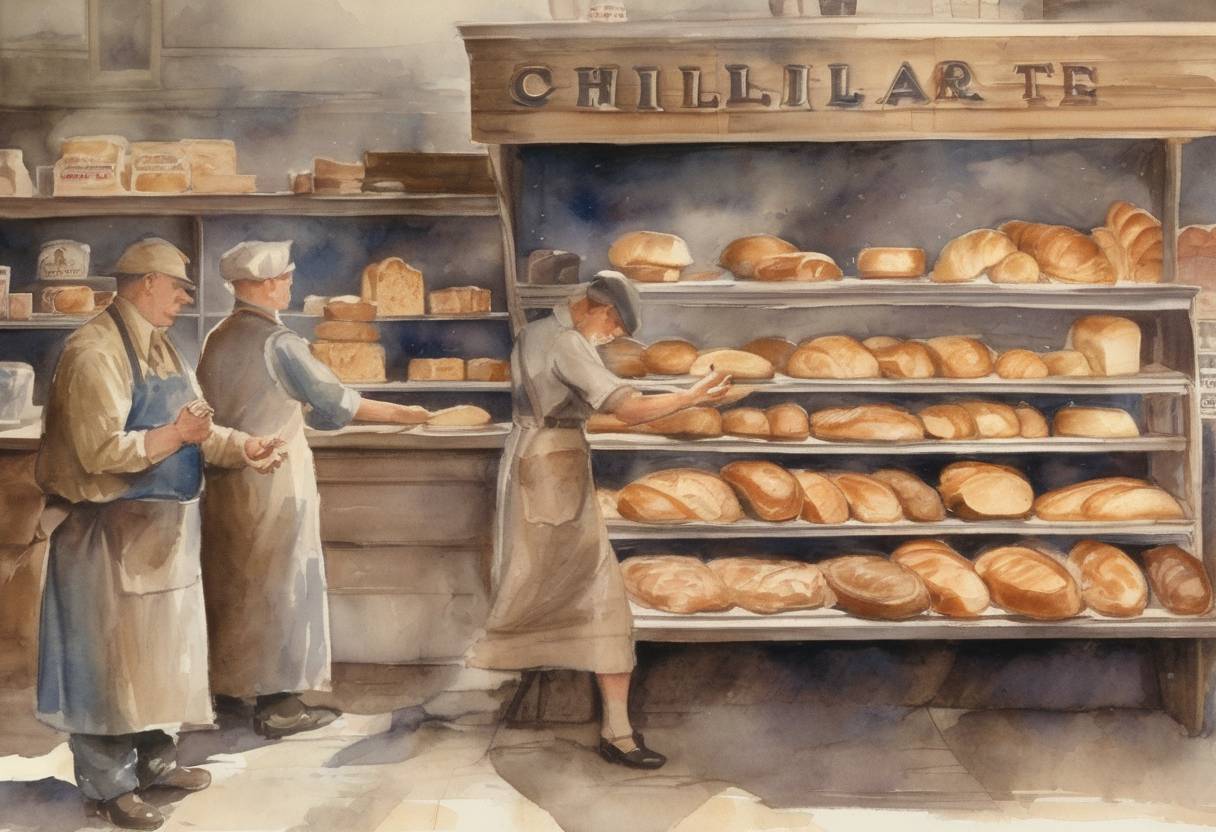
On July 7, 1928, the Chillicothe Baking Company of Chillicothe, Missouri, made history by selling the first commercially sliced bread. This innovation, often hailed as a groundbreaking development in the baking industry, was facilitated by the invention of the automatic bread-slicing machine by Otto Frederick Rohwedder.
Before the advent of sliced bread, consumers typically purchased whole loaves and sliced them at home. This process was not only time-consuming but also often resulted in uneven slices. Otto Frederick Rohwedder, an inventor from Davenport, Iowa, recognized the potential for a machine that could streamline this process. After years of development and overcoming setbacks, including a fire that destroyed his prototype and blueprints in 1917, Rohwedder successfully created a functional bread-slicing machine.
Rohwedder’s machine was designed to slice a loaf of bread into uniform pieces and wrap it in wax paper to maintain freshness. This innovation addressed two major consumer concerns: convenience and freshness. The machine’s ability to produce evenly sliced bread quickly gained attention and set the stage for its commercial success.
The Chillicothe Baking Company, under the leadership of its owner Frank Bench, became the first bakery to use Rohwedder’s machine. On July 7, 1928, they introduced “Kleen Maid Sliced Bread” to the public. The product was advertised as “the greatest forward step in the baking industry since bread was wrapped,” a phrase that would later inspire the popular saying, “the greatest thing since sliced bread.”
The introduction of sliced bread revolutionized the baking industry and consumer habits. It quickly gained popularity, leading to increased sales and the widespread adoption of bread-slicing machines by other bakeries. The convenience of pre-sliced bread became a staple in American households, influencing the development of other food products and packaging innovations.
The success of sliced bread also had broader economic implications. It contributed to the growth of the commercial baking industry and supported the expansion of related sectors, such as packaging and advertising.
The sale of sliced bread by the Chillicothe Baking Company on July 7, 1928, marked a significant milestone in food history. This simple yet transformative innovation exemplifies how technological advancements can reshape everyday life, leaving a lasting impact on consumer culture and industry practices.
Source: en.wikipedia.org