The Ratification of the Thirteenth Amendment
1865 · Washington, D.C., United States
The Thirteenth Amendment to the United States Constitution was ratified, abolishing slavery in the United States.
June 26, 1870
The Christian holiday of Christmas was declared a federal holiday in the United States.
Washington, D.C., United States | United States Congress
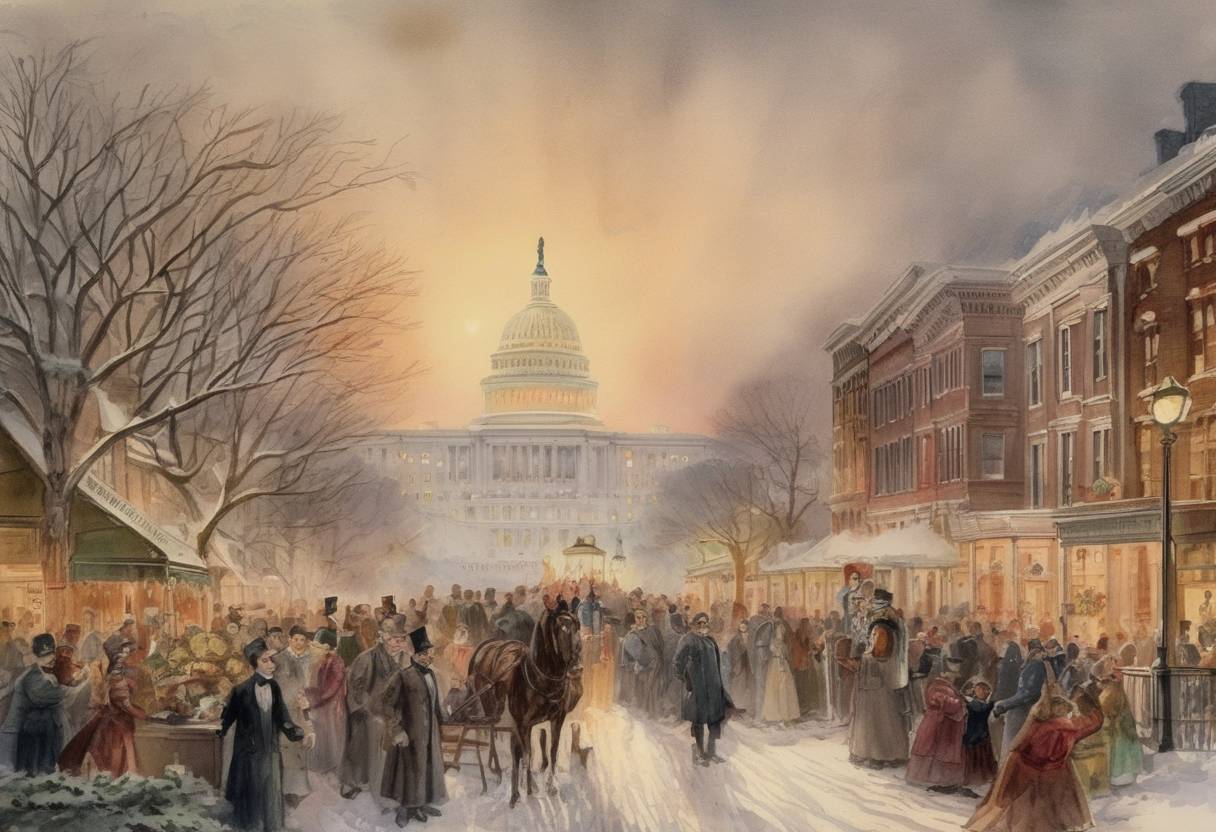
On June 26, 1870, Christmas was officially declared a federal holiday in the United States. This decision marked a significant moment in American cultural history, reflecting the growing acceptance and celebration of Christmas across the nation.
Early Celebrations: Christmas was celebrated in various forms by European settlers in America, but its observance was not uniform. In the early 19th century, Christmas was not widely recognized as a major holiday in the United States. In fact, some Puritanical groups in New England even banned its celebration due to its perceived pagan origins and rowdy festivities.
Cultural Shifts: By the mid-19th century, Christmas began to gain popularity in the United States. Influences from European immigrants, the publication of Charles Dickens’ “A Christmas Carol” in 1843, and the promotion of Christmas traditions by figures like Clement Clarke Moore, who wrote “A Visit from St. Nicholas” (commonly known as “The Night Before Christmas”), helped shape the holiday into a family-centered celebration.
The Act of 1870: The decision to make Christmas a federal holiday was part of a broader legislative act passed by Congress. This act also recognized New Year’s Day, Independence Day, and Thanksgiving Day as federal holidays. The inclusion of Christmas reflected its growing importance in American society.
Purpose: The establishment of Christmas as a federal holiday aimed to provide a day of rest and celebration for federal employees. It also acknowledged the holiday’s significance in American culture and its role in fostering goodwill and community spirit.
Cultural Impact: Declaring Christmas a federal holiday helped solidify its status as a major cultural event in the United States. It encouraged the spread of Christmas traditions, such as gift-giving, decorating Christmas trees, and family gatherings.
Economic Influence: Over time, Christmas also became a significant economic event, with the holiday season driving consumer spending and retail sales. The commercialization of Christmas has become a notable aspect of its modern celebration.
Continued Evolution: While Christmas is rooted in Christian traditions, it has evolved into a holiday celebrated by people of various cultural and religious backgrounds, often focusing on themes of generosity, family, and community.
In summary, the declaration of Christmas as a federal holiday in 1870 was a pivotal moment in American history, reflecting broader cultural shifts and setting the stage for the holiday’s enduring significance in the United States.
Source: en.wikipedia.org