Pope Sylvester I Begins His Papacy
314 · Rome, Roman Empire
Pope Sylvester I begins his papacy, succeeding Pope Miltiades.
June 30, 0296
Pope Marcellinus begins his papacy.
Rome, Roman Empire | Catholic Church
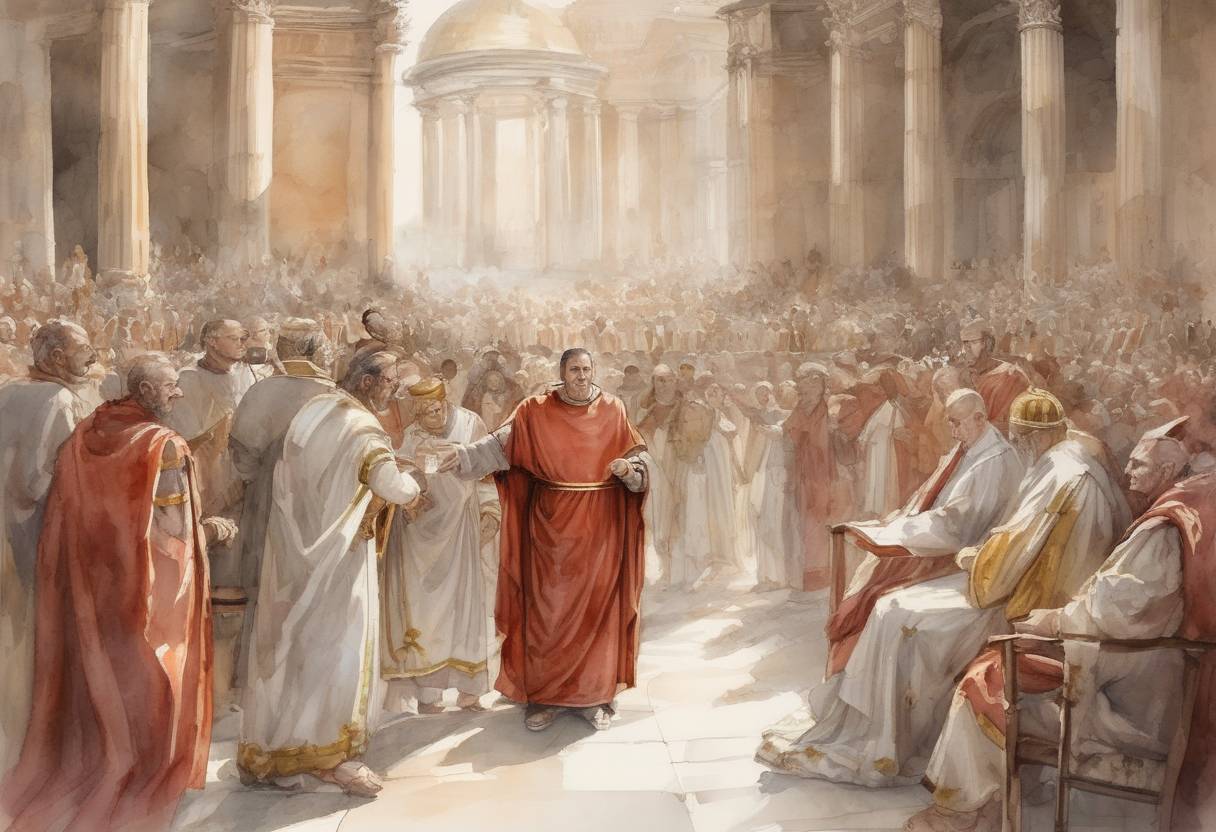
On June 30, 296, Marcellinus ascended to the papacy, becoming the Bishop of Rome and the leader of the worldwide Catholic Church. His papacy occurred during a period of significant challenges for Christians, particularly under the Roman Empire’s rule.
Roman Empire: At the time of Marcellinus’s election, the Roman Empire was under the rule of Emperor Diocletian. The empire was experiencing a period of relative stability after the Crisis of the Third Century, a time marked by political instability, economic turmoil, and external threats.
Christian Persecution: The early Christian community faced intermittent persecution under Roman rule. Although Diocletian initially tolerated Christians, this period would soon lead to the Great Persecution, the empire’s last and most severe persecution of Christians.
Leadership: Marcellinus’s papacy is noted for its challenges, particularly as the Christian community navigated the complexities of practicing their faith under Roman rule. His leadership was crucial in maintaining the church’s structure and morale during these trying times.
Persecution: During his papacy, the situation for Christians began to deteriorate. Although the Great Persecution officially began in 303, tensions were already rising, and Christians were increasingly targeted.
Apostasy Allegations: Historical records, including those from the Liber Pontificalis, suggest that Marcellinus faced accusations of apostasy, allegedly offering sacrifices to Roman gods during the persecution. However, these accounts are debated among historians, and the details remain unclear.
Legacy: Despite the controversies, Marcellinus is remembered for his role in guiding the church through a tumultuous period. His papacy set the stage for future leaders to navigate the challenges of persecution and maintain the resilience of the Christian community.
Martyrdom and Death: Marcellinus’s papacy ended around 304 AD. While some sources suggest he died a martyr, the exact circumstances of his death are uncertain.
Impact on the Church: The period following Marcellinus’s papacy was marked by continued persecution, culminating in the Edict of Milan in 313, which granted religious tolerance to Christians and significantly altered the church’s status within the Roman Empire.
Pope Marcellinus’s tenure as pope is a testament to the resilience and adaptability of the early Christian church in the face of adversity. His leadership during a critical period of persecution remains a significant chapter in the history of the papacy and the broader Christian tradition.
Source: en.wikipedia.org