The Berlin Blockade and Airlift
1948 · Berlin, Germany
The Soviet Union began its blockade of Berlin, which led to the Berlin Airlift by Western Allies.
May 12, 1949
The Soviet Union lifted the Berlin Blockade, which had been in place since June 1948, allowing supplies to flow into West Berlin and marking a significant moment in the early Cold War.
Berlin, Germany | Soviet Union
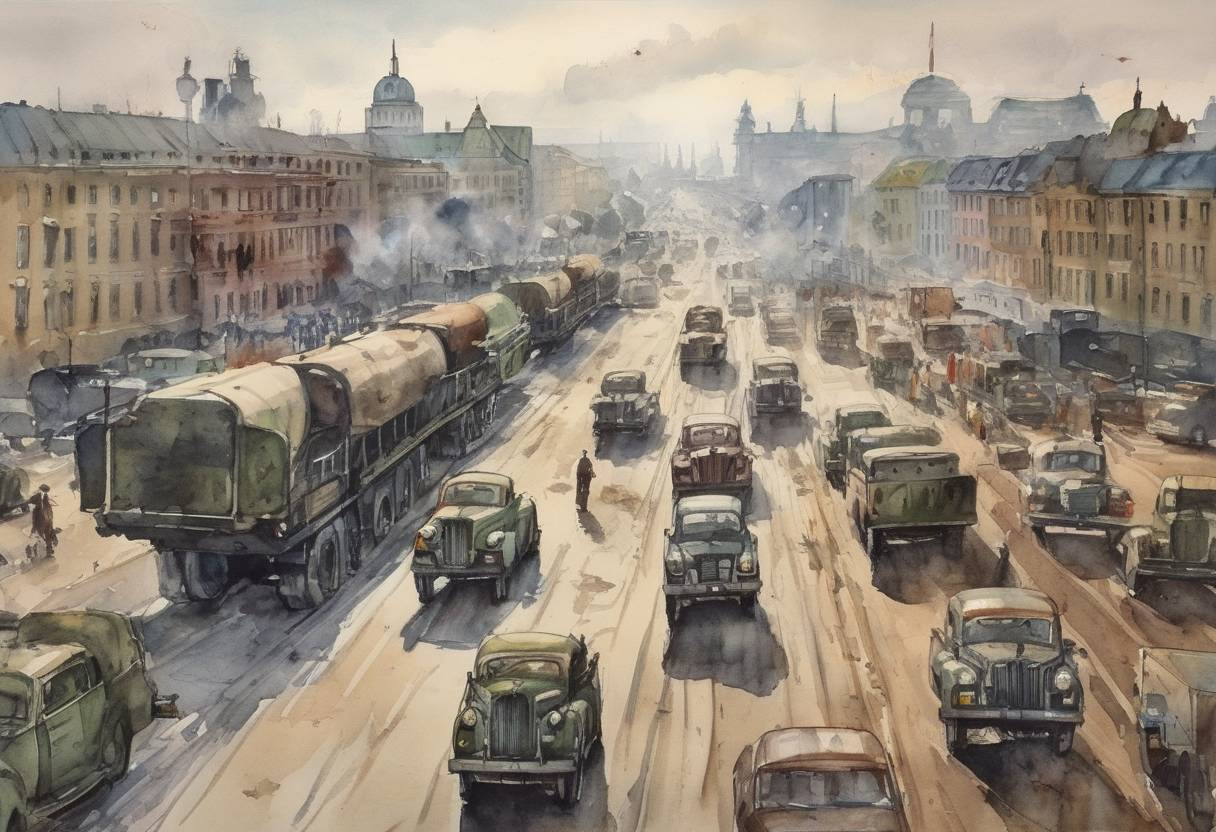
On May 12, 1949, the Soviet Union officially lifted the Berlin Blockade, a pivotal event in the early stages of the Cold War. This blockade had been in place since June 24, 1948, and its removal marked a significant turning point in the geopolitical tensions between the Soviet Union and the Western Allies.
The Berlin Blockade was a major crisis that arose from the post-World War II division of Germany and Berlin. After the war, Germany was divided into four occupation zones controlled by the United States, the United Kingdom, France, and the Soviet Union. Berlin, located deep within the Soviet zone, was similarly divided among the four powers.
In 1948, tensions escalated when the Western Allies introduced a new currency, the Deutsche Mark, in their zones, including West Berlin. The Soviets viewed this move as a threat to their influence in Germany and responded by blocking all ground routes to West Berlin, effectively isolating the city from Western support.
In response to the blockade, the Western Allies, led by the United States and the United Kingdom, organized the Berlin Airlift, a massive logistical effort to supply West Berlin with food, fuel, and other essential goods. From June 1948 to May 1949, Allied aircraft made over 200,000 flights, delivering more than 2.3 million tons of supplies to the beleaguered city.
The airlift was a remarkable feat of coordination and determination, demonstrating the resolve of the Western Allies to support West Berlin and resist Soviet pressure. It also highlighted the strategic importance of Berlin in the broader context of the Cold War.
The blockade’s lifting on May 12, 1949, came after months of negotiations and was largely seen as a Soviet concession in the face of the successful airlift. The blockade had failed to achieve its objective of forcing the Western Allies out of Berlin and had instead solidified their commitment to the city’s defense.
The end of the Berlin Blockade had several important consequences:
Strengthening of the Western Alliance: The crisis reinforced the unity and resolve of the Western Allies, leading to the formation of NATO (North Atlantic Treaty Organization) in April 1949, a military alliance aimed at countering Soviet expansion.
Division of Germany: The blockade and subsequent airlift underscored the division of Germany into East and West, a division that would persist until the end of the Cold War.
Cold War Symbolism: Berlin became a symbol of the Cold War struggle between East and West, representing the ideological divide between communism and democracy.
Soviet Strategy Reevaluation: The failure of the blockade prompted the Soviet Union to reconsider its strategies in dealing with the West, leading to a temporary easing of tensions.
In summary, the lifting of the Berlin Blockade on May 12, 1949, was a crucial moment in Cold War history, demonstrating the resilience of the Western Allies and setting the stage for the prolonged geopolitical struggle that would define the latter half of the 20th century.
Source: en.wikipedia.org