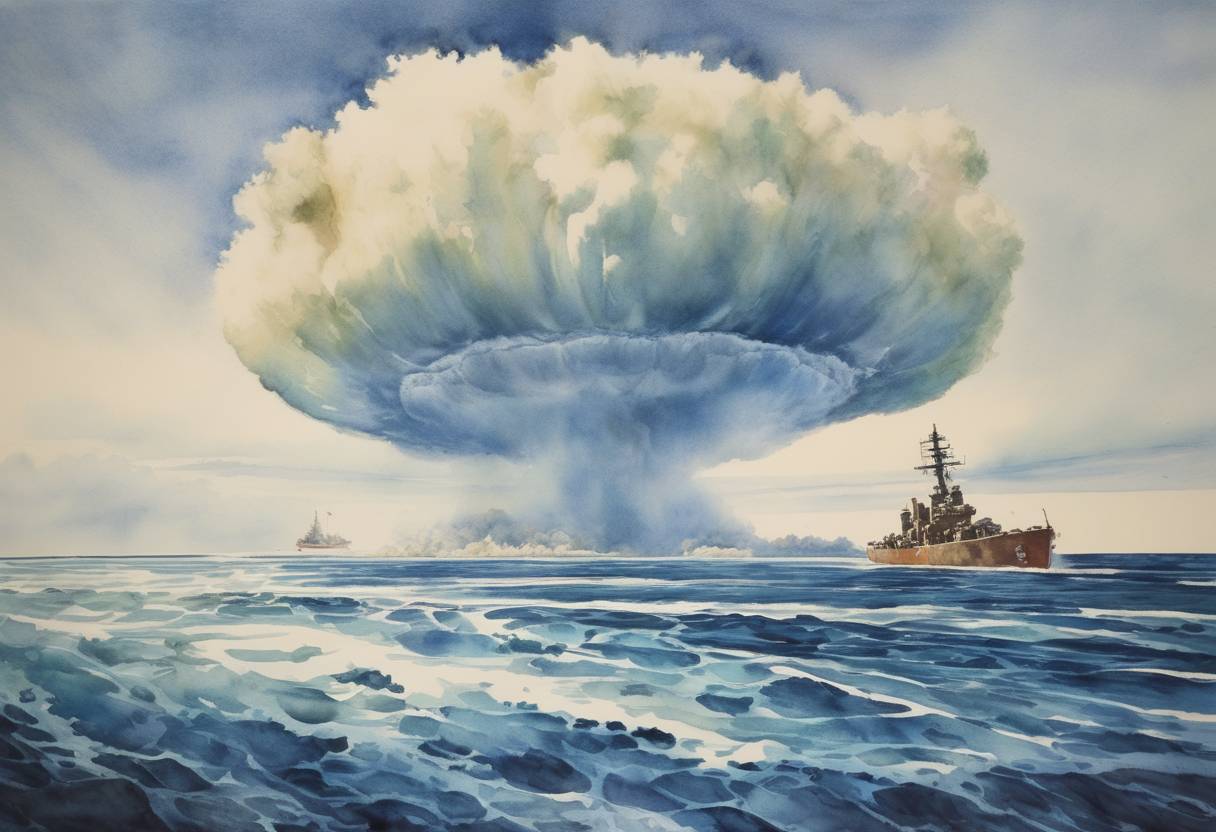
Nuclear Testing at Enewetak Atoll - October 5, 1951
On October 5, 1951, the United States conducted the first of the series of nuclear tests in the Northern Hemisphere under Operation Greenhouse, near Enewetak Atoll in the Pacific Ocean. This test marked a significant moment in the history of Cold War-era military developments, showcasing advancements in nuclear technology.
Context and Background
Enewetak Atoll
- Location: Part of the Marshall Islands, Enewetak Atoll was used extensively by the United States as a nuclear test site following World War II.
- Strategic Importance: Selected for its remote location, away from populous areas, it provided a venue for nuclear testing while minimizing direct civilian impact.
The Cold War Era
- Arms Race: The period was marked by an intense arms race between the United States and the Soviet Union, with both superpowers striving to achieve nuclear superiority.
- Deterrence: The development and demonstration of nuclear capabilities were critical components of military deterrence strategies during this time.
Operation Greenhouse
- Objective: To test new designs that would maximize the yield and efficiency of nuclear weapons, specifically the development of thermonuclear technology (hydrogen bombs).
- Innovation: Introduced new technological innovations that contributed to subsequent thermonuclear weapons design.
The Test
- Date: Conducted on October 5, 1951, the test laid groundwork for future tests and development of more powerful nuclear weapons.
- Significance: It demonstrated advancements in nuclear payload efficiency and yielded data crucial for further development of thermonuclear devices.
Aftermath and Consequences
- Technological Progress: The success of the test paved the way for subsequent tests that increased understanding of nuclear weapon behaviors and potential.
- Environmental and Ethical Concerns: Continued tests at Enewetak raised concerns over environmental damage and the moral implications of nuclear proliferation.
- Legacy: Enewetak and other test sites left lasting impacts on local ecologies and populations, contributing to broader discourse on nuclear testing and disarmament.
Broader Historical Impact
The tests marked a pivotal moment in the Cold War, escalating the nuclear arms race and influencing global nuclear policy. They underscored the technological capabilities of the United States, influencing international diplomatic and military strategies through the latter half of the 20th century.