1835 · New Echota, United States
The Treaty of New Echota is signed, ceding Cherokee land to the United States in return for compensation, leading to the forced removal of the Cherokee people known as the Trail of Tears.
September 5, 1877
A treaty was signed at Fort Robinson, Nebraska, formally ending the Great Sioux War of 1876-77 between the United States and the Sioux Nation, marking the end of fighting, the Sioux's relinquishment of their Black Hills territory, and the eventual settlement onto reservations.
Fort Robinson, United States | United States Government
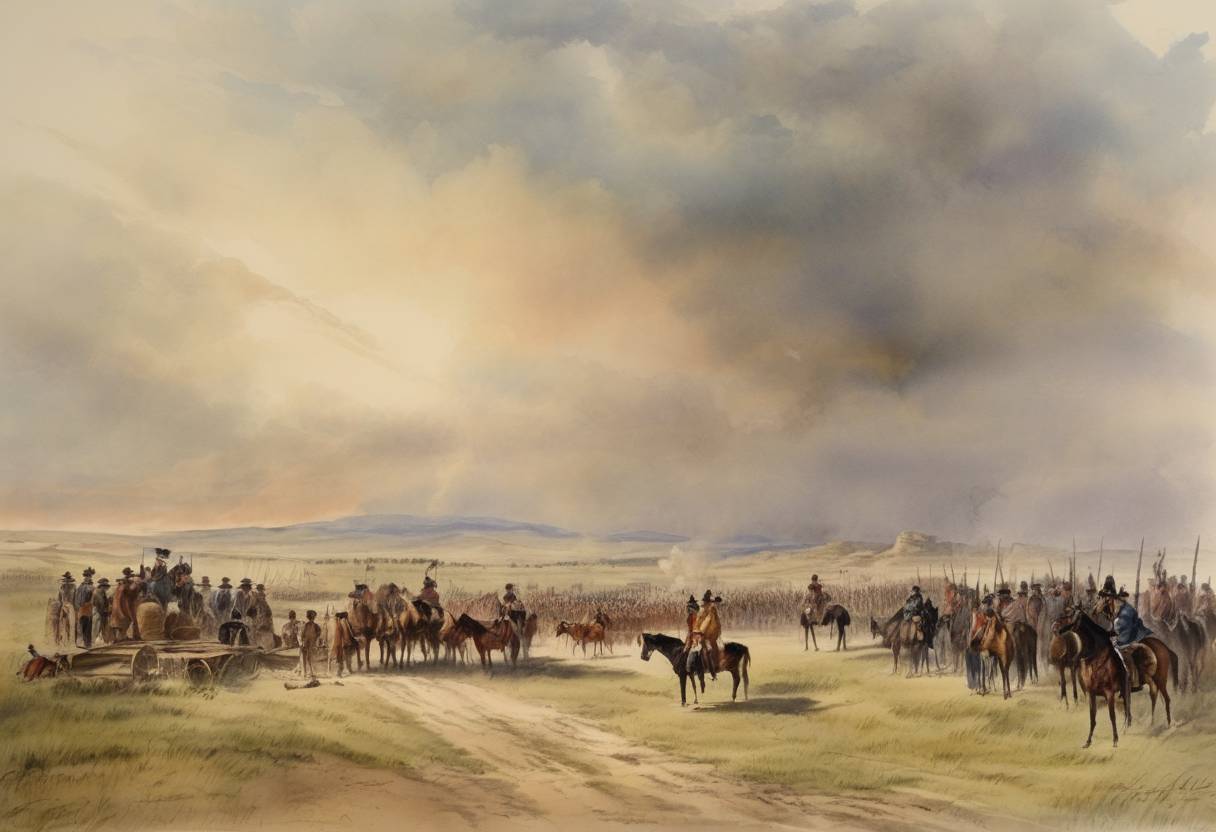
On September 5, 1877, a treaty was signed at Fort Robinson, Nebraska, formally concluding the Great Sioux War of 1876-77. This conflict, which pitted the United States against the Sioux Nation, along with their allies among the Northern Cheyenne, was part of the larger series of conflicts known as the Indian Wars, which spanned much of the 19th century in the United States.
The Great Sioux War was primarily ignited by the discovery of gold in the Black Hills, an area sacred to the Sioux, which had been guaranteed to them in perpetuity by the Fort Laramie Treaty of 1868. The influx of miners and settlers into the region led to increased tensions, as the U.S. government sought to obtain the land from the Sioux. Despite early victories for the Sioux, including the famous Battle of the Little Bighorn where Custer was defeated, the sustained military pressure and strategic advantages of the U.S. ultimately led to their capitulation.
The treaty signed at Fort Robinson marked a pivotal moment in the history of the Sioux people:
Cessation of Hostilities: The treaty officially ended active military engagements between the Sioux Nation and the U.S. military forces.
Relinquishment of the Black Hills: The Sioux reluctantly ceded the Black Hills to the United States. This area was of profound spiritual importance to the Sioux and known for its rich resources.
Resettlement onto Reservations: With the signing of the treaty, the Sioux agreed to move onto specified reservations. This forced relocation was a part of the U.S. policy of concentrating Native American tribes on reservations to facilitate control and limit conflict over land.
The consequences of the treaty signing were profound for the Sioux Nation and had long-lasting effects:
Loss of Autonomy and Land: The Sioux lost a vast expanse of their ancestral lands, which had a deeply adverse impact on their traditional way of life.
Increased Dependency: As the Sioux moved to reservations, they became increasingly dependent on government provisions, which were often inadequate and led to severe hardships.
Cultural and Social Changes: Forced assimilation policies were put in place, aiming to erase Sioux culture and integrate them into American society, which led to significant cultural disruption.
The signing of the treaty at Fort Robinson was emblematic of the broader pattern of Native American displacement and cultural upheaval faced by indigenous peoples across the United States. The dynamics and ramifications of such treaties remain a critical aspect of Native American and U.S. history.
Source: www.nps.gov