Signing of the United States Constitution
1787 · Philadelphia, United States
The United States Constitution was signed by delegates at the Constitutional Convention in Philadelphia.
August 29, 1786
Shays' Rebellion began with an armed uprising in response to economic injustices and harsh government policies in the United States.
Northampton, United States | Shaysites
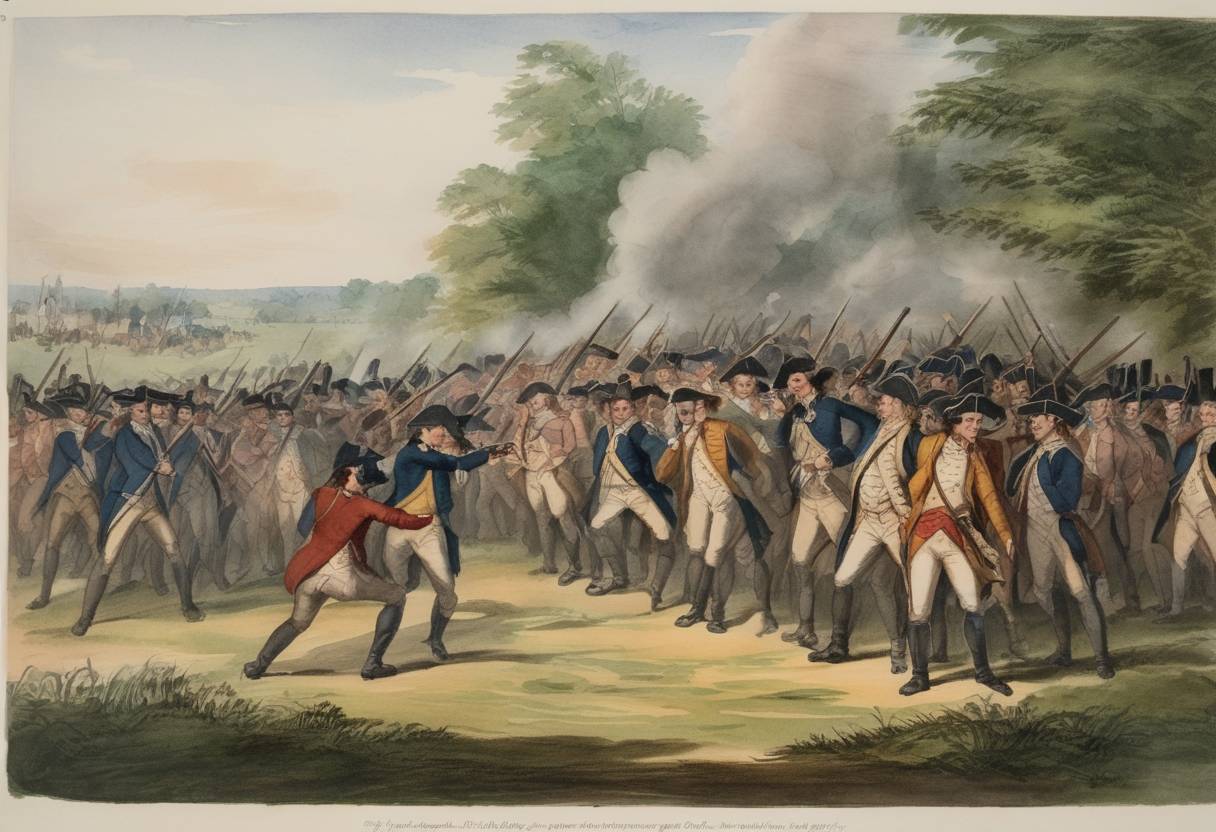
On August 29, 1786, Shays’ Rebellion, an armed uprising, commenced as a reaction to economic grievances and stringent government measures in the post-Revolutionary United States, primarily affecting Massachusetts. This rebellion was marked by the mobilization of disgruntled farmers and war veterans, highlighting the socioeconomic tensions in the fledgling nation.
After the American Revolutionary War, the United States faced a severe economic depression. The national government, operating under the Articles of Confederation, was weak and lacked the power to support the agrarian-based economy effectively. Additionally, individual states held substantial debts from the war, resorting to levying heavy taxes and demanding payments in hard currency, which was scarce. Massachusetts, in particular, enforced stringent tax and debt collection measures, placing a significant burden on rural farmers, many of whom were Revolutionary War veterans.
Farmers faced foreclosures and the loss of their lands due to their inability to pay taxes and debts. The disenfranchisement culminated in protests and calls for government reform, most notably for the issuance of paper money and tax relief. These pleas went largely ignored by the state government, fueling widespread discontent and desperation among the agrarian communities.
The tensions reached a peak on August 29, 1786, when protestors forcibly shut down the Northampton court in Massachusetts. This action was part of a wider strategy where protesters targeted local courthouses to prevent the hearings on tax and debt-related foreclosures. Led by Daniel Shays, a former captain in the Continental Army, and other leaders, these groups sought to halt the legal machinery perceived as complicit in their economic oppression.
The closure of the Northampton court set off a chain of similar events across Massachusetts, with protestors confronting judicial institutions in various towns. The insurgents organized under a semblance of military structure borrowed from their wartime experience, ultimately posing a considerable challenge to state authorities.
Shays’ Rebellion lasted until the end of 1787, after several confrontations between the rebels and state militia. The rebellion underscored the deficiencies of the Articles of Confederation, prompting calls for a stronger federal government to manage economic policy and civil order.
The insurrection directly influenced the crafting of the United States Constitution in 1787, leading to the establishment of a unified federal framework capable of addressing such internal conflicts. Shays’ Rebellion illustrated the fragility of post-Revolutionary America and served as a catalyst for the nation’s foundational changes, significantly impacting the course of American governance.
Source: www.britannica.com