Ratification of the 15th Amendment to the United States Constitution
1870 · Washington D.C., United States
The 15th Amendment to the United States Constitution was ratified, granting voting rights regardless of race.
November 7, 1837
Elijah P. Lovejoy, an American Presbyterian minister, journalist, and newspaper editor, was murdered by a pro-slavery mob in Alton, Illinois, becoming a martyr for the abolitionist movement.
Alton, United States | Abolitionist movement
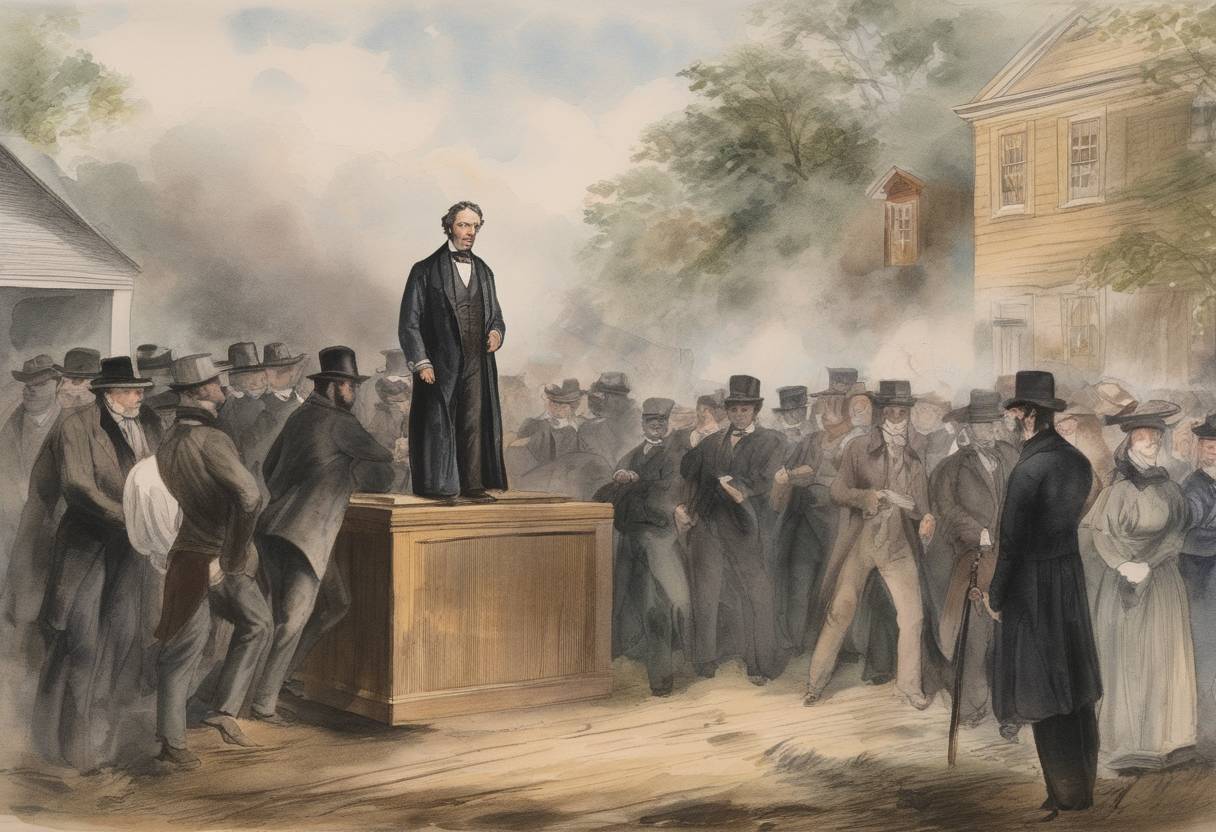
Elijah Parish Lovejoy, a Presbyterian minister, journalist, and editor, became a pivotal martyr in the abolitionist movement when he was murdered on November 7, 1837, in Alton, Illinois. Known for his staunch anti-slavery stance, Lovejoy’s death was a significant turning point in the struggle against slavery in the United States.
Born in 1802, Lovejoy originally hailed from Maine and graduated from Waterville College. He moved to St. Louis, Missouri, where he initially pursued a career in teaching before transitioning to journalism. In 1833, Lovejoy became the editor of the “St. Louis Observer,” an anti-slavery newspaper that increasingly attracted the ire of pro-slavery factions.
After several presses were destroyed by mobs opposing his views, Lovejoy moved his operations across the river to Alton, Illinois, a free state, hoping to find a safer environment for his abolitionist work. However, tensions in Alton were similarly high. Despite receiving threats, Lovejoy continued to publish his anti-slavery sentiments.
On the night of November 7, 1837, Lovejoy and his supporters were guarding a newly delivered printing press in a warehouse on the banks of the Mississippi River. As tensions escalated, a pro-slavery mob gathered with the intent to destroy the press. A violent confrontation ensued, marked by gunfire exchanges between the mob and Lovejoy’s defenders. During the chaos, Lovejoy was shot five times after multiple attempts to set the building aflame, leading to his death at the age of 34.
Lovejoy’s murder garnered national attention and rapidly became a rallying point for the abolitionist cause. The brutality of the attack and the silencing of a free press stirred profound outrage and sympathy among abolitionists and moderate anti-slavery supporters across the Northern states. The incident highlighted the extreme lengths to which pro-slavery advocates would go to suppress the abolitionist movement.
His death is often credited with awakening a new intensity in the struggle against slavery, inspiring others, including prominent figures like John Brown, to take a more active stance in the abolitionist movement. Lovejoy is now remembered not only as a martyr for the cause but as a symbol of the essential fight for freedom of speech and the press in America.
Source: www.history.com