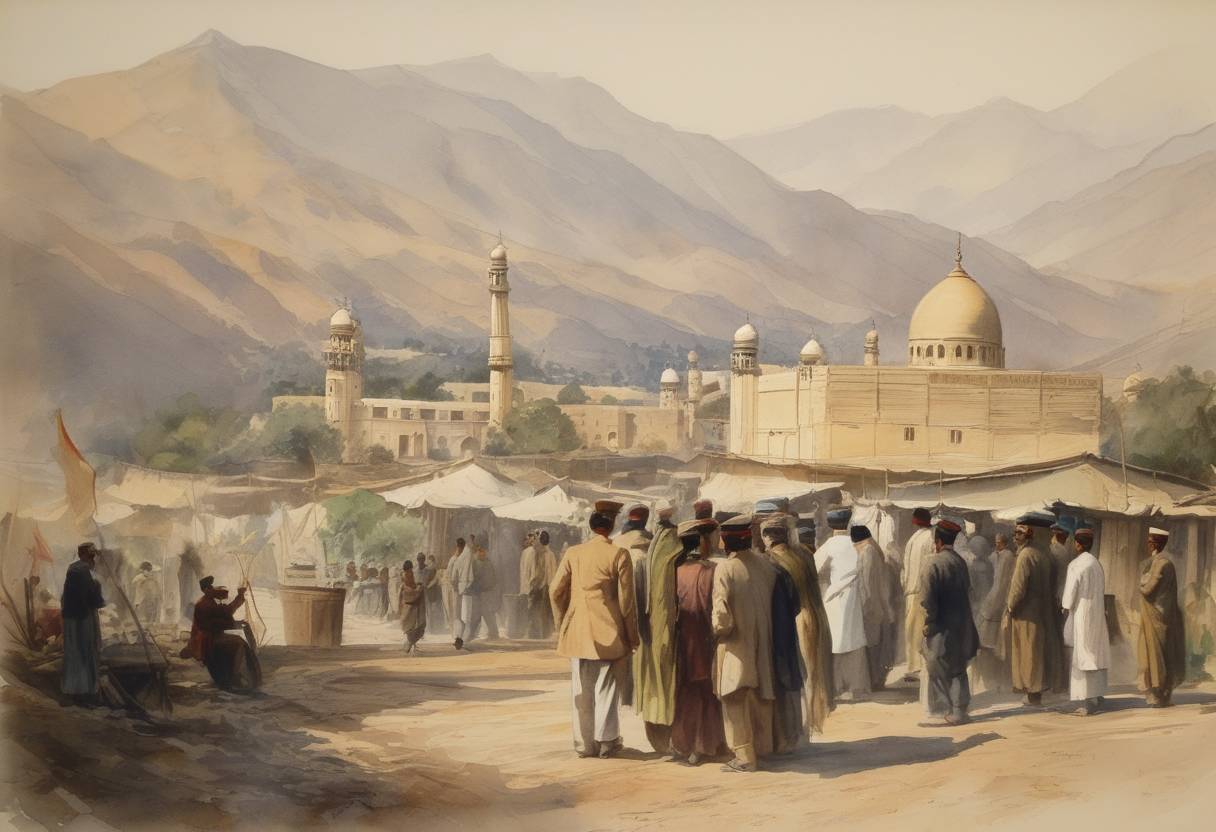
Afghanistan Regains Full Independence: Treaty of Rawalpindi, August 19, 1919
On August 19, 1919, Afghanistan formally regained full independence from British influence with the signing of the Treaty of Rawalpindi. This significant event marked the end of the Third Anglo-Afghan War, a brief conflict that reinforced Afghanistan’s sovereignty.
Background
The historical context for independence was rooted in the imperial competition between the British Empire and Russia, known as the “Great Game,” which left Afghanistan as a strategic buffer state. British influence had been exerted in Afghanistan primarily through the outcomes of the Anglo-Afghan Wars in the 19th century, where Britain sought control over Afghan foreign relations.
The Third Anglo-Afghan War
King Amanullah Khan, who ascended to the Afghan throne in 1919, sought to free Afghanistan from British control completely. In May 1919, Afghan forces invaded British India, leading to the Third Anglo-Afghan War. Although a militarily inconclusive conflict, it was marked by several skirmishes and ultimately a peace settlement.
Signing of the Treaty
The Treaty of Rawalpindi was signed following an armistice on August 8, 1919. The treaty recognized Afghanistan as an independent state, allowing it to conduct its foreign affairs without British intervention. The official recognition of Afghan independence on August 19 signaled a new chapter for Afghan autonomy and national development.
Aftermath and Significance
The recognition of Afghanistan’s independence had notable implications. Internally, King Amanullah Khan embarked on a series of modernization and reform efforts, emphasizing national identity and self-governance. Externally, Afghanistan could now engage with other nations without British oversight, opening diplomatic relations with countries such as the Soviet Union.
The signing of the Treaty of Rawalpindi is annually celebrated in Afghanistan as Independence Day, underscoring its lasting significance in affirming Afghanistan’s status as a sovereign nation on the international stage.
In summary, the Treaty of Rawalpindi on August 19, 1919, was a pivotal moment in Afghan history, signifying the end of colonial restrictions and the beginning of true autonomy from British imperialism.