Anesthetic Ether Used for the First Time by Dr. William Morton
1846 · Boston, United States
Anesthetic ether is used for the first time by American dentist Dr. William Morton during a tooth extraction.
June 26, 1721
Dr. Zabdiel Boylston gave the first smallpox inoculations in Boston, Massachusetts during a smallpox epidemic. His actions, although controversial at the time, were a significant step towards the understanding and development of vaccines.
Boston, United States | Medical practitioners
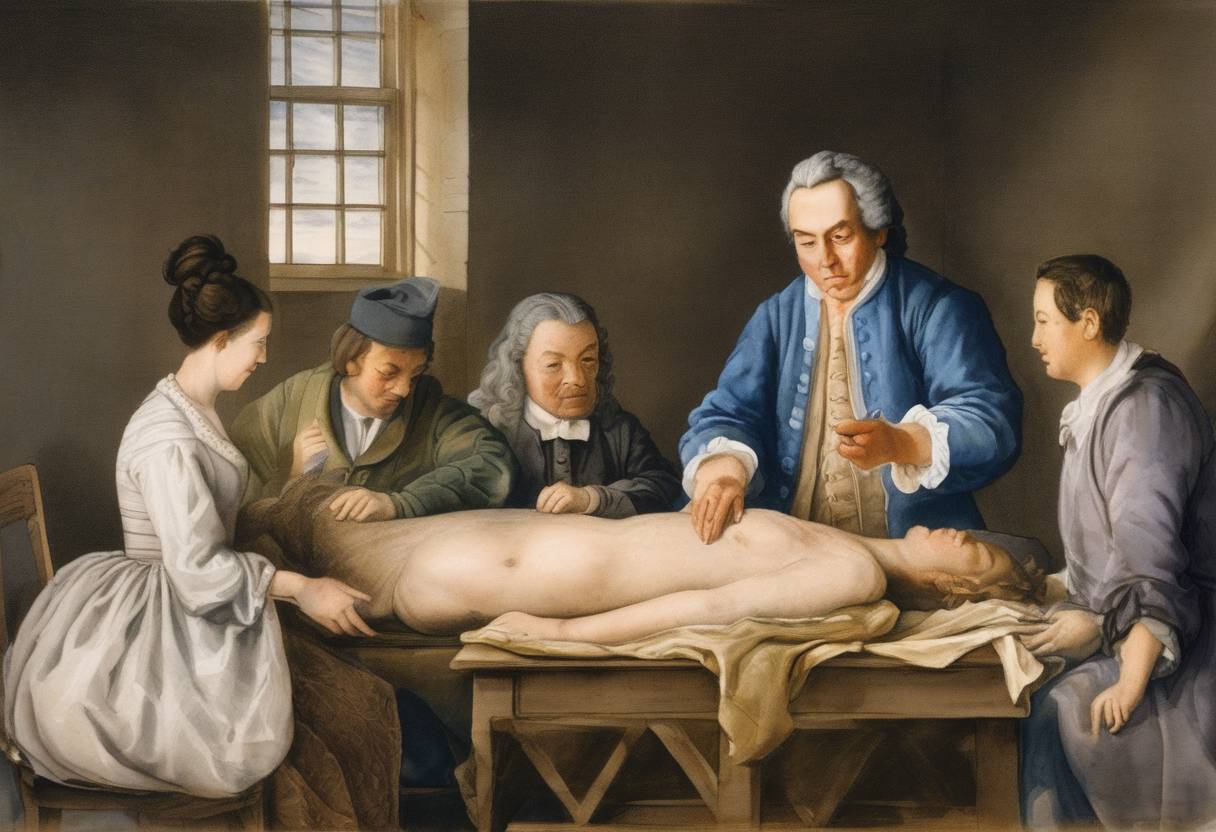
On June 26, 1721, Dr. Zabdiel Boylston, a physician in Boston, Massachusetts, made a groundbreaking move in the fight against infectious diseases by administering the first smallpox inoculations in the American colonies. This event marked a pivotal moment in medical history, even as it courted significant controversy.
During the early 18th century, smallpox was a devastating disease with a high mortality rate, causing widespread fear and numerous outbreaks. Inoculation, also known as variolation, was the practice of deliberately introducing material from smallpox sores into a healthy individual to induce a mild form of the disease, which then conferred immunity. This method had been practiced in various parts of the world, notably in Africa, Asia, and the Middle East, long before it became known in the West.
The 1721 epidemic swept through Boston, compelling civic leaders and medical professionals to seek preventative measures. Understanding the severity of the disease and the potential benefits of inoculation, Dr. Boylston took a courageous step to introduce this method to the American colonies.
On this date, Boylston inoculated his son, Thomas, a household servant, and a servant’s son, marking the first known instance of smallpox inoculation in America. This act was influenced by Cotton Mather, a Puritan minister who had learned about the practice from his African slave, Onesimus, who was familiar with the technique from his own experiences in Africa.
Boylston’s inoculations were met with intense debate and criticism. Many physicians and members of the public were skeptical and feared that inoculation could spread the disease rather than prevent it. The practice was seen as experimental and was opposed on grounds of both religious and scientific orthodoxy. Moreover, public fear was exacerbated by a lack of understanding of how contagions spread and how inoculation worked.
Despite such resistance, Boylston continued his practice, eventually inoculating several hundred individuals, with a significantly lower mortality rate compared to those who contracted the disease naturally.
Dr. Boylston’s commitment to inoculation had far-reaching effects. It helped lay the groundwork for further developments in immunization and was instrumental in changing public perception and acceptance of preventative medical interventions. The successful use of inoculation in Boston contributed to its gradual acceptance across Europe and America, setting the stage for the future development of vaccination, which would become a cornerstone of modern medicine.
Boylston’s work highlighted the importance of scientific inquiry and evidence-based practice in medicine. Moreover, his efforts underscored the critical need to overcome public fear and misinformation to improve public health, a challenge that resonates in contemporary times with modern vaccinations.
Source: en.wikipedia.org