The Act of Supremacy: March 23, 1534
1534 · London, England
The Parliament of England passed the Act of Supremacy, establishing King Henry VIII as the Supreme Head of the Church of England.
November 2, 1534
English Parliament passed the First Act of Supremacy, making Henry VIII the Supreme Head of the Church of England.
London, England | English Parliament
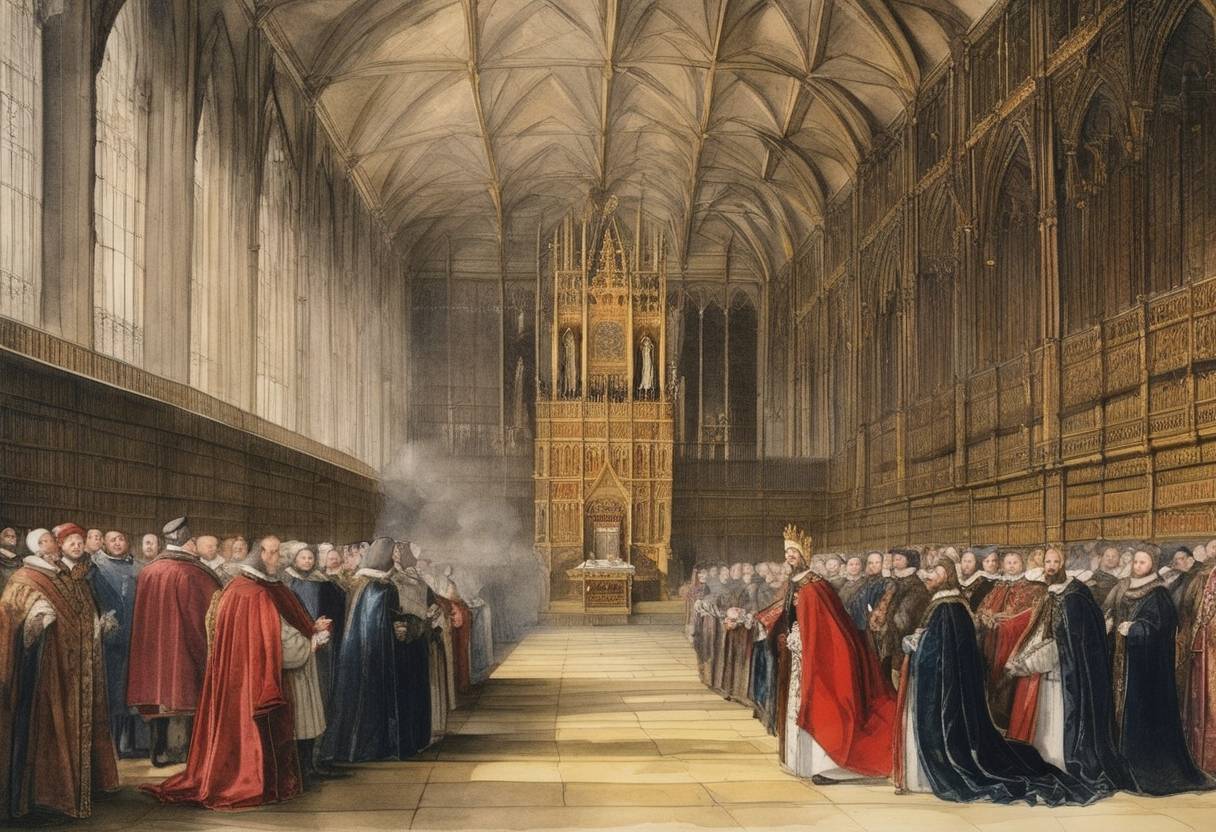
On November 2, 1534, the English Parliament passed the First Act of Supremacy, a pivotal piece of legislation that established King Henry VIII as the “Supreme Head” of the Church of England. This legislative move marked a major turning point in English religious and political history.
The Act of Supremacy was an outcome of Henry VIII’s desire to annul his marriage to Catherine of Aragon. The Pope’s refusal to grant the annulment led Henry to sever ties with the Catholic Church. This schism was part of a broader movement known as the English Reformation, driven by both personal motives and the desire for increased sovereignty and control over religious and political matters.
The Act declared that the King “shall be taken, accepted, and reputed the only supreme head on earth of the Church of England.” It required English subjects to swear an oath recognizing the King’s supremacy over the English Church. This redefined the relationship between church and state, granting the monarchy substantial religious authority that had traditionally belonged to the Papacy.
The passing of the Act of Supremacy had sweeping religious, social, and political consequences:
This legislative act was a foundational moment for the English Reformation and set the stage for the eventual dichotomy between Catholic and Protestant factions in Europe. Additionally, the Act of Supremacy was revisited and modified in subsequent reigns, notably under Henry’s daughter, Elizabeth I, embodying the ongoing religious and political evolution of the nation.
Source: www.history.com