Emperor Otto III and the Monastery of San Salvatore
996 · Pavia, Holy Roman Empire (modern-day Italy)
Emperor Otto III issues a document confirming the privileges of the monastery of San Salvatore in Pavia, Italy.
December 7, 0983
Holy Roman Emperor Otto II dies, leading to a succession crisis as his son, Otto III, is only three years old at the time. This event marks a significant moment in the history of the Holy Roman Empire.
Rome, Holy Roman Empire | Holy Roman Empire
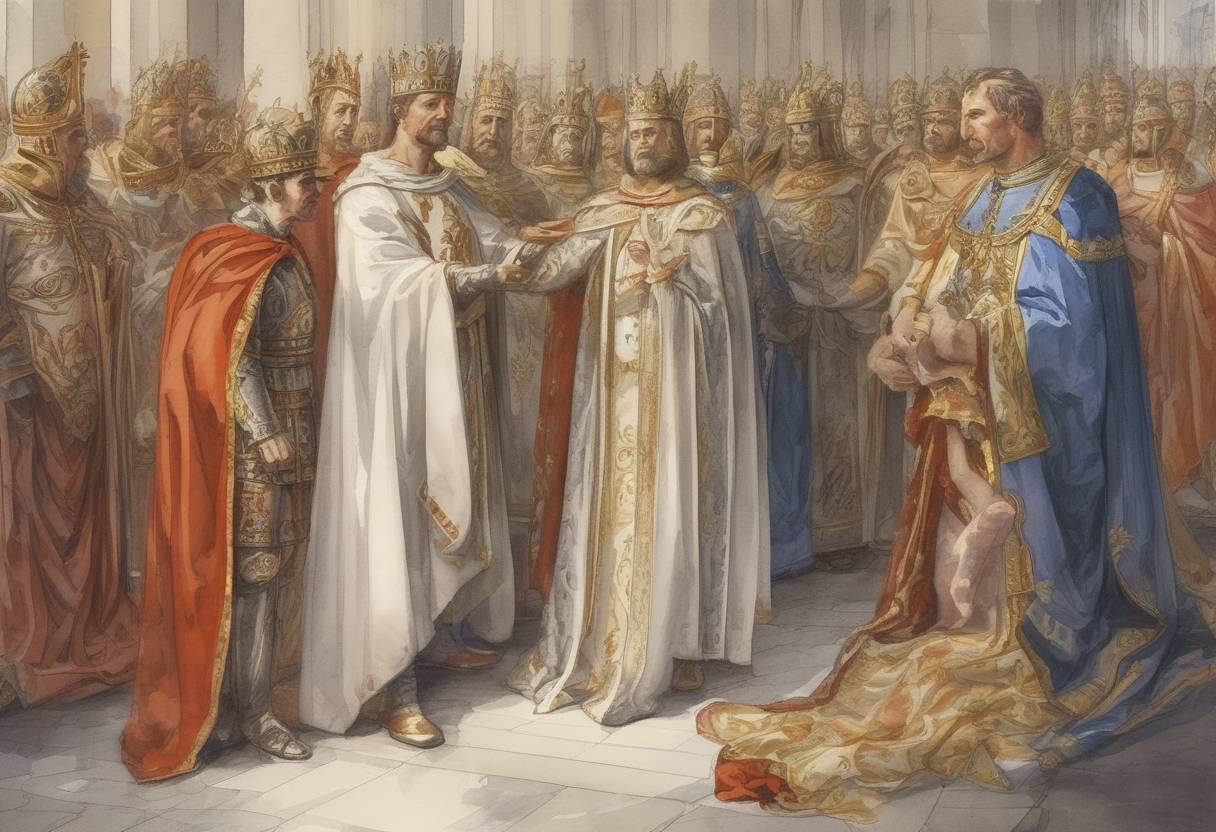
On December 7, 983, Holy Roman Emperor Otto II passed away, triggering a significant succession crisis within the Holy Roman Empire. His death marked a pivotal moment in the empire’s history due to the precarious situation surrounding his heir, Otto III, who was only three years old at the time.
Otto II, born in 955, was the son of Otto I, the first Holy Roman Emperor. Otto II was crowned co-emperor with his father in 967 and became sole emperor upon Otto I’s death in 973. His reign was marked by efforts to consolidate imperial authority in Italy and Germany, as well as conflicts with the Byzantine Empire and the Saracens in southern Italy.
Military Campaigns: Otto II’s reign was characterized by military campaigns aimed at expanding and securing the empire’s borders. Notably, his defeat at the Battle of Stilo in 982 against the Saracens weakened his position in southern Italy.
Internal Challenges: Otto II faced internal dissent and challenges to his authority from various German nobles, which complicated his efforts to maintain a stable rule.
Premature Death: Otto II’s unexpected death at the age of 28 left the empire in a vulnerable state. His son and heir, Otto III, was too young to assume the responsibilities of leadership, creating a power vacuum.
Regency: The immediate aftermath of Otto II’s death saw the establishment of a regency to govern on behalf of the young Otto III. His mother, Theophanu, a Byzantine princess, and his grandmother, Adelaide of Italy, played crucial roles in managing the empire’s affairs during this period.
Political Instability: The regency faced significant challenges, including opposition from powerful nobles who sought to exploit the situation to increase their influence. This period of instability threatened the cohesion of the empire.
Consolidation of Power: Despite the initial crisis, Otto III eventually assumed full control of the empire in 994. His reign was marked by efforts to strengthen imperial authority and promote a vision of a unified Christian empire.
Cultural and Political Influence: The events following Otto II’s death underscored the complexities of succession in medieval Europe and highlighted the delicate balance of power between the emperor and the nobility.
Legacy: The regency period and Otto III’s subsequent rule had lasting impacts on the Holy Roman Empire’s structure and its interactions with neighboring regions, shaping the political landscape of medieval Europe.
In conclusion, the death of Otto II on December 7, 983, and the ensuing succession crisis were crucial in shaping the future of the Holy Roman Empire. The challenges faced during this period underscored the vulnerabilities of dynastic succession and the intricate dynamics of medieval European politics.
Source: en.wikipedia.org