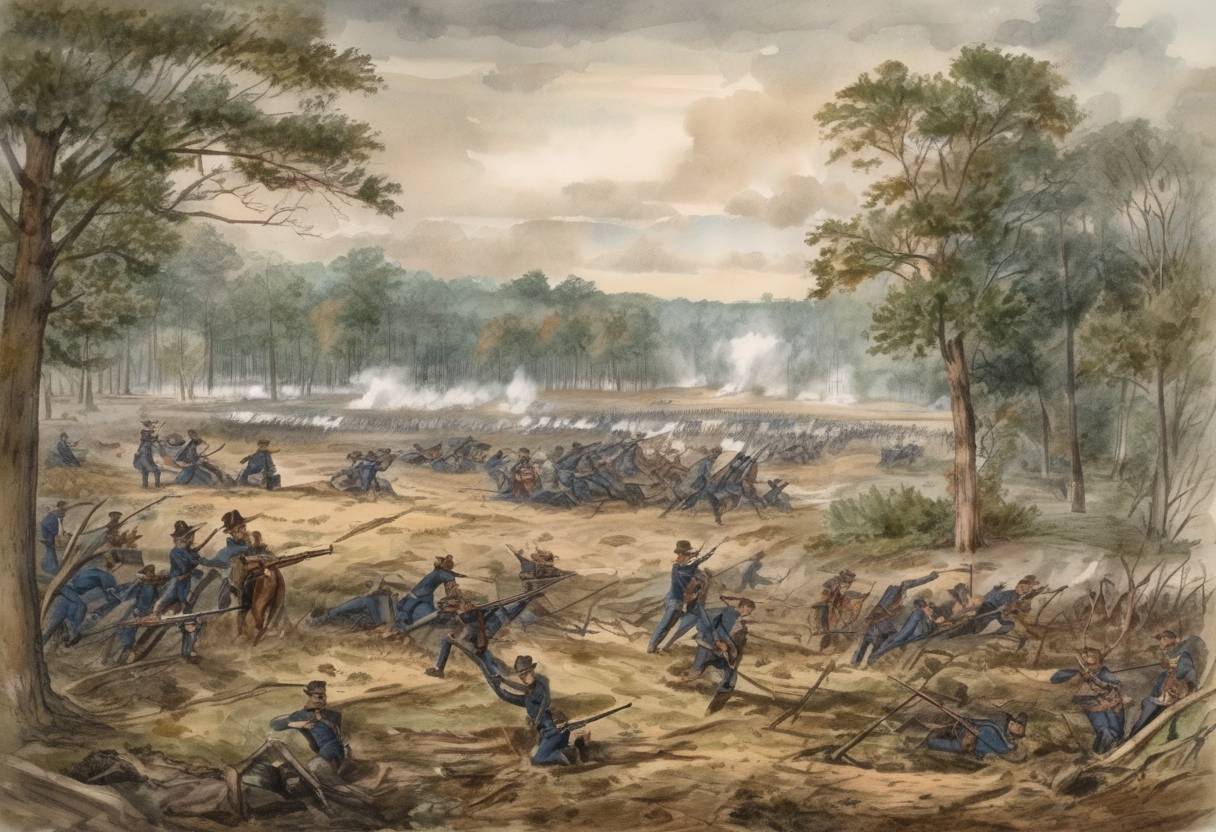
Battle of Chancellorsville: May 2, 1863
The Battle of Chancellorsville, fought from April 30 to May 6, 1863, is often regarded as Confederate General Robert E. Lee’s most significant victory during the American Civil War. The battle began in earnest on May 2, 1863, and unfolded in the dense wilderness of Spotsylvania County, Virginia.
Context and Prelude
- Strategic Situation: By early 1863, the Union Army of the Potomac, under Major General Joseph Hooker, sought to outmaneuver and defeat Lee’s Confederate Army of Northern Virginia. Hooker planned to cross the Rappahannock River and attack Lee’s forces from the rear, hoping to catch them off guard.
- Confederate Position: Lee’s army was significantly outnumbered, with approximately 60,000 troops compared to Hooker’s 130,000. Despite this, Lee decided to take a bold and aggressive approach.
Key Events on May 2, 1863
- Lee’s Strategy: Lee executed a risky plan by dividing his already outnumbered forces. He sent Lieutenant General Thomas “Stonewall” Jackson with about 28,000 men on a flanking march to attack the Union right flank.
- Jackson’s Flank Attack: On the afternoon of May 2, Jackson’s corps launched a surprise attack against the Union XI Corps, commanded by Major General Oliver O. Howard. The attack was devastating, causing chaos and panic among Union troops.
- Union Response: The Union forces were caught off guard, and their lines quickly collapsed under the pressure of Jackson’s assault. This maneuver is considered one of the most successful flanking attacks in military history.
Aftermath and Consequences
- Casualties: The battle resulted in significant casualties on both sides, with the Union suffering approximately 17,000 casualties and the Confederates around 13,000.
- Stonewall Jackson’s Wounding: Tragically, during the night of May 2, Jackson was accidentally shot by his own men while scouting ahead of his lines. He was severely wounded and died of pneumonia on May 10, 1863, a significant loss for the Confederate army.
- Impact on the War: Despite being outnumbered, Lee’s audacious tactics at Chancellorsville bolstered Confederate morale and solidified his reputation as a brilliant military strategist. However, the victory came at a high cost, particularly with the loss of Jackson.
Broader Significance
The Battle of Chancellorsville is often cited as a classic example of tactical brilliance and the effective use of maneuver warfare. It demonstrated Lee’s willingness to take calculated risks and his ability to exploit the weaknesses of his opponents. However, the victory did not translate into long-term strategic advantage for the Confederacy, as the Union’s industrial strength and manpower continued to exert pressure in the subsequent campaigns.
The battle set the stage for Lee’s second invasion of the North, which would culminate in the Battle of Gettysburg two months later, marking a turning point in the Civil War.