The Maiden Flight of the Boeing 737: April 9, 1967
1967 · Seattle, United States
The first Boeing 737 made its maiden flight, marking the beginning of one of the most successful commercial aircraft lines.
September 21, 1942
The Boeing B-29 Superfortress made its maiden flight, marking a significant advancement in aviation technology during World War II.
Seattle, United States | Boeing
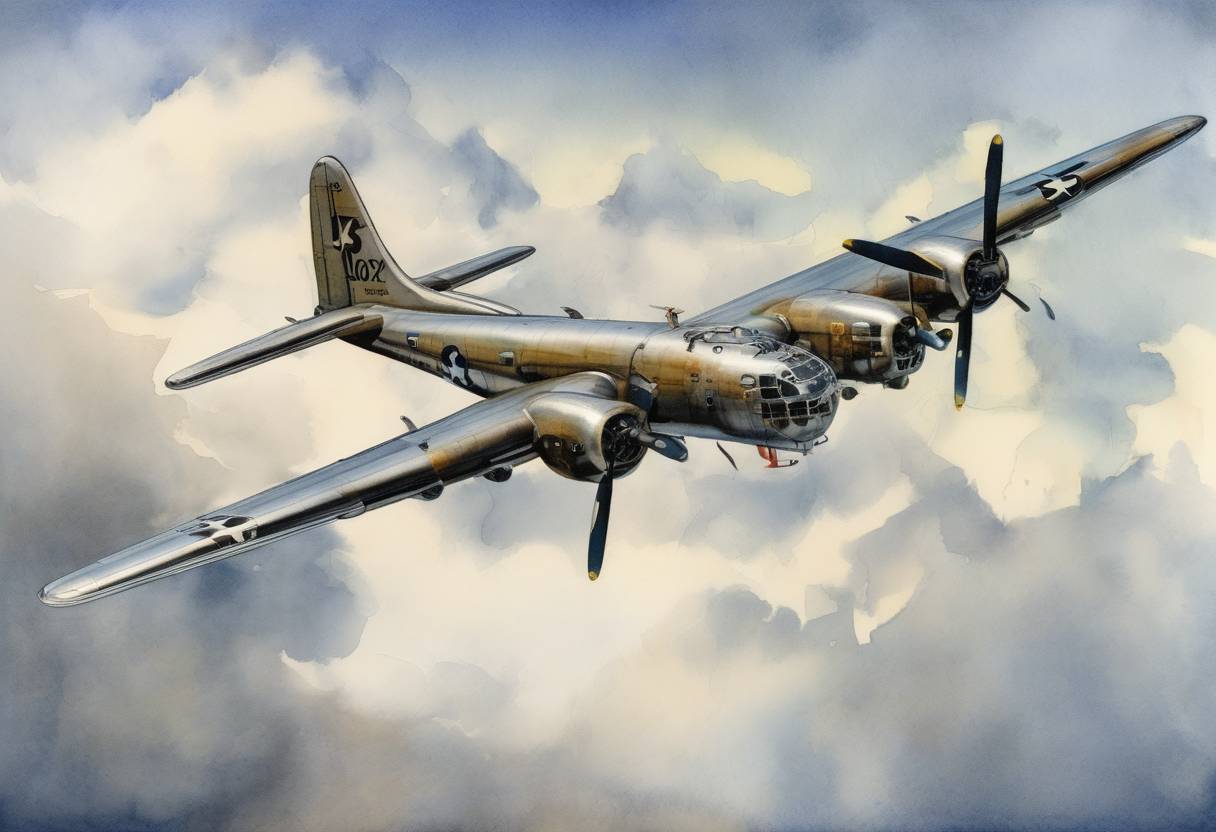
On September 21, 1942, the Boeing B-29 Superfortress took to the skies for its maiden flight, marking a pivotal moment in aviation history during World War II. This event represented a significant technological advancement in military aviation, with the B-29 becoming one of the most advanced bombers of its time.
The development of the B-29 Superfortress was initiated in response to a 1939 United States Army Air Corps request for a new long-range bomber. The goal was to create an aircraft capable of delivering heavy payloads over vast distances, which was crucial for the strategic bombing campaigns envisioned during the war.
The first flight of the B-29 took place at Boeing Field in Seattle, Washington. The prototype, piloted by Edmund T. “Eddie” Allen, demonstrated the aircraft’s capabilities and set the stage for its eventual deployment in the Pacific Theater.
The B-29 Superfortress played a crucial role in the Allied victory in World War II, particularly in the Pacific. It was instrumental in the strategic bombing campaign against Japan, including the infamous missions that dropped atomic bombs on Hiroshima and Nagasaki in August 1945.
The maiden flight of the Boeing B-29 Superfortress on September 21, 1942, was more than just a test of a new aircraft; it was a leap forward in aviation technology that had lasting impacts on military strategy and the outcome of World War II. Its legacy continues to be felt in both military and civilian aviation advancements.
Source: en.wikipedia.org