The Reopening of the Statue of Liberty's Pedestal on August 3, 2004
2004 · New York City, United States
The pedestal of the Statue of Liberty reopens to the public after being closed following the September 11 attacks.
October 28, 1886
The Statue of Liberty is dedicated in New York Harbor by President Grover Cleveland.
New York City, United States | United States Government
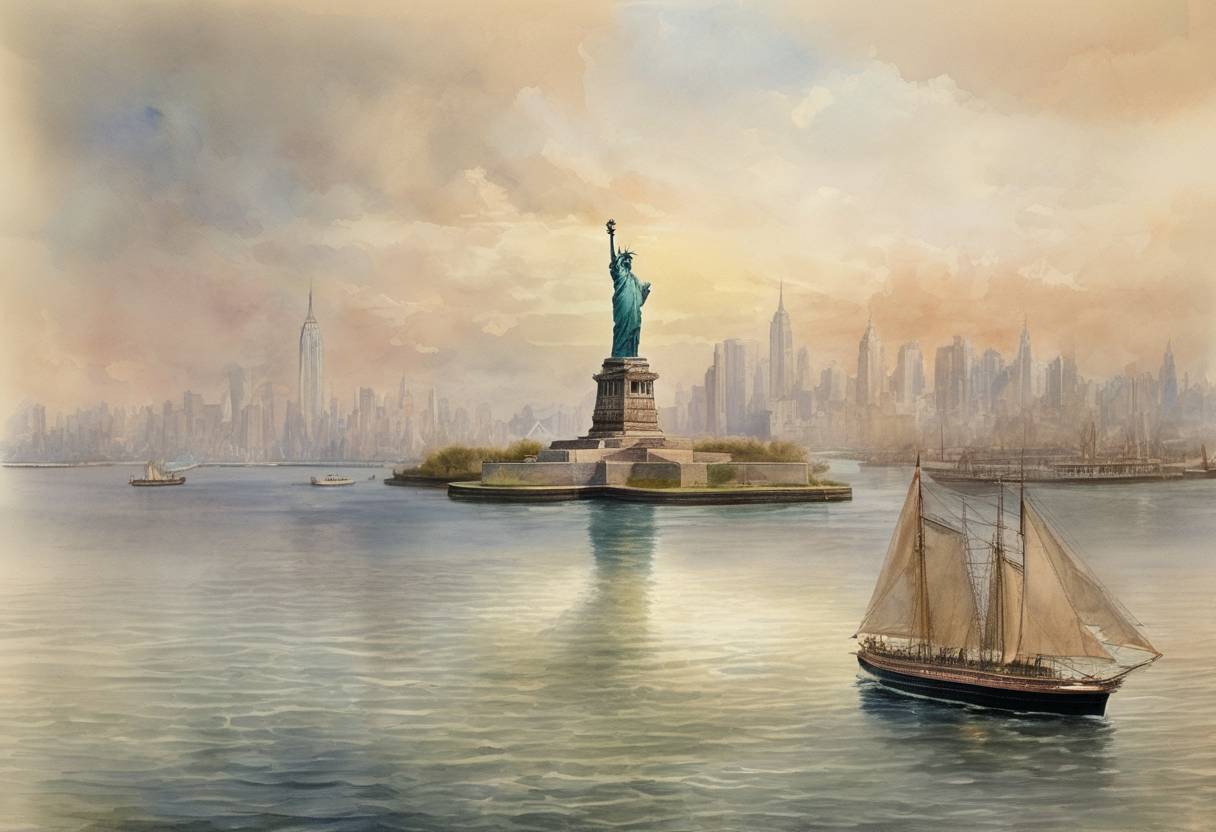
On October 28, 1886, the Statue of Liberty was officially dedicated in New York Harbor by President Grover Cleveland. This monumental event marked the culmination of years of collaboration between France and the United States and symbolized the enduring friendship between the two nations.
The idea for the Statue of Liberty originated in France in the early 1870s. It was conceived by French historian Édouard René de Laboulaye as a gift to the United States to celebrate the centennial of the American Declaration of Independence and to symbolize liberty and democracy. The renowned French sculptor Frédéric Auguste Bartholdi was commissioned to design the statue.
The dedication ceremony was a grand affair attended by numerous dignitaries and thousands of spectators. The event featured a parade through New York City, speeches, and a naval review in the harbor.
The Statue of Liberty quickly became an iconic symbol of freedom and hope, particularly for immigrants arriving in the United States. Positioned on Liberty Island, it was one of the first sights seen by millions of immigrants as they entered New York Harbor.
The dedication of the Statue of Liberty on October 28, 1886, remains a pivotal moment in American history, representing the ideals of freedom and democracy that continue to inspire people around the world.
Source: en.wikipedia.org