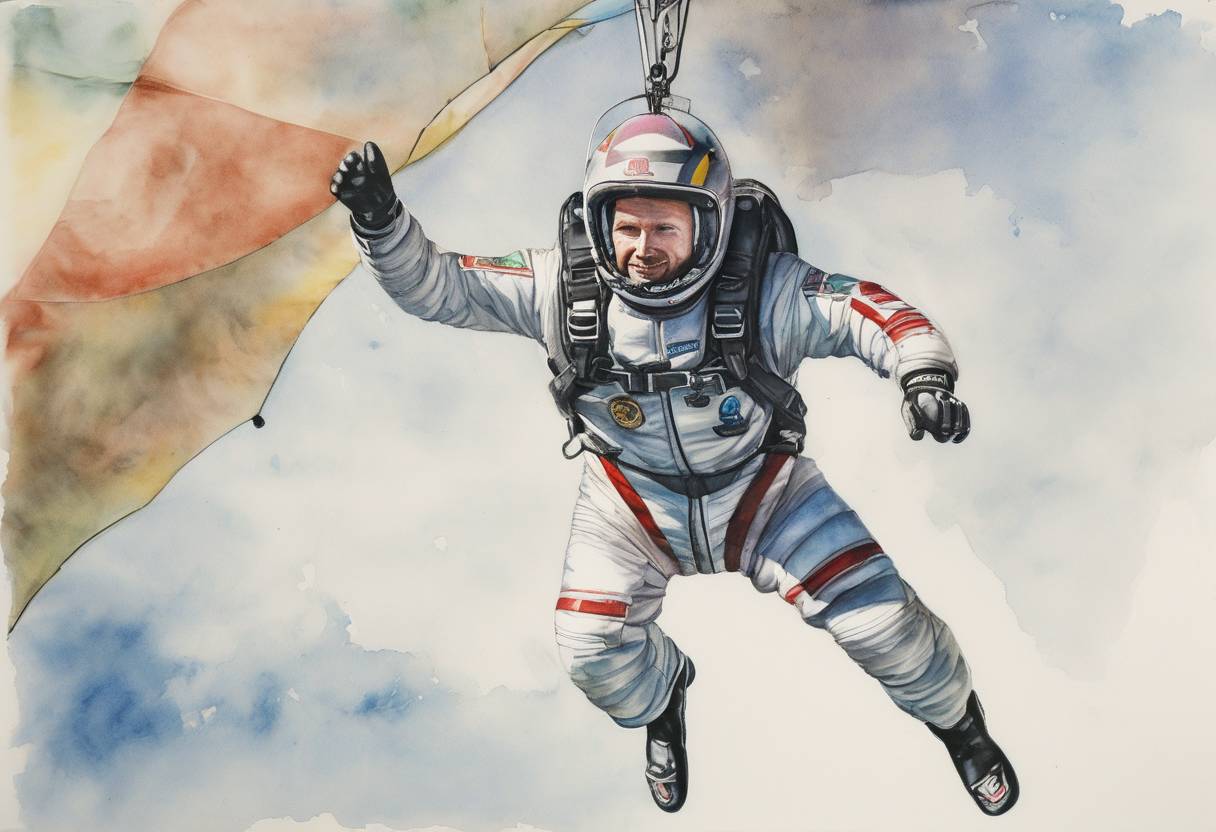
It seems there is a slight error in the date you provided. Austrian skydiver Felix Baumgartner set the world record for the highest skydive on October 14, 2012, not 2007. Here are the details of this historic event:
Felix Baumgartner’s Record-Breaking Skydive
Overview
On October 14, 2012, Austrian skydiver Felix Baumgartner made history by completing a record-breaking skydive from the stratosphere. This daring jump was part of the Red Bull Stratos project, which aimed to transcend human limits and gather valuable scientific data.
Key Details
Altitude: Baumgartner jumped from an altitude of approximately 39 kilometers (about 24 miles) above the Earth’s surface. This was the highest altitude ever reached by a human in a balloon.
Location: The jump took place over Roswell, New Mexico, a site chosen for its favorable weather conditions and vast open spaces.
Balloon Ascent: Baumgartner ascended to the stratosphere in a specially designed helium balloon, which took about two and a half hours to reach the jump altitude.
Freefall and Speed: During his descent, Baumgartner reached a maximum speed of 1,357.64 km/h (843.6 mph), becoming the first human to break the sound barrier without vehicular power in freefall.
Duration: The entire freefall lasted approximately 4 minutes and 19 seconds before Baumgartner deployed his parachute, with the total jump lasting about 9 minutes.
Scientific and Historical Significance
Data Collection: The mission provided valuable data on high-altitude human survival, which could inform future space travel and emergency escape systems for astronauts.
Technological Advancements: The jump required the development of advanced technology, including a specialized pressure suit and a capsule to protect Baumgartner during ascent.
Inspiration and Achievement: Baumgartner’s jump captured the world’s attention, showcasing human courage and the spirit of exploration. It set new benchmarks in the field of extreme sports and aeronautics.
Aftermath
Records: Baumgartner set several records, including the highest manned balloon flight, the highest skydive, and the fastest freefall speed.
Legacy: The mission’s success inspired further research and exploration in high-altitude and space environments. It also demonstrated the potential for private sector contributions to scientific and exploratory endeavors.
Felix Baumgartner’s skydive remains a remarkable achievement in the history of human exploration, illustrating the blend of courage, science, and innovation.