874 · Winchester, England
The death of Saint Alphege, an Anglo-Saxon bishop of Winchester who was later canonized as a martyr and saint.
September 28, 0935
The death of Wenceslaus I, Duke of Bohemia, who was later canonized as Saint Wenceslaus. He was murdered by his brother Boleslaus the Cruel, which led to his veneration as a martyr and a saint, becoming a symbol of Czech statehood and Christian virtue.
Stará Boleslav, Czech Republic
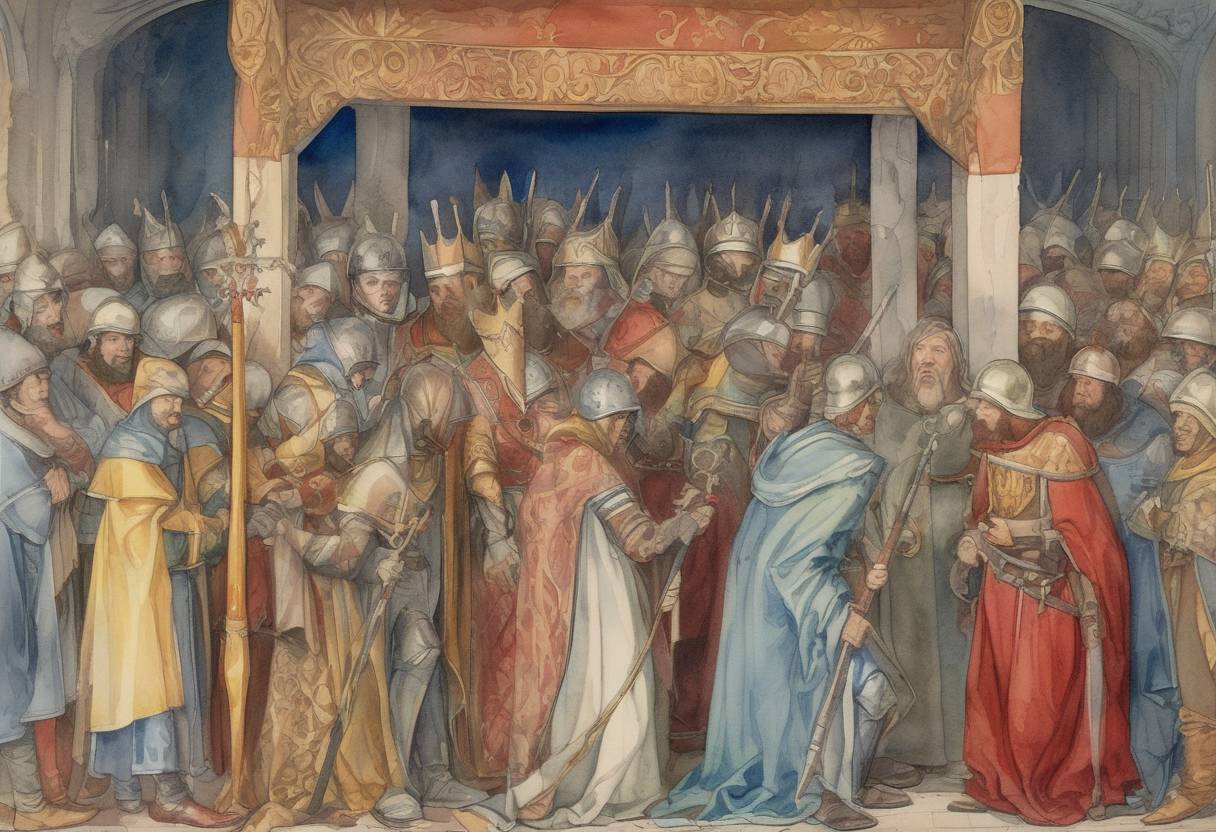
On September 28, 935, Wenceslaus I, Duke of Bohemia, met a tragic end at the hands of his brother, Boleslaus the Cruel. This event marked a significant turning point in the history of Bohemia and the Christianization of the region.
Wenceslaus I was born around 907 into the Přemyslid dynasty, which ruled over Bohemia. He was the son of Duke Vratislaus I and Drahomíra. Raised by his grandmother, Ludmila, who was a devout Christian, Wenceslaus was deeply influenced by her faith and values. Ludmila’s influence was pivotal in shaping Wenceslaus’s commitment to Christianity, which played a crucial role in his leadership.
Upon the death of his father in 921, Wenceslaus assumed the role of Duke of Bohemia. His reign was marked by efforts to consolidate Christian rule in the region, which included fostering alliances with neighboring Christian states and promoting the church’s influence within Bohemia.
The political landscape of Bohemia during Wenceslaus’s reign was fraught with tension. His Christian policies and alliances with the Holy Roman Empire were not universally popular, especially among the pagan factions and those who favored independence from external influences.
On September 28, 935, Wenceslaus was invited to a feast by his brother Boleslaus at Stará Boleslav. It was here that Boleslaus, driven by ambition and opposition to Wenceslaus’s policies, orchestrated his murder. According to chroniclers, Wenceslaus was attacked on his way to church and killed by Boleslaus and his accomplices.
The murder of Wenceslaus had immediate and long-lasting repercussions. His death was seen as a martyrdom, and he was quickly venerated as a saint. The cult of Saint Wenceslaus grew rapidly, and he became a symbol of Czech statehood and Christian virtue. His legacy was cemented by the construction of the St. Vitus Cathedral in Prague, where his relics were enshrined.
Wenceslaus’s canonization as a saint played a significant role in the Christianization of Bohemia, as his story was used to promote Christian values and unity. Over time, he became a national hero and a symbol of moral integrity and piety.
The story of Saint Wenceslaus has endured through the centuries, becoming an integral part of Czech cultural and religious identity. His feast day, celebrated on September 28, is a public holiday in the Czech Republic, known as “St. Wenceslaus Day” or “Czech Statehood Day.”
Wenceslaus’s legacy is also immortalized in the popular Christmas carol “Good King Wenceslas,” which, although not historically accurate, reflects his enduring reputation as a benevolent and just ruler.
In summary, the death of Wenceslaus I, Duke of Bohemia, was a pivotal moment in the history of the region, leading to his veneration as a martyr and saint, and solidifying his role as a symbol of Christian virtue and Czech national identity.
Source: en.wikipedia.org