Trajan Becomes Roman Emperor: January 27, 98 AD
98 · Rome, Roman Empire
Trajan becomes Roman Emperor, succeeding Nerva.
September 14, 0081
The Roman Emperor Titus dies, and his brother Domitian succeeds him as Emperor of Rome.
Rome, Roman Empire | Roman Empire
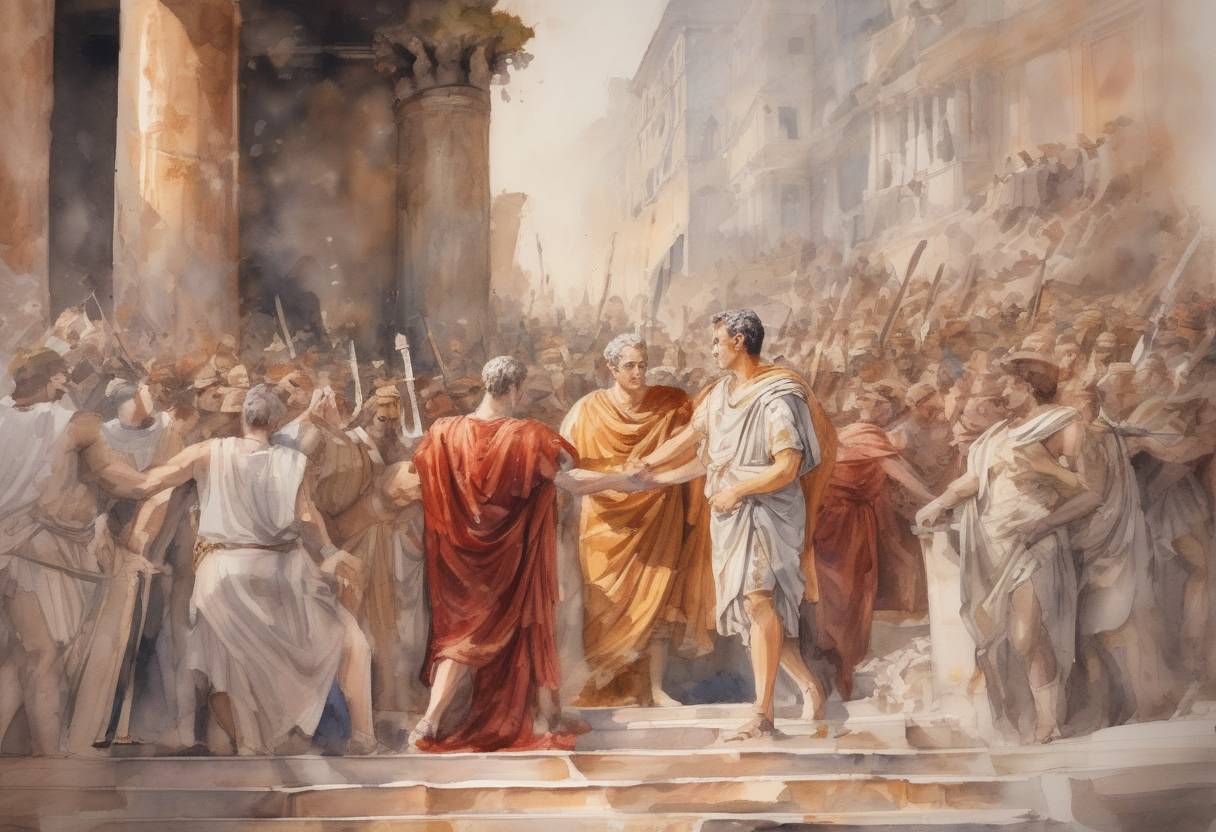
On September 14, 81 CE, the Roman Empire witnessed a significant transition in leadership with the death of Emperor Titus Flavius Vespasianus, commonly known as Titus. His passing marked the end of a brief but impactful reign and the beginning of his brother Domitian’s rule.
Titus was born on December 30, 39 CE, and was the elder son of Emperor Vespasian, the founder of the Flavian dynasty. Before becoming emperor, Titus had established himself as a capable military leader, notably commanding Roman forces during the Siege of Jerusalem in 70 CE, which culminated in the destruction of the Second Temple—a pivotal event in Jewish history.
Titus ascended to the throne on June 24, 79 CE, following the death of his father, Vespasian. His reign, though short-lived, was marked by several significant events, including the completion of the Colosseum and the catastrophic eruption of Mount Vesuvius in 79 CE, which buried the cities of Pompeii and Herculaneum.
Titus’s death at the age of 41 was sudden and unexpected. Ancient sources, such as the historian Suetonius, suggest that he died of a fever, although there were rumors of foul play, possibly implicating his brother Domitian. However, these claims remain speculative and are not substantiated by concrete evidence.
Domitian, born on October 24, 51 CE, was the younger son of Vespasian. Unlike his brother, Domitian had not been groomed for leadership and had spent much of his early life in the shadow of his father and brother. Nevertheless, upon Titus’s death, Domitian was declared emperor without opposition, marking the continuation of the Flavian dynasty.
Domitian’s rule lasted from 81 CE until his assassination in 96 CE. His reign was characterized by significant developments in the Roman Empire, including extensive building projects, economic reforms, and military campaigns. However, Domitian’s autocratic style and increasing paranoia led to tensions with the Senate and the elite, ultimately culminating in his assassination.
The transition from Titus to Domitian is a notable moment in Roman history, highlighting the complexities of imperial succession and the challenges of maintaining stability within the empire. While Titus is often remembered for his benevolent rule and public works, Domitian’s legacy is more controversial, marked by both achievements and tyranny.
The events of September 14, 81 CE, underscore the volatile nature of Roman imperial politics and the enduring impact of the Flavian dynasty on the Roman Empire’s history.
Source: www.britannica.com