Abdication of Tsar Nicholas II: The End of the Romanov Dynasty
1917 · Pskov, Russia
Tsar Nicholas II of Russia abdicated the throne, marking the end of the Romanov dynasty.
July 17, 1918
The Romanov family, the last imperial dynasty of Russia, was executed by Bolsheviks in Yekaterinburg, marking a significant turning point in the Russian Revolution.
Yekaterinburg, Russia | Bolsheviks
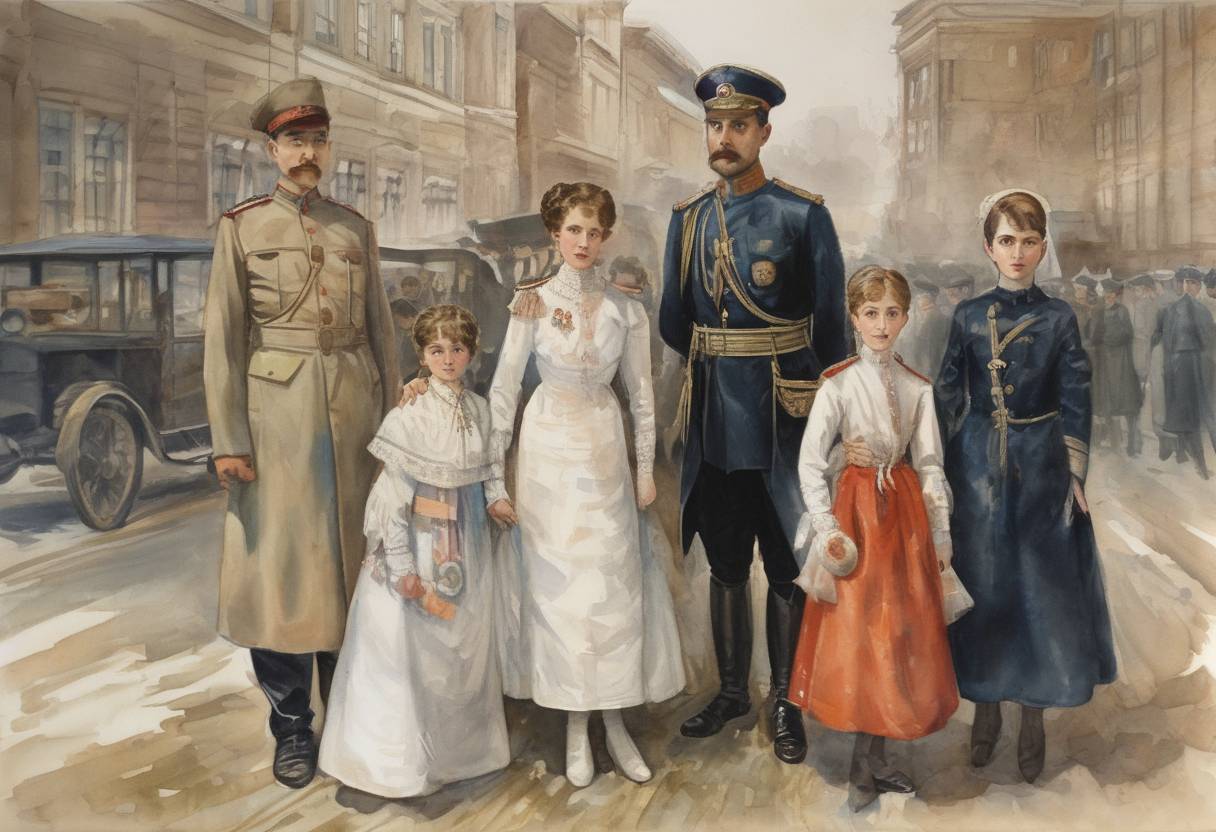
On July 17, 1918, the Romanov family, the last imperial dynasty of Russia, was executed by Bolshevik forces in the city of Yekaterinburg. This event marked a significant turning point in the Russian Revolution, symbolizing the definitive end of the Russian monarchy and the consolidation of Bolshevik power.
The Romanov dynasty had ruled Russia for over 300 years, beginning with Michael I in 1613. However, by the early 20th century, the monarchy was facing increasing challenges. Tsar Nicholas II’s reign was marked by military defeats, such as the Russo-Japanese War, and domestic unrest, culminating in the 1905 Revolution. The outbreak of World War I further strained the Russian economy and military, leading to widespread discontent.
In March 1917, the February Revolution forced Nicholas II to abdicate the throne, ending centuries of Romanov rule. The provisional government that followed was short-lived, as the Bolsheviks, led by Vladimir Lenin, seized power during the October Revolution later that year.
After his abdication, Nicholas II and his family were placed under house arrest. Initially held in the Alexander Palace, they were later moved to Tobolsk in Siberia. As the civil war intensified and the Bolsheviks feared that the Romanovs might become a rallying point for counter-revolutionary forces, they were relocated to the Ipatiev House in Yekaterinburg in April 1918.
The decision to execute the Romanovs was made by the Ural Soviet, a regional Bolshevik authority, with the approval of the central Bolshevik leadership. In the early hours of July 17, 1918, Nicholas II, his wife Alexandra, their five children (Olga, Tatiana, Maria, Anastasia, and Alexei), and four loyal attendants were awakened and told they were being moved to a safer location.
Instead, they were led to a basement room where they were summarily executed by a firing squad. The execution was brutal and chaotic, with some family members and attendants surviving the initial volley and being killed by bayonets and gunshots.
The execution of the Romanov family was initially shrouded in secrecy, with the Bolsheviks only announcing Nicholas II’s death. The fate of the rest of the family was not confirmed until years later. The bodies were secretly buried in a forest outside Yekaterinburg, and their remains were not discovered until the late 20th century.
The execution marked a pivotal moment in the Russian Revolution, eliminating the possibility of a monarchical restoration and solidifying Bolshevik control. It also sent a clear message to the world about the lengths to which the Bolsheviks would go to maintain their power.
The Romanovs were canonized as martyrs by the Russian Orthodox Church Outside Russia in 1981 and by the Russian Orthodox Church inside Russia in 2000. Their story continues to captivate historians and the public, symbolizing the dramatic and often tragic transformations of early 20th-century Russia.
Source: en.wikipedia.org