Richard II Crowned King of England
1377 · London, England
Richard II was crowned King of England at the age of 10.
June 21, 1377
King Edward III of England died, marking the end of his 50-year reign and the beginning of the reign of his grandson, Richard II.
London, England | English Monarchy
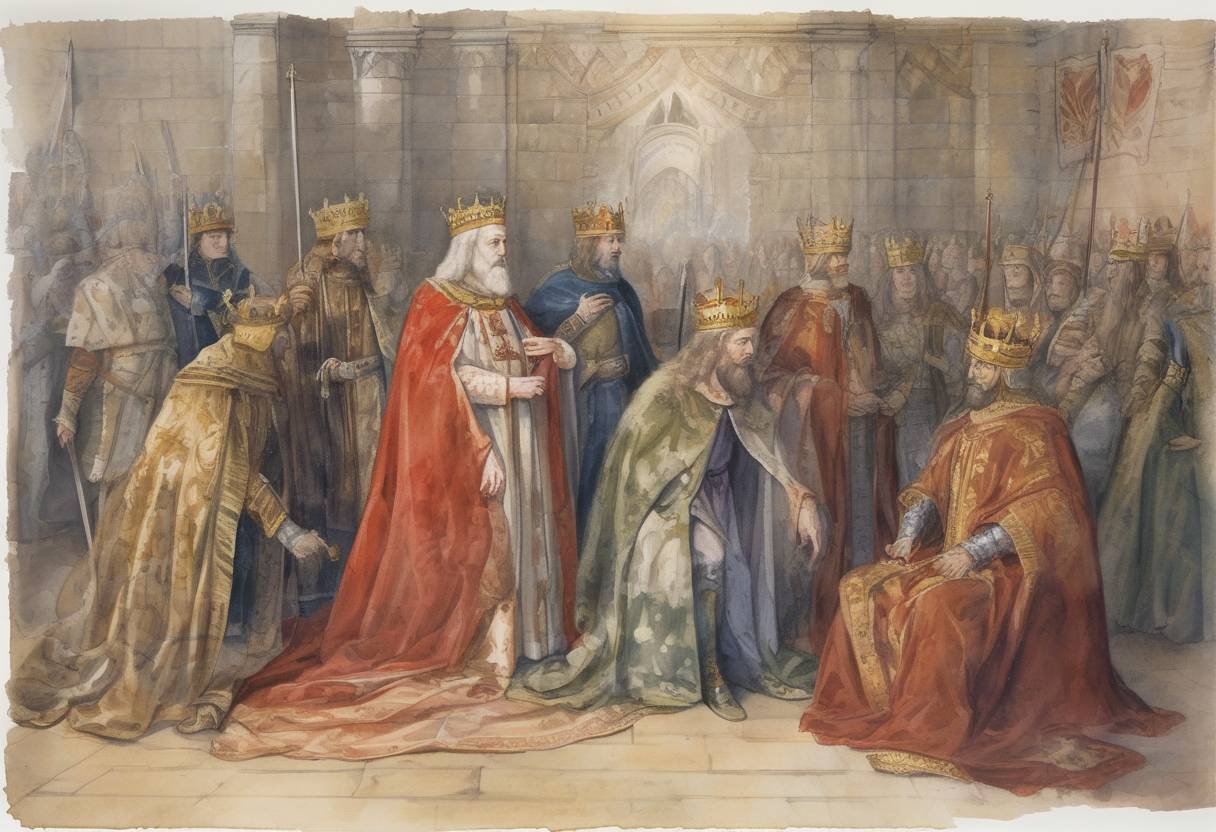
On June 21, 1377, King Edward III of England passed away, marking the end of a remarkable 50-year reign and ushering in the era of his grandson, Richard II. Edward III’s reign was one of the longest in English history and was characterized by significant military, political, and social developments.
Edward III ascended to the throne in 1327, following the deposition of his father, Edward II. His reign is often noted for the following key aspects:
The Hundred Years’ War: Edward III is perhaps best known for his role in the early phases of the Hundred Years’ War against France. His claim to the French throne, through his mother Isabella, was a primary catalyst for the conflict. Notable victories during his reign include the Battle of Crécy in 1346 and the capture of Calais in 1347.
The Black Death: The catastrophic outbreak of the Black Death in 1348-1350 had a profound impact on England, drastically reducing the population and leading to significant social and economic changes.
Parliamentary Developments: Edward III’s reign saw the evolution of the English Parliament, with the establishment of the Commons as a distinct body and the regular summoning of Parliament to approve taxes, setting precedents for future governance.
The Order of the Garter: In 1348, Edward III founded the Order of the Garter, one of the oldest and most prestigious orders of chivalry in the world, reflecting his interest in chivalric ideals and knighthood.
Upon Edward III’s death, the crown passed to his grandson, Richard II, as Edward’s eldest son, the Black Prince, had predeceased him in 1376. Richard II was only ten years old at the time of his accession, leading to a regency period dominated by his uncles, particularly John of Gaunt.
Youth and Regency: Richard II’s youth and inexperience posed challenges, as the regency had to navigate political factions and external threats.
Peasants’ Revolt: Richard’s reign would soon face significant challenges, including the Peasants’ Revolt of 1381, a major uprising driven by social and economic grievances exacerbated by the aftermath of the Black Death.
Legacy of Edward III: Edward III left a mixed legacy, with his military successes and administrative reforms overshadowed by the financial strain of prolonged warfare and the social upheaval of the Black Death.
The transition from Edward III to Richard II marked a pivotal moment in English history, setting the stage for future conflicts and transformations that would shape the medieval kingdom.
Source: en.wikipedia.org