Martin Luther King Jr. Awarded the Nobel Peace Prize
1964 · Oslo, Norway
Martin Luther King Jr. was awarded the Nobel Peace Prize for his nonviolent resistance to racial prejudice in America.
December 10, 1964
Dr. Martin Luther King Jr. received the Nobel Peace Prize for his nonviolent struggle against racial segregation and discrimination in the United States.
Oslo, Norway | Nobel Foundation
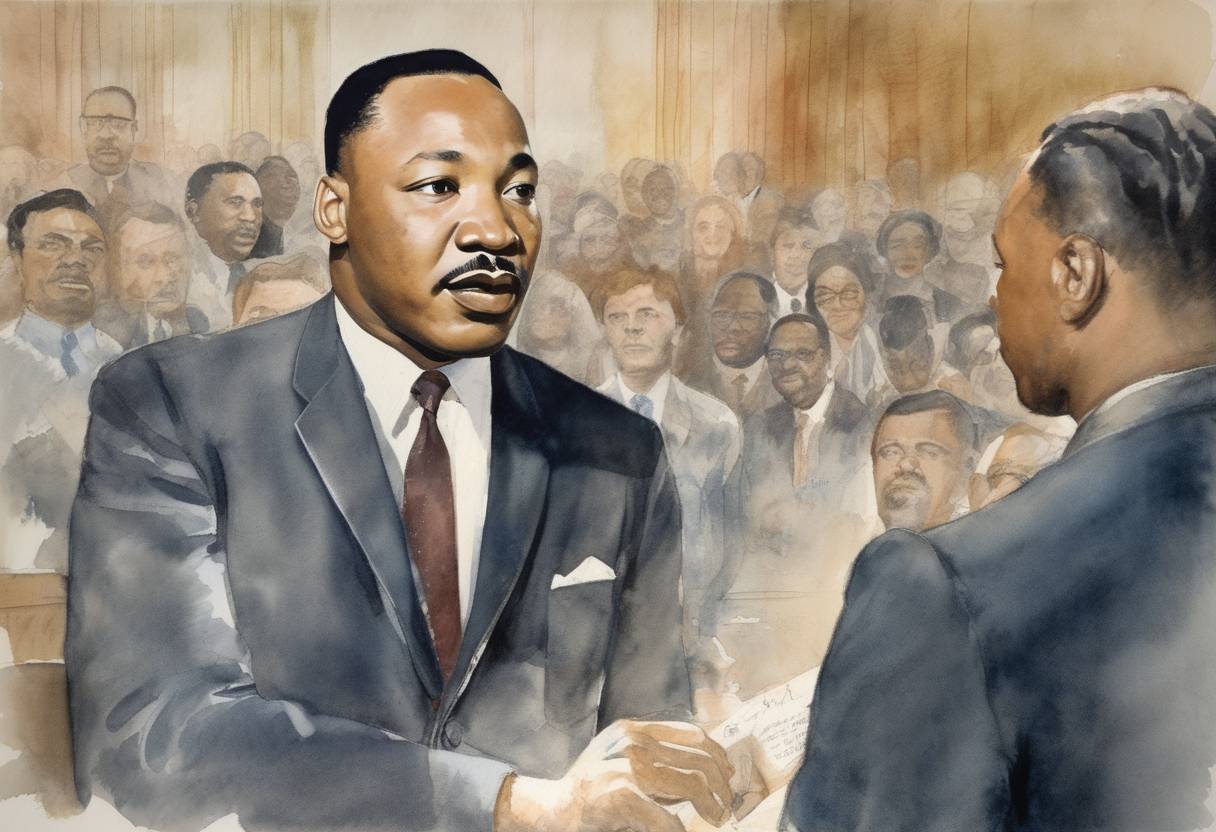
On December 10, 1964, Dr. Martin Luther King Jr. was awarded the Nobel Peace Prize for his exceptional leadership in the nonviolent struggle against racial segregation and discrimination in the United States. At the age of 35, he became the youngest recipient of the prize at that time, highlighting his significant impact on the Civil Rights Movement.
Dr. King’s journey toward this prestigious recognition was marked by his unwavering commitment to nonviolence and equality. Born on January 15, 1929, in Atlanta, Georgia, King emerged as a prominent leader during the Montgomery Bus Boycott in 1955, which was sparked by Rosa Parks’ refusal to give up her seat to a white passenger. This event marked the beginning of his influential role in the Civil Rights Movement.
King’s philosophy was deeply rooted in the teachings of Mahatma Gandhi, advocating for peaceful resistance as a means to achieve social change. His leadership in organizing nonviolent protests, such as the Birmingham Campaign and the March on Washington for Jobs and Freedom in 1963, where he delivered his iconic “I Have a Dream” speech, brought national and international attention to the struggle for civil rights in America.
The Nobel Peace Prize ceremony took place in Oslo, Norway, where King delivered a powerful acceptance speech. In his address, he emphasized the importance of nonviolence and the urgent need for racial equality and justice. He dedicated the prize to the Civil Rights Movement and its supporters, acknowledging the collective efforts of countless individuals who fought for freedom and dignity.
King’s acceptance speech also highlighted the broader implications of the civil rights struggle, linking it to global issues of poverty, war, and injustice. He expressed hope that the award would inspire continued efforts toward achieving peace and equality worldwide.
Receiving the Nobel Peace Prize significantly elevated King’s profile on the international stage, further legitimizing the Civil Rights Movement and its goals. It also provided him with a larger platform to advocate for social justice and human rights.
The prize money, which amounted to approximately $54,000, was used to support the ongoing efforts of the Southern Christian Leadership Conference (SCLC) and other civil rights initiatives. King’s recognition by the Nobel Committee underscored the moral and ethical dimensions of the struggle for civil rights, reinforcing the importance of nonviolent resistance as a powerful tool for social change.
Dr. Martin Luther King Jr.’s receipt of the Nobel Peace Prize remains a pivotal moment in the history of the Civil Rights Movement, symbolizing the triumph of nonviolence and the enduring fight for equality and justice.
Source: en.wikipedia.org