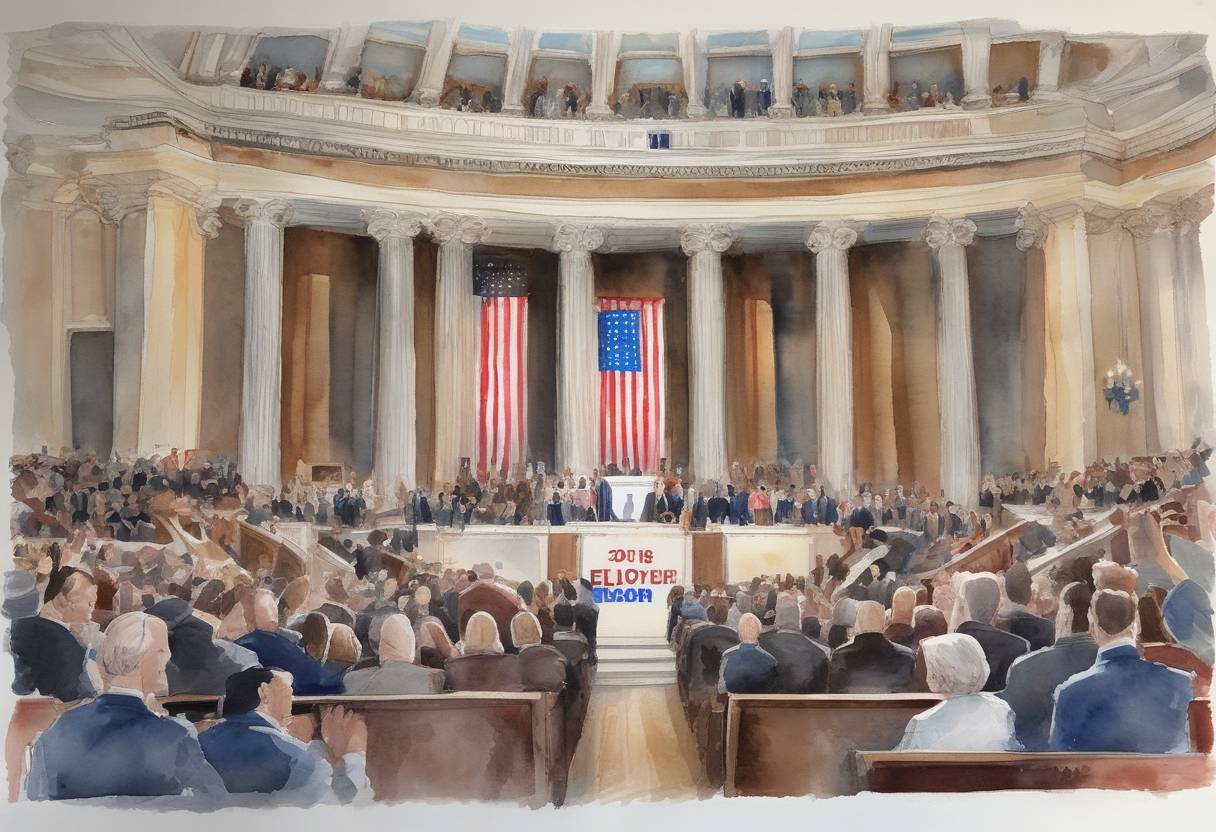
United States Midterm Elections - November 6, 2018
The United States midterm elections held on November 6, 2018, were a significant event in American political history, marked by a shift in the balance of power within Congress and notable demographic changes among elected officials.
Context and Background
The 2018 midterm elections took place during the presidency of Donald Trump, a period characterized by heightened political polarization and activism. These elections were seen as a referendum on Trump’s presidency and policies, with both major parties mobilizing efforts to sway voter turnout.
Key Outcomes
House of Representatives: The Democratic Party gained control of the House of Representatives, flipping 41 seats from Republican to Democrat. This shift ended the Republican majority that had been in place since 2011 and was largely driven by suburban districts where voters expressed dissatisfaction with the Trump administration.
Senate: The Republican Party retained control of the Senate, even gaining two additional seats. This outcome was influenced by the electoral map, which favored Republicans as more Democratic seats were up for election in states that had supported Trump in the 2016 presidential election.
Notable Features
High Voter Turnout: The 2018 midterms saw the highest voter turnout for a midterm election in over a century, with approximately 50% of eligible voters participating. This surge was attributed to increased political engagement and mobilization efforts by both parties.
Diversity and Representation: The election was historic for the election of a record number of women and minority candidates. Notable firsts included:
- Rashida Tlaib and Ilhan Omar became the first Muslim women elected to Congress.
- Sharice Davids and Deb Haaland became the first Native American women elected to Congress.
- Alexandria Ocasio-Cortez became the youngest woman ever elected to Congress at the age of 29.
Aftermath and Significance
The 2018 midterm elections had several significant consequences:
Legislative Dynamics: With Democrats controlling the House, there was increased oversight of the Trump administration, leading to numerous investigations and heightened scrutiny of executive actions.
Policy Implications: The divided Congress resulted in legislative gridlock on many issues, although some bipartisan agreements were reached on specific matters such as criminal justice reform.
Political Landscape: The results highlighted shifting political dynamics, particularly in suburban areas, and set the stage for the 2020 presidential election. The increased diversity among elected officials also reflected broader societal changes and demands for more inclusive representation.
Overall, the 2018 midterm elections were a pivotal moment in U.S. politics, reflecting both the challenges and opportunities of a rapidly changing political landscape.