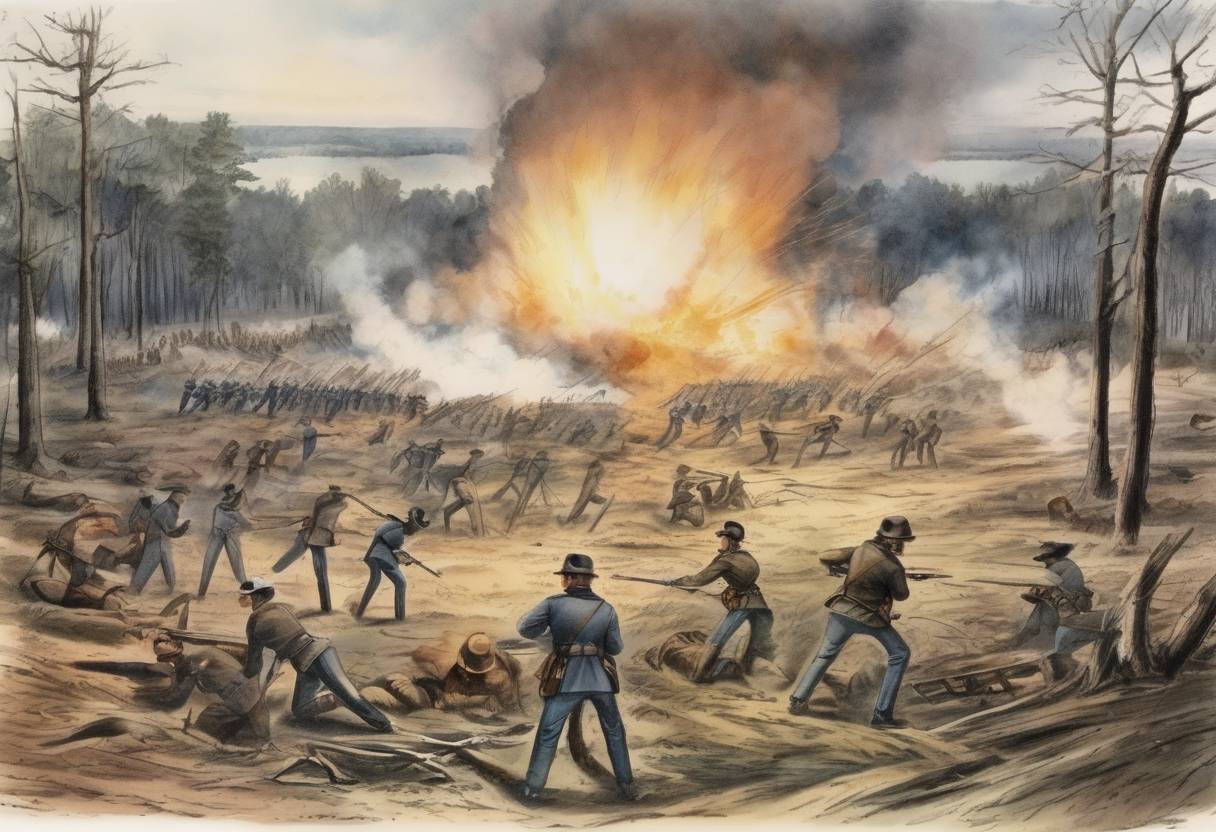
The Battle of the Crater: July 30, 1864
The Battle of the Crater was a significant and dramatic event during the American Civil War, occurring on July 30, 1864, during the Siege of Petersburg, Virginia. This battle is remembered for its innovative yet ultimately disastrous execution by Union forces.
Context and Prelude
The Siege of Petersburg was a critical campaign aimed at cutting off the Confederate capital of Richmond from vital supply lines. Union General Ulysses S. Grant sought to break the stalemate and gain a decisive advantage. The Union forces, under the command of Major General Ambrose Burnside, devised a bold plan to break through the Confederate defenses.
The plan involved digging a tunnel beneath the Confederate lines and filling it with explosives. The idea was to create a massive explosion that would obliterate a section of the Confederate defenses, allowing Union troops to charge through the breach and capture Petersburg.
The Explosion
On the morning of July 30, 1864, Union forces detonated the mine, creating a massive crater—170 feet long, 60 feet wide, and 30 feet deep. The explosion was successful in terms of its immediate impact, killing and wounding many Confederate soldiers and creating chaos within their ranks.
The Attack and Its Failure
Despite the initial success of the explosion, the subsequent Union attack was poorly executed. Several factors contributed to the failure:
Leadership and Planning Issues: There was confusion and a lack of clear leadership among Union commanders. The troops were not adequately prepared for the assault, and there was a failure to exploit the breach effectively.
Troop Movement: Union soldiers, instead of moving around the crater, charged directly into it, becoming disorganized and trapped. This made them easy targets for recovering Confederate forces.
Confederate Response: Confederate General Robert E. Lee and his forces quickly regrouped. Under the command of General William Mahone, Confederate troops launched a counterattack, inflicting heavy casualties on the Union soldiers trapped in the crater.
Aftermath and Consequences
The Battle of the Crater ended in a disastrous defeat for the Union, with approximately 3,800 Union casualties compared to 1,500 Confederate casualties. The failure to capitalize on the initial success of the explosion prolonged the Siege of Petersburg, which continued until April 1865.
The battle highlighted issues of leadership and coordination within the Union Army and underscored the challenges of siege warfare. It also had significant implications for the careers of those involved, particularly for General Burnside, who faced criticism and was relieved of command.
Broader Historical Significance
The Battle of the Crater is often cited as a case study in military strategy and the importance of effective leadership and planning. It also reflects the brutal and costly nature of the Civil War, where innovative tactics sometimes led to unforeseen and tragic outcomes. Despite its failure, the battle remains a poignant reminder of the complexities and human cost of war.