Execution of the Inca King Dauphin on November 20, 1541
1541 · Jaén, Peru
After its capture by Spanish conquistadors, King Dauphin of the Inca Empire and his court were executed by Francisco Pizarro in Jaén, Peru.
August 29, 1533
Atahualpa, the last Inca Emperor, was executed by Spanish conquistadors under Francisco Pizarro's command, marking a significant event in the Spanish conquest of the Inca Empire.
Cajamarca, Peru | Spanish Conquistadors
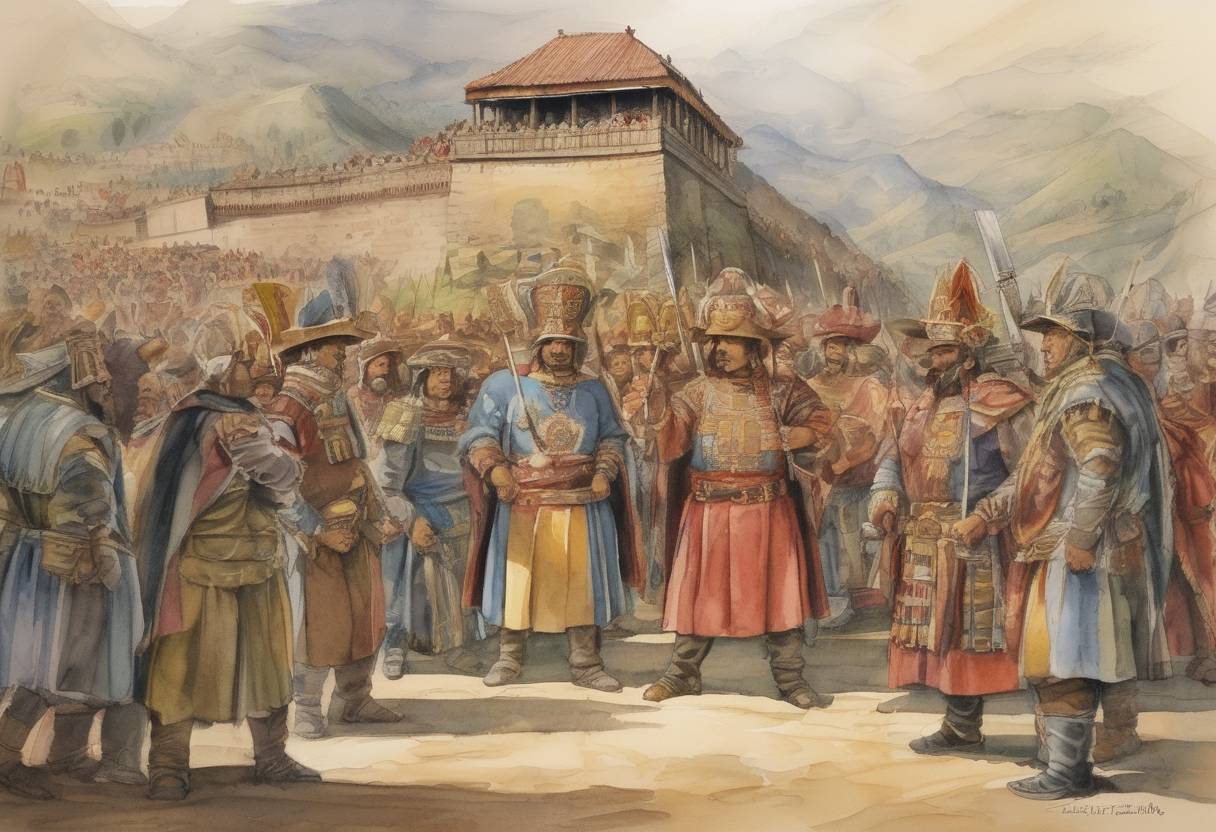
On August 29, 1533, Atahualpa, the last sovereign emperor of the Inca Empire, was executed by Spanish conquistadors under the command of Francisco Pizarro. This event marked a pivotal moment in the Spanish conquest of the Inca Empire, leading to the eventual collapse of one of the most powerful indigenous civilizations in the Americas.
Atahualpa became the Inca emperor after a civil war with his half-brother Huáscar, which weakened the empire and made it more vulnerable to external threats. The Spanish, led by Francisco Pizarro, arrived in the Inca territory in 1532, during a time of internal strife and instability.
Capture at Cajamarca: On November 16, 1532, Atahualpa was captured by Pizarro’s forces during a surprise attack in the town of Cajamarca. Despite being heavily outnumbered, the Spanish used superior weaponry and tactics to seize the emperor.
Ransom and Negotiations: Atahualpa, in an attempt to secure his release, offered a ransom of a room filled with gold and silver. The Incas fulfilled this promise, delivering vast amounts of treasure to the Spanish.
Trial and Accusations: Despite the ransom being paid, the Spanish accused Atahualpa of various charges, including plotting against them and practicing idolatry. These accusations were largely fabricated to justify his execution.
Execution: On August 29, 1533, Atahualpa was executed by garrote, a method of strangulation. Initially sentenced to be burned at the stake, he was offered a more “merciful” death by strangulation after agreeing to convert to Christianity.
Impact on the Inca Empire: Atahualpa’s death marked the end of effective Inca resistance to Spanish conquest. The power vacuum and ensuing chaos facilitated the Spanish consolidation of control over the vast Inca territories.
Broader Historical Significance: The execution of Atahualpa symbolized the fall of the Inca Empire and the beginning of Spanish dominance in South America. It highlighted the devastating impact of European colonization on indigenous civilizations.
The execution of Atahualpa was a critical event in the history of the Americas, illustrating the clash of cultures and the tragic consequences of European imperial ambitions. It set the stage for the further expansion of Spanish influence and the profound transformation of the continent’s social and political landscapes.
Source: www.britannica.com