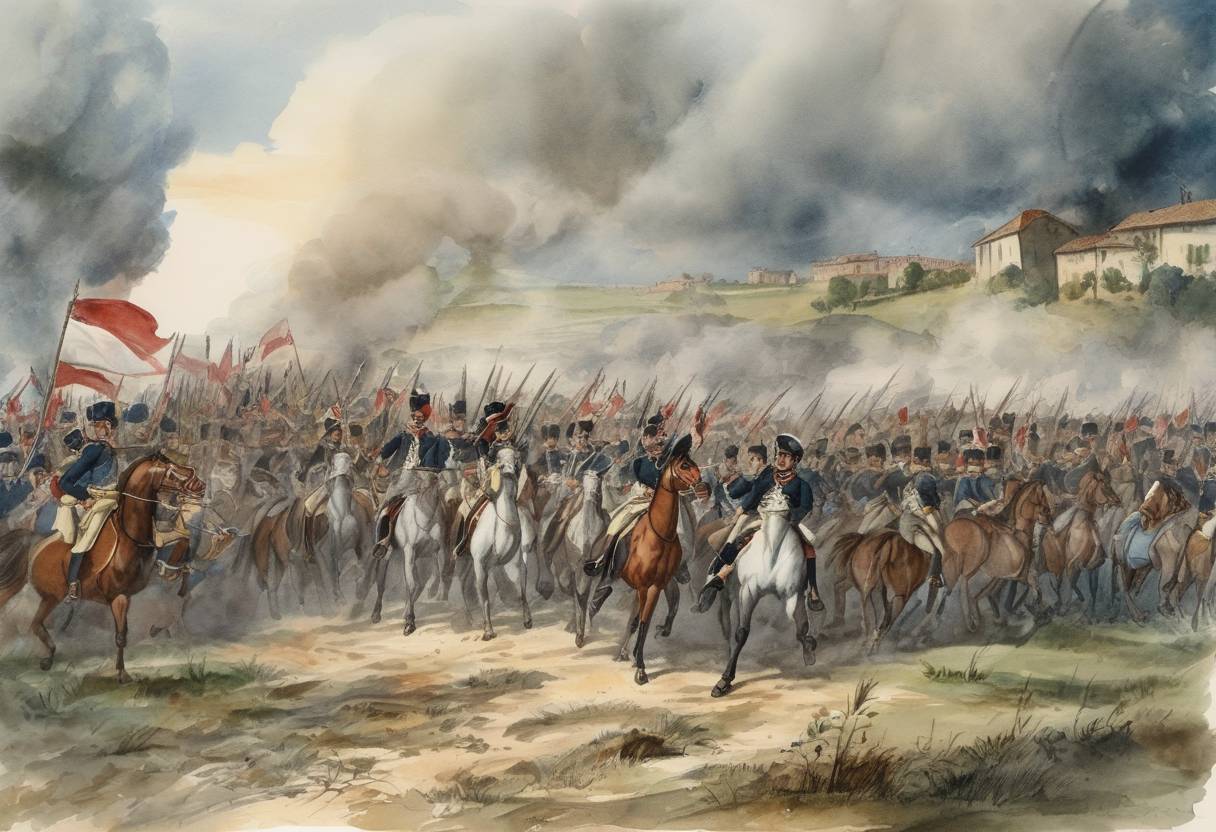
The Battle of Marengo: June 14, 1800
The Battle of Marengo, fought on June 14, 1800, was a pivotal engagement during the War of the Second Coalition, part of the broader Napoleonic Wars. This battle saw the forces of Napoleon Bonaparte, leading the French Army, achieve a significant victory over the Austrian army commanded by General Michael von Melas in the plains of Piedmont, near Alessandria in northern Italy.
Context and Prelude
- War of the Second Coalition: The battle was part of the War of the Second Coalition (1798-1802), where European monarchies, including Austria, Russia, and Great Britain, sought to contain the spread of revolutionary France.
- Napoleon’s Return to Power: In November 1799, Napoleon Bonaparte had seized power in France through the Coup of 18 Brumaire, becoming First Consul. He aimed to consolidate his rule by securing military victories.
- Strategic Importance: Control of northern Italy was crucial for both France and Austria. It served as a gateway for further operations into the heart of Europe.
The Battle
- Initial Austrian Success: On the morning of June 14, the Austrian forces launched a surprise attack on the French, initially pushing them back. General Melas believed he had secured a decisive victory by midday.
- French Reinforcements and Counterattack: Napoleon, however, had strategically held back reserves. In the afternoon, General Louis Desaix arrived with reinforcements. His timely intervention turned the tide.
- Desaix’s Role and Death: Desaix’s counterattack was crucial, but he was killed during the fighting. His actions, however, allowed the French to regroup and launch a decisive counteroffensive.
- Austrian Retreat: By evening, the French forces had overwhelmed the Austrians, forcing them into a chaotic retreat.
Aftermath and Significance
- French Control of Italy: The victory at Marengo solidified French control over northern Italy, forcing the Austrians to retreat and eventually negotiate peace.
- Treaty of Lunéville: The battle led to the Treaty of Lunéville in February 1801, which confirmed French dominance in Italy and the Rhine, reshaping the European political landscape.
- Napoleon’s Prestige: The victory bolstered Napoleon’s reputation as a military genius and strengthened his political position in France, paving the way for his eventual proclamation as Emperor in 1804.
Broader Historical Impact
The Battle of Marengo was not just a tactical victory but a strategic triumph that demonstrated Napoleon’s military acumen and ability to inspire and lead his troops under pressure. It marked a turning point in the Napoleonic Wars, showcasing the effectiveness of rapid maneuver warfare and the importance of decisive leadership in battle.