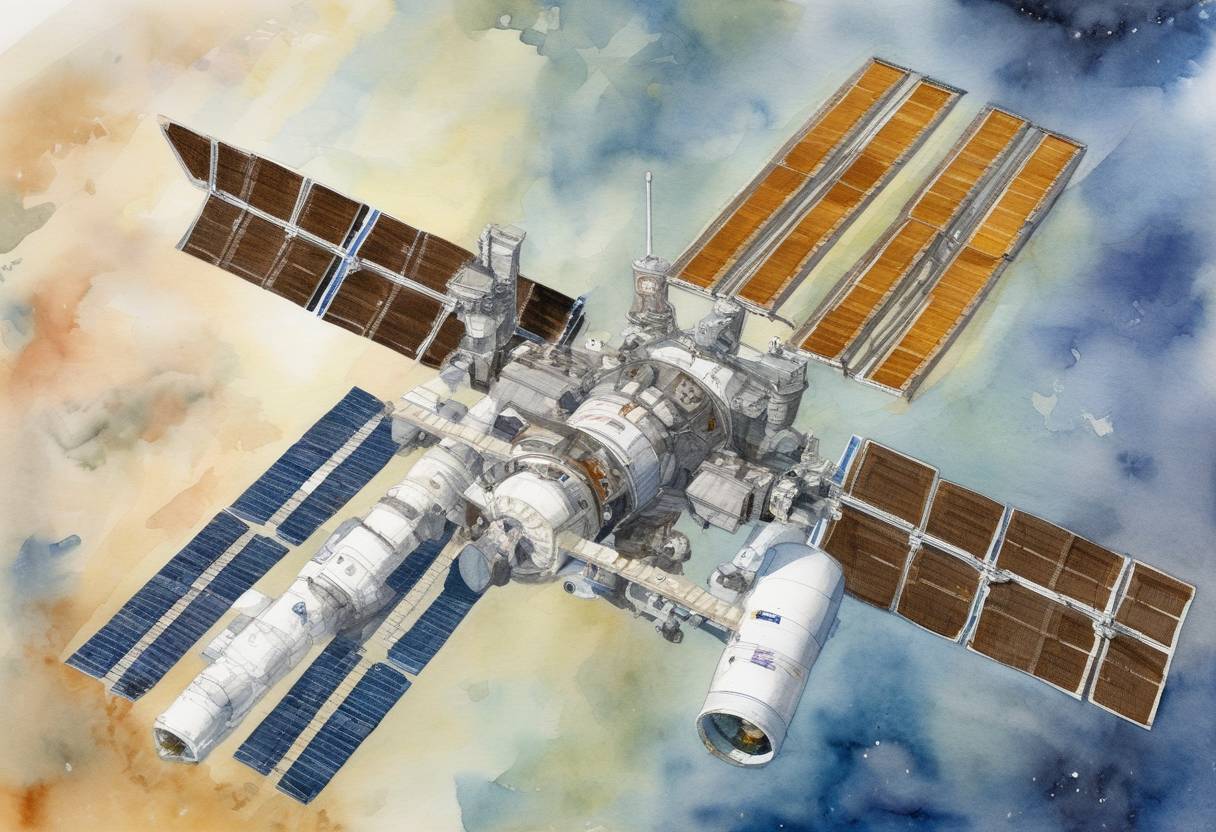
The Delivery of the Tranquility Module to the ISS
On February 19, 2010, the International Space Station (ISS) received its final major module, the Tranquility module, also known as Node 3. This significant event marked a pivotal moment in the construction and expansion of the ISS, enhancing its capabilities and living space for astronauts.
Background
The ISS is a collaborative project involving space agencies from the United States (NASA), Russia (Roscosmos), Europe (ESA), Japan (JAXA), and Canada (CSA). Construction of the ISS began in 1998, and over the years, it has been assembled piece by piece in orbit. The Tranquility module was part of the final stages of this assembly process.
The Tranquility Module
Design and Purpose: Tranquility was built by the European Space Agency and Thales Alenia Space. It serves as a life-support hub, housing vital systems for water recycling, air revitalization, and waste management. The module also provides additional space for crew quarters and exercise equipment, significantly improving the living conditions aboard the ISS.
Features: Tranquility includes advanced environmental control systems and is equipped with ports for additional modules or visiting spacecraft. It also hosts the Cupola, a seven-windowed observatory module that offers astronauts stunning views of Earth and space, enhancing their ability to conduct scientific observations and photography.
Delivery by Space Shuttle Endeavour
Mission STS-130: The delivery of the Tranquility module was carried out by the Space Shuttle Endeavour during mission STS-130. The mission launched from Kennedy Space Center on February 8, 2010, and was the 32nd shuttle mission to the ISS.
Installation: After Endeavour docked with the ISS, astronauts conducted three spacewalks to install Tranquility. The module was attached to the port side of the Unity node, and the Cupola was relocated to its final position on Tranquility, providing a panoramic view of the Earth.
Significance and Aftermath
Completion of Major Construction: The addition of Tranquility marked the completion of the ISS’s major structural components, allowing the station to support a larger crew and more scientific research.
Enhanced Capabilities: With Tranquility, the ISS could better support long-duration missions, contributing to research that benefits life on Earth and prepares humanity for future exploration missions, including those to Mars.
International Collaboration: The successful delivery and integration of Tranquility underscored the importance of international cooperation in space exploration, showcasing the combined efforts of multiple space agencies and countries.
The installation of the Tranquility module was a testament to human ingenuity and collaboration, marking a milestone in the ongoing mission of the ISS to serve as a platform for scientific discovery and international partnership in space.