The Great Fire of Boston - March 20, 1760
1760 · Boston, United States
The Great Fire of Boston destroyed 349 buildings, significantly impacting the city and leading to changes in building regulations.
January 15, 1919
The Great Molasses Flood occurred in Boston, Massachusetts, when a large storage tank burst, releasing a wave of molasses that killed 21 people.
Boston, United States | Purity Distilling Company
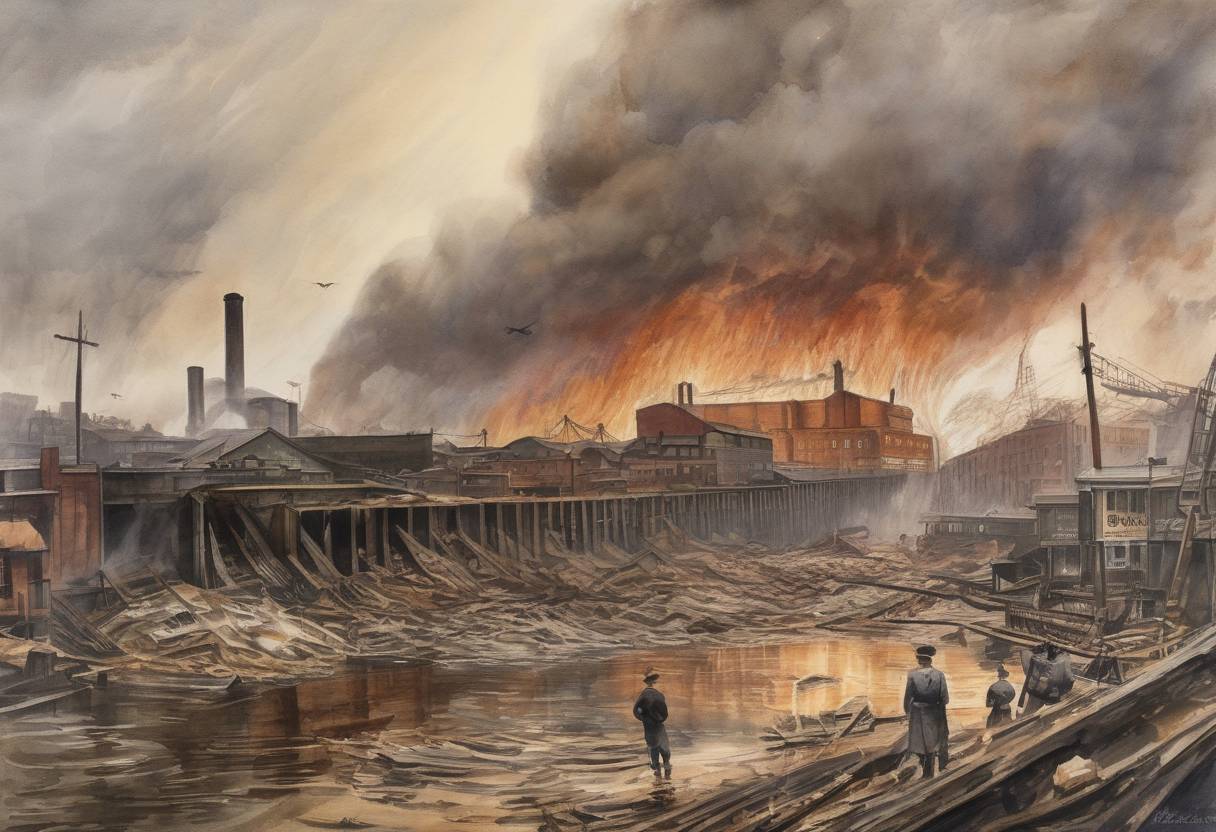
On January 15, 1919, a catastrophic event known as the Great Molasses Flood occurred in the North End neighborhood of Boston, Massachusetts. This unusual disaster resulted from the sudden rupture of a large storage tank containing approximately 2.3 million gallons of molasses, leading to a deadly wave that claimed the lives of 21 people and injured around 150 others.
The storage tank was owned by the Purity Distilling Company, a subsidiary of United States Industrial Alcohol (USIA). The molasses stored in the tank was intended for the production of industrial alcohol, which was in high demand during World War I for the manufacture of munitions. The tank, constructed in 1915, was 50 feet tall and 90 feet in diameter. Reports suggest that the tank had been leaking molasses since its construction, but these concerns were largely ignored by the company.
At approximately 12:30 PM on January 15, 1919, the tank burst, releasing a massive wave of molasses that traveled at an estimated 35 miles per hour. The wave was reported to be 25 feet high at its peak, engulfing the surrounding area. Buildings were swept off their foundations, and the elevated railway structure was damaged. The sheer force of the molasses wave trapped people and animals, making rescue efforts extremely difficult.
The cleanup operation was extensive and challenging, involving over 300 workers. The sticky molasses coated streets, buildings, and even the Boston Harbor, complicating the removal process. The cleanup took weeks, and the effects of the flood lingered for much longer, with molasses reportedly being tracked throughout the city by residents and workers.
The disaster led to a lengthy investigation and a landmark court case. The inquiry revealed that the tank had been poorly constructed and inadequately tested. The steel used was too thin, and the rivets were insufficient to hold the structure together under the pressure of the molasses. The court case, which lasted for several years, resulted in USIA being found liable for the disaster. The company paid out settlements totaling around \(628,000 (equivalent to approximately \)9 million today) to the victims and their families.
The Great Molasses Flood had significant implications for industrial safety standards. It highlighted the need for stricter regulations and oversight in the construction and maintenance of industrial facilities. The disaster also underscored the importance of corporate responsibility and accountability, setting a precedent for future litigation involving industrial accidents.
In the years since, the Great Molasses Flood has become a part of Boston’s local lore, remembered for its tragic impact and the lessons it imparted on industrial safety and engineering practices.
Source: en.wikipedia.org