Explorer 6: The First Satellite Images of Earth
1959 · Cape Canaveral, United States
The United States launched Explorer 6, which was equipped with a photocell scanner and became the first satellite to send back images of Earth from space.
July 26, 1963
The Syncom 2 satellite was launched by NASA, becoming the world's first geostationary communication satellite.
Cape Canaveral, United States | NASA
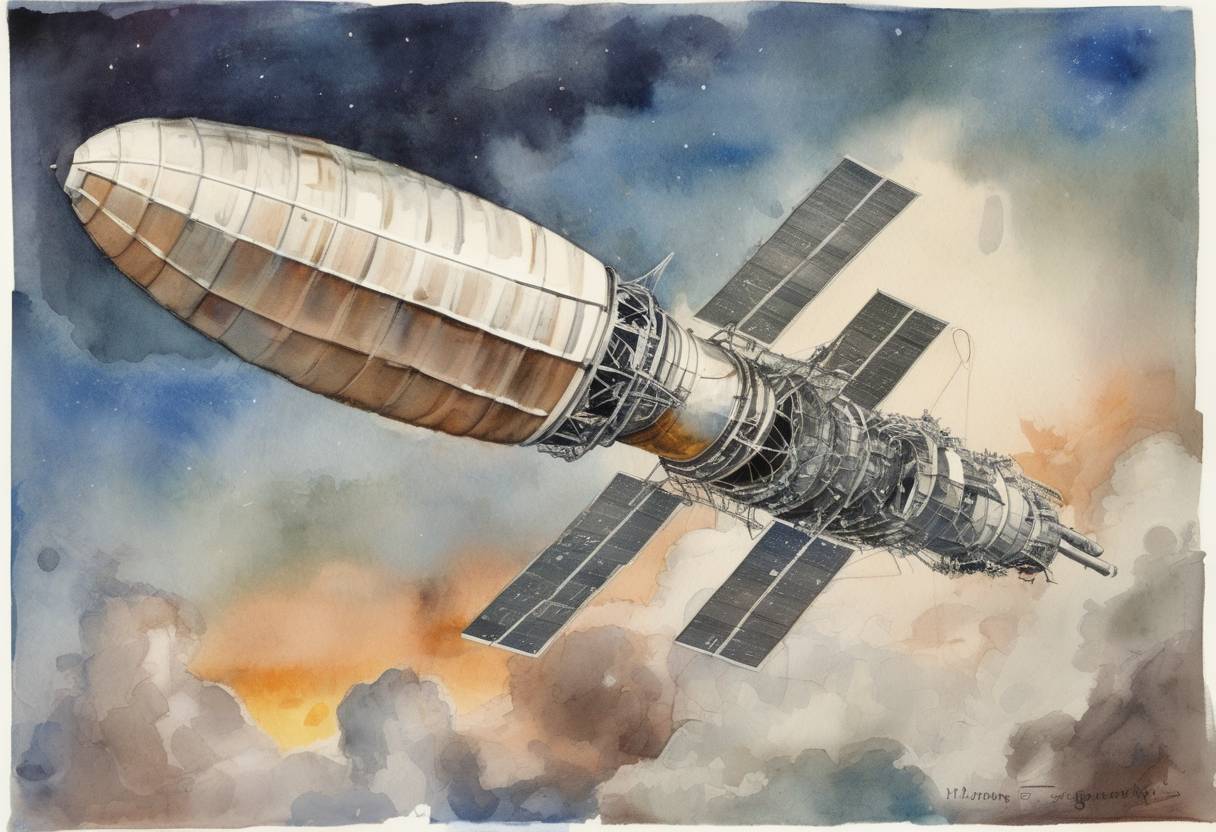
On July 26, 1963, NASA successfully launched Syncom 2, marking a significant milestone in space exploration and telecommunications. Syncom 2 became the world’s first geostationary communication satellite, paving the way for modern satellite communications.
Before the launch of Syncom 2, communication satellites were primarily in low Earth orbit, which required multiple satellites to provide continuous coverage. The concept of a geostationary satellite, which orbits the Earth at the same rotational speed as the planet, allowing it to remain fixed over a single point, was proposed by science fiction writer Arthur C. Clarke in 1945. This concept promised more efficient and reliable communication capabilities.
Syncom 2 was launched into a geosynchronous orbit, approximately 22,300 miles (35,900 kilometers) above the equator. Although it was not perfectly geostationary, as it had a slight inclination, it was the first satellite to demonstrate the feasibility of geostationary communication.
Syncom 2’s successful operation demonstrated the practicality of geostationary satellites for global communications. It facilitated the first live two-way telephone call via satellite between heads of state, President John F. Kennedy and Nigerian Prime Minister Abubakar Tafawa Balewa, showcasing its potential for international communication.
In summary, the launch of Syncom 2 on July 26, 1963, was a pivotal event in the history of telecommunications, demonstrating the potential of geostationary satellites and setting the stage for the interconnected world we live in today.
Source: en.wikipedia.org