Brazil's 2018 Presidential Election: First Round
2018 · Brasília, Brazil
Brazil held the first round of its presidential election, with Jair Bolsonaro and Fernando Haddad advancing to the runoff.
May 11, 2016
Brazil's Senate voted to suspend President Dilma Rousseff and begin an impeachment trial against her.
Brasília, Brazil | Brazilian Senate
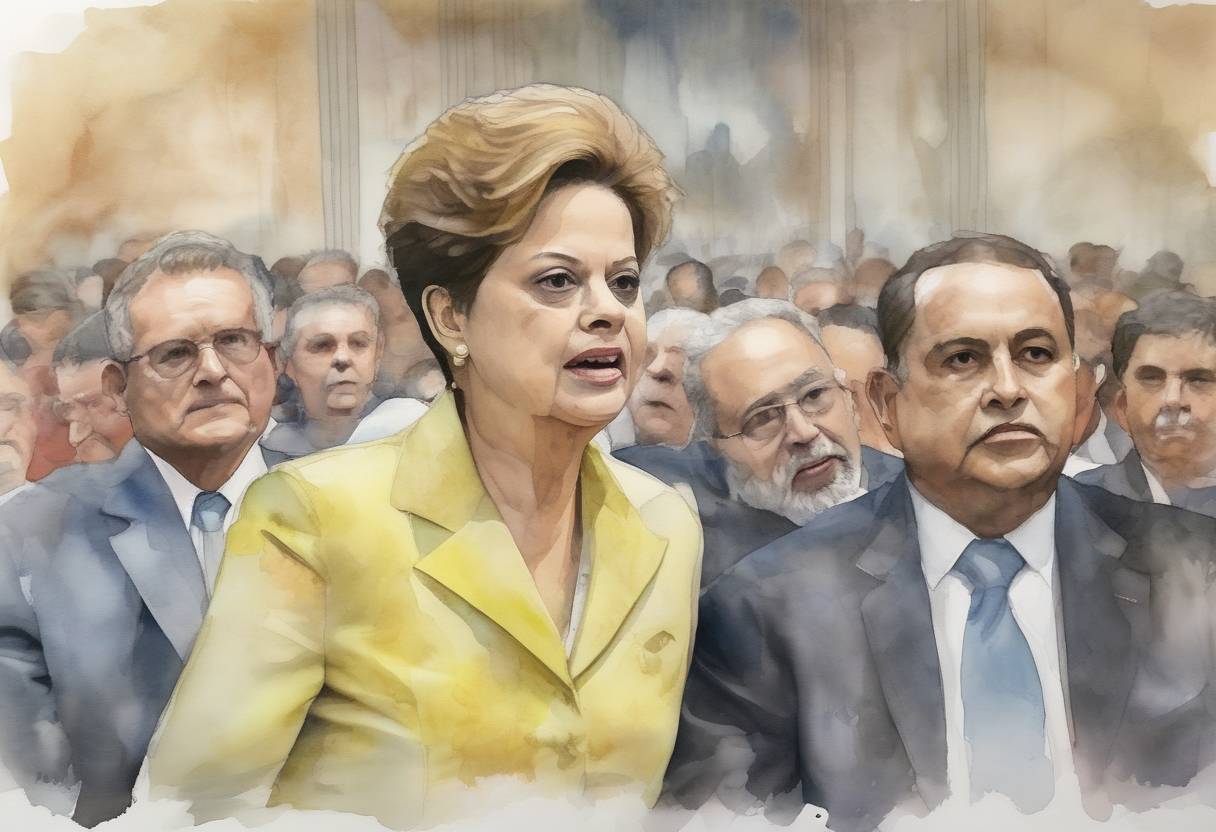
On May 11, 2016, the Brazilian Senate voted to suspend President Dilma Rousseff and initiate an impeachment trial against her. This significant political event marked a critical juncture in Brazil’s contemporary history, reflecting deep political and economic challenges within the country.
Dilma Rousseff, a member of the Workers’ Party (Partido dos Trabalhadores, PT), was Brazil’s first female president, having been elected in 2010 and re-elected in 2014. Her presidency was initially marked by economic growth and social welfare programs. However, her second term was plagued by a severe economic recession, rising unemployment, and a massive corruption scandal involving the state-controlled oil company, Petrobras.
The impeachment proceedings against Rousseff were primarily based on accusations of fiscal mismanagement. She was accused of using accounting tricks to hide the size of the budget deficit, a practice known as “fiscal pedaling.” These maneuvers allegedly violated Brazil’s fiscal responsibility laws.
Chamber of Deputies Vote: On April 17, 2016, the lower house of Brazil’s National Congress, the Chamber of Deputies, voted overwhelmingly in favor of impeachment, with 367 votes for and 137 against.
Senate Vote: Following the Chamber of Deputies’ decision, the Senate was required to vote on whether to proceed with the impeachment trial. On May 11, 2016, after a marathon session that lasted more than 20 hours, the Senate voted 55 to 22 in favor of suspending Rousseff and beginning the trial.
Suspension: With the Senate’s decision, Rousseff was immediately suspended from office for up to 180 days while the trial took place. During this period, Vice President Michel Temer assumed the role of acting president.
Impeachment Trial: The trial culminated on August 31, 2016, when the Senate voted 61 to 20 to remove Rousseff from office permanently. The decision ended 13 years of Workers’ Party rule in Brazil.
Political Climate: The impeachment deepened political divisions in Brazil. Supporters of Rousseff and the Workers’ Party viewed the impeachment as a coup, while opponents saw it as a necessary step to address corruption and economic mismanagement.
Economic and Social Impact: The political turmoil exacerbated Brazil’s economic challenges, contributing to a prolonged recession. The impeachment also sparked widespread protests and debates about the state of democracy in Brazil.
The impeachment of Dilma Rousseff was a pivotal moment in Brazilian politics, highlighting issues of governance, accountability, and the rule of law. It underscored the complexities of managing a large and diverse nation facing significant economic and social challenges. The event also had lasting implications for Brazil’s political landscape, influencing subsequent elections and the country’s approach to corruption and fiscal policy.
Source: www.bbc.com