The Fall of Vitellius: December 22, 69 AD
69 · Rome, Roman Empire
Vitellius, the Roman emperor, was captured and killed in Rome by Vespasian's forces, effectively ending his rule and the Year of the Four Emperors.
July 1, 0069
Tiberius Julius Alexander orders his Roman legions in Alexandria to swear allegiance to Vespasian as Emperor, marking a pivotal moment in the Year of the Four Emperors.
Alexandria, Roman Egypt | Roman Empire
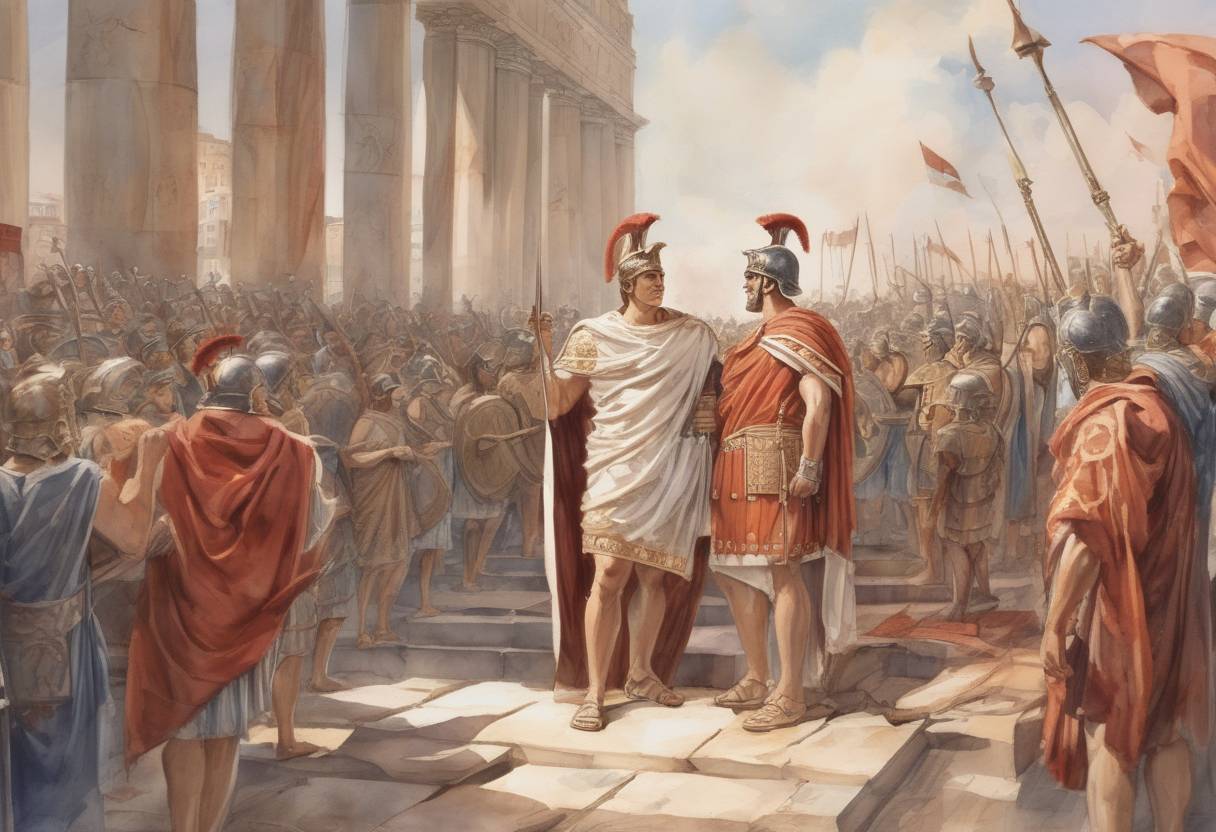
On July 1, 69 CE, Tiberius Julius Alexander, the Prefect of Egypt, played a crucial role in the tumultuous period known as the Year of the Four Emperors by ordering his Roman legions in Alexandria to swear allegiance to Vespasian as Emperor. This event marked a significant turning point in the power struggles that characterized this chaotic year in Roman history.
The Year of the Four Emperors was a period of civil war and political upheaval in the Roman Empire, following the death of Emperor Nero in 68 CE. The power vacuum led to a rapid succession of emperors: Galba, Otho, Vitellius, and finally Vespasian. Each claimed the imperial throne amidst widespread instability and conflict.
Tiberius Julius Alexander was a key figure in the Roman administration, serving as the Prefect of Egypt, a crucial province due to its grain supply to Rome. His support was vital for any claimant to the throne.
The events of July 1, 69 CE, underscore the importance of military allegiance and provincial support in the Roman imperial succession. Tiberius Julius Alexander’s decision to back Vespasian was pivotal in shaping the outcome of the Year of the Four Emperors, highlighting the complex interplay of military, political, and economic factors in Roman imperial politics.
Source: en.wikipedia.org