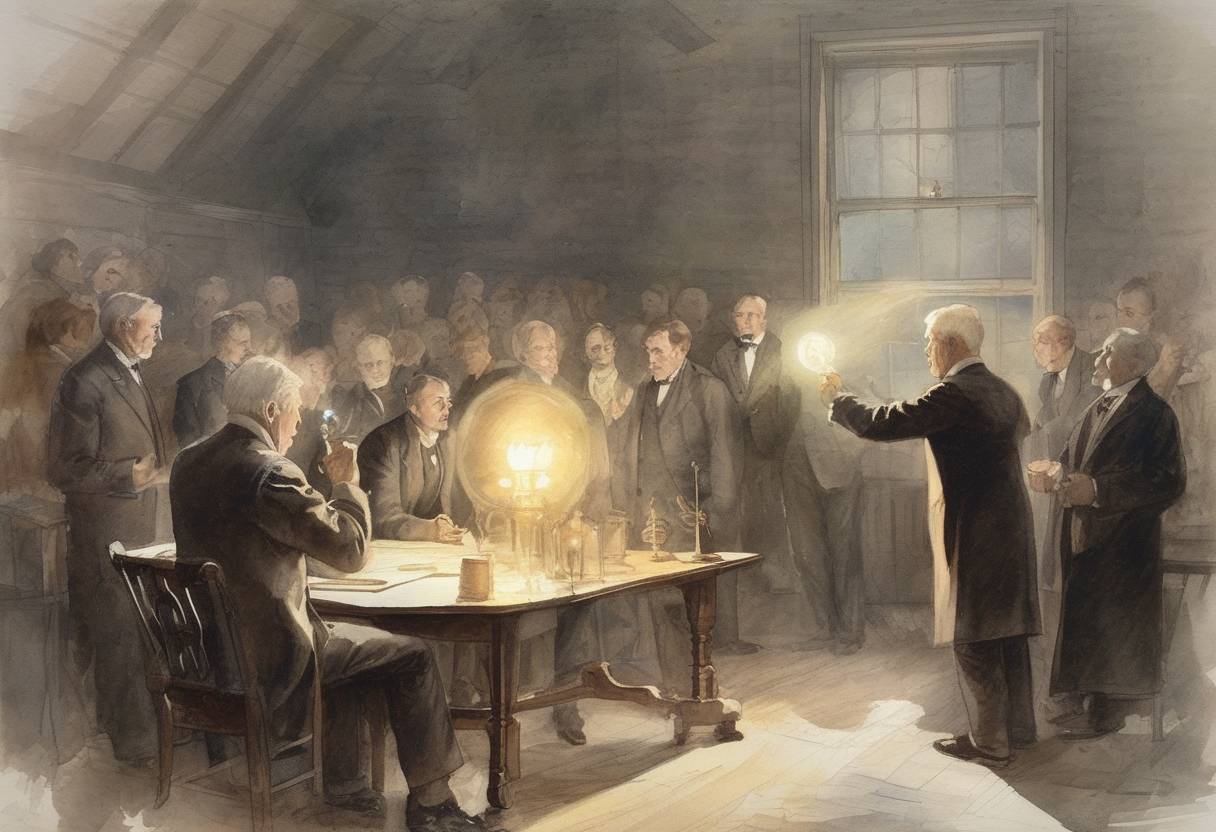
Thomas Edison’s Demonstration of Incandescent Lighting
On December 31, 1879, Thomas Edison publicly demonstrated his incandescent lighting system for the first time at his laboratory in Menlo Park, New Jersey. This event marked a pivotal moment in the history of electric lighting and had profound implications for the future of electricity and technology.
Background
Before Edison’s breakthrough, the primary sources of artificial light were gas lamps and candles, which were inefficient and posed safety hazards. The quest for a practical electric light had been ongoing, with several inventors attempting to create a viable solution. However, these early attempts were often hampered by short-lived filaments and high costs.
Edison, already a renowned inventor with successes like the phonograph, turned his attention to electric lighting in the late 1870s. He aimed to develop a long-lasting, affordable, and safe electric light bulb that could be used in homes and businesses.
The Demonstration
Edison’s demonstration on New Year’s Eve in 1879 was a culmination of months of experimentation and innovation. He invited a select group of investors, journalists, and local residents to witness the unveiling of his incandescent light bulb. The event took place at his Menlo Park laboratory, which was illuminated by dozens of electric lights, showcasing the potential of his invention.
The key to Edison’s success was his use of a carbonized bamboo filament, which proved to be more durable and efficient than previous materials. This filament, combined with a vacuum-sealed glass bulb, allowed the light to burn for extended periods without quickly burning out.
Impact and Significance
Edison’s demonstration was met with awe and excitement, capturing the public’s imagination and signaling the dawn of a new era in lighting. The success of the incandescent bulb led to the establishment of the Edison Electric Light Company and the eventual widespread adoption of electric lighting.
The impact of Edison’s invention extended beyond lighting. It paved the way for the development of electric power distribution systems, transforming industries and daily life. The ability to light homes and streets safely and efficiently contributed to longer working hours and increased productivity, fueling economic growth.
Aftermath
Following the demonstration, Edison continued to refine his lighting system and worked on creating an entire infrastructure for electric power distribution. By the early 1880s, cities like New York began installing electric lighting systems, and the use of electric light rapidly spread across the United States and the world.
Edison’s work laid the foundation for modern electrical engineering and technology, influencing countless innovations and shaping the 20th century. His demonstration at Menlo Park remains a landmark event in the history of technology and industry.
In summary, Thomas Edison’s public demonstration of incandescent lighting on December 31, 1879, was a transformative moment that revolutionized the use of electric light and set the stage for the electrification of the modern world.