The Battle of Copenhagen: April 2, 1801
1801 · Copenhagen, Denmark
The Battle of Copenhagen takes place during the War of the Second Coalition, where a British fleet under Admiral Sir Hyde Parker defeats a Danish-Norwegian fleet.
October 22, 1707
The Scilly naval disaster occurred when four British Royal Navy ships were wrecked off the Isles of Scilly, resulting in the loss of nearly 2,000 sailors.
Isles of Scilly, England | British Royal Navy
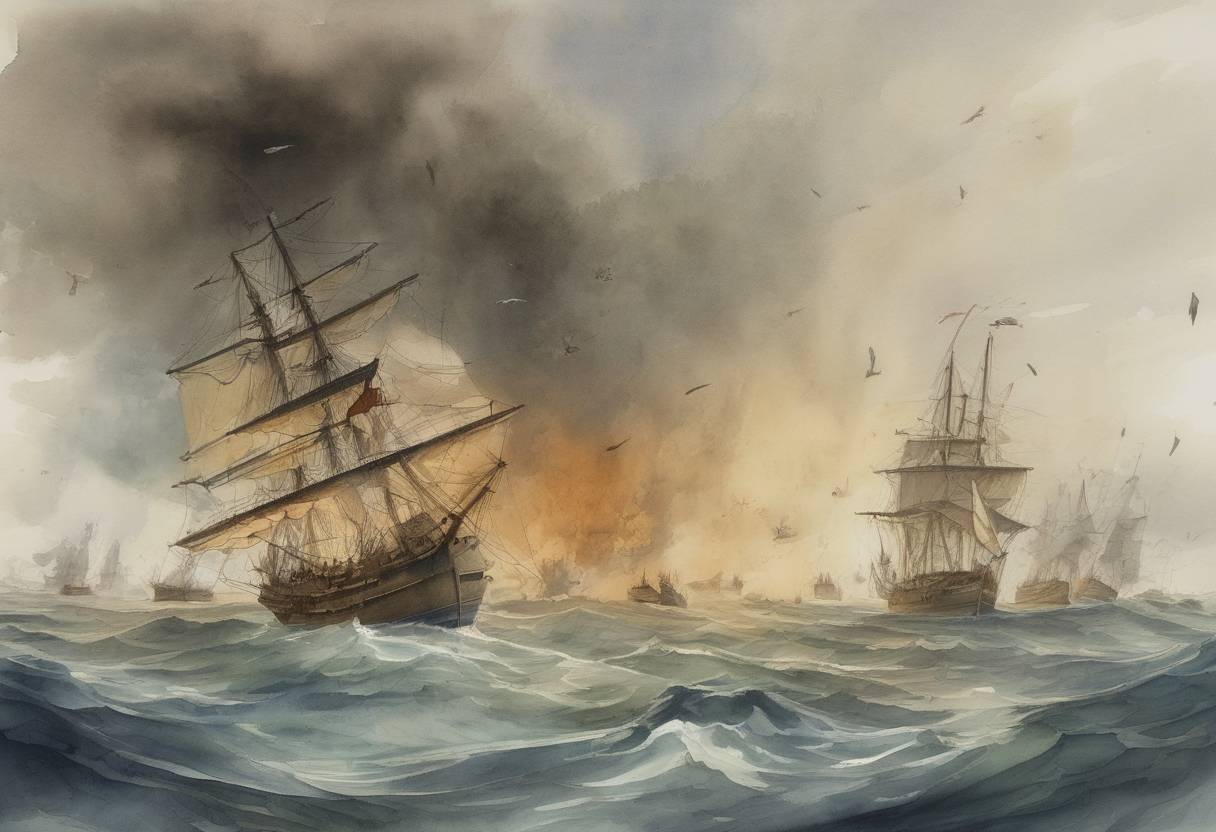
On October 22, 1707, one of the most catastrophic maritime disasters in British naval history occurred off the Isles of Scilly, an archipelago off the southwestern tip of Cornwall, England. This tragic event, known as the Scilly Naval Disaster, resulted in the loss of nearly 2,000 sailors and highlighted the critical need for advancements in naval navigation.
The disaster took place during the War of the Spanish Succession (1701-1714), a conflict involving several European powers over who should succeed to the Spanish throne. The British Royal Navy was a key player in this war, tasked with maintaining control of the seas and supporting military operations.
In October 1707, a fleet under the command of Admiral Sir Cloudesley Shovell was returning to England from Gibraltar. The fleet had successfully completed its mission in the Mediterranean but faced treacherous weather conditions as it approached the English Channel.
On the night of October 22, 1707, the fleet encountered severe storms and poor visibility. Navigational errors, compounded by the lack of precise longitude measurement, led the ships dangerously close to the rocky shores of the Isles of Scilly.
Four ships were wrecked:
The total loss of life was nearly 2,000 sailors, including Admiral Shovell, whose body was later found washed ashore.
The Scilly Naval Disaster had profound implications for naval navigation and safety:
Navigational Challenges: The disaster underscored the urgent need for improved navigational techniques, particularly the accurate determination of longitude at sea. This led to increased efforts to solve the “longitude problem,” culminating in the development of the marine chronometer by John Harrison in the mid-18th century.
Maritime Safety: The tragedy prompted the British government to invest in better charts and navigational aids, including the establishment of lighthouses and the improvement of sea maps.
Legacy: The disaster remains a poignant reminder of the perils faced by sailors in the age of sail and the importance of technological advancements in ensuring maritime safety.
The Scilly Naval Disaster of 1707 is a significant event in naval history, illustrating the challenges of early 18th-century navigation and its impact on future maritime practices.
Source: en.wikipedia.org