Vincent van Gogh's Ear Incident - December 23, 1888
1888 · Arles, France
Vincent van Gogh, in a fit of madness, cut off part of his left ear in Arles, France.
September 14, 1927
Dancer Isadora Duncan dies in a car accident in Nice, France.
Nice, France | N/A
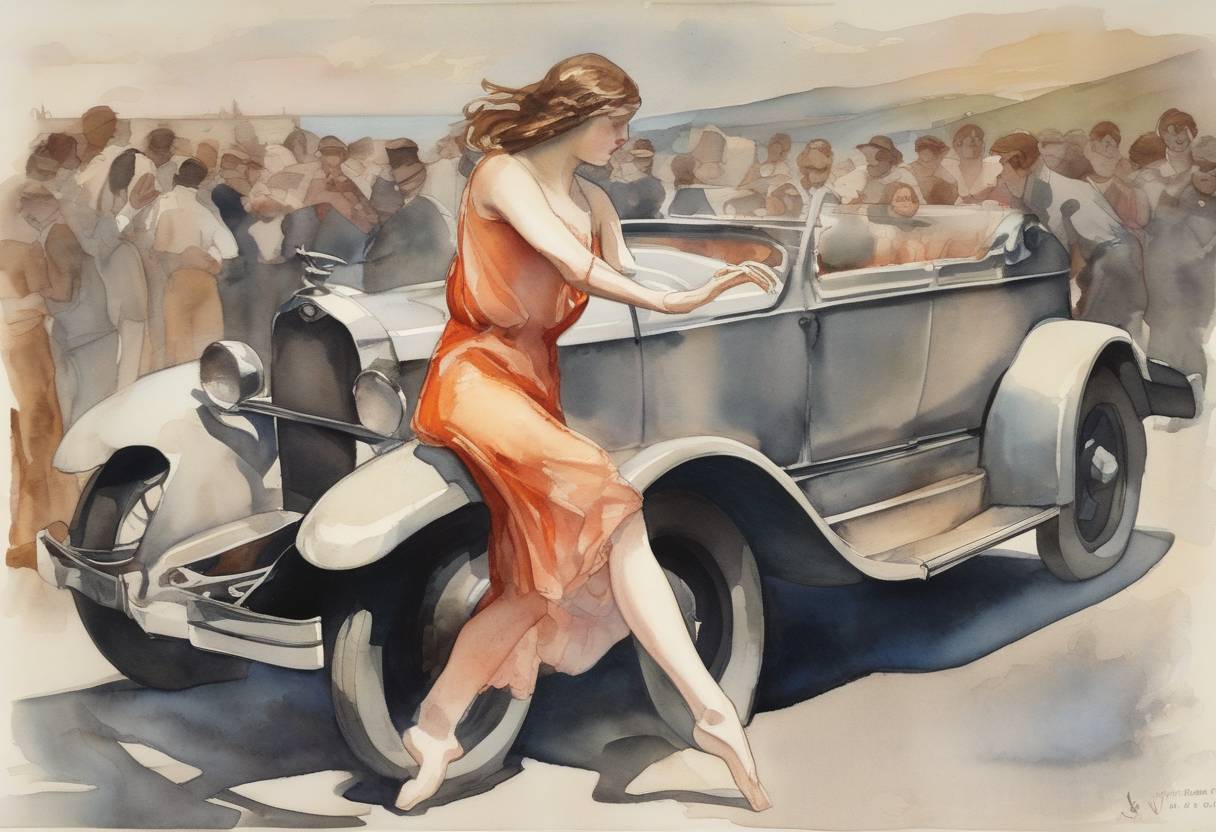
On September 14, 1927, the world lost one of its most innovative and influential dancers, Isadora Duncan, in a tragic car accident in Nice, France. Known for her revolutionary approach to dance, Duncan’s untimely death marked the end of an era in the performing arts.
Isadora Duncan was born on May 26, 1877, in San Francisco, California. She is often credited with being the pioneer of modern dance, breaking away from the rigid structures of classical ballet. Duncan’s style was characterized by free-flowing movements, inspired by the natural world and ancient Greek art. Her performances were often set to classical music, and she was known for dancing barefoot, wearing loose, flowing costumes that allowed for greater freedom of movement.
Duncan’s influence extended beyond dance; she was a symbol of artistic freedom and a proponent of women’s rights and social change. Her life was marked by personal tragedy, including the loss of her two children in a car accident in 1913, which profoundly affected her work and personal life.
On the evening of September 14, 1927, Isadora Duncan was in Nice, France. She was a passenger in an Amilcar automobile, a popular French sports car of the time. As the car drove along the Promenade des Anglais, a tragic accident occurred. Duncan was wearing a long, flowing silk scarf, a signature accessory that she often wore both on and off stage. As the car began to move, the scarf became entangled in the open-spoked wheels and axle of the vehicle.
The scarf tightened around her neck, and she was violently pulled from the car, resulting in her instant death. The accident was a shocking and tragic end to the life of a woman who had lived so passionately and freely.
Isadora Duncan’s death was widely mourned in the artistic community and beyond. Her contributions to dance and her role as a cultural icon were celebrated in numerous tributes. Duncan’s legacy lives on through the continued evolution of modern dance, which she helped to shape with her innovative techniques and philosophies.
Her life and work have inspired countless dancers and choreographers, and her story has been the subject of numerous biographies, films, and stage productions. Duncan’s emphasis on natural movement and emotional expression continues to influence contemporary dance, ensuring her place as a pivotal figure in the history of the performing arts.
In summary, Isadora Duncan’s tragic death on September 14, 1927, marked the end of a remarkable life dedicated to the arts. Her pioneering spirit and contributions to dance remain influential, making her a lasting symbol of artistic innovation and freedom.
Source: www.britannica.com