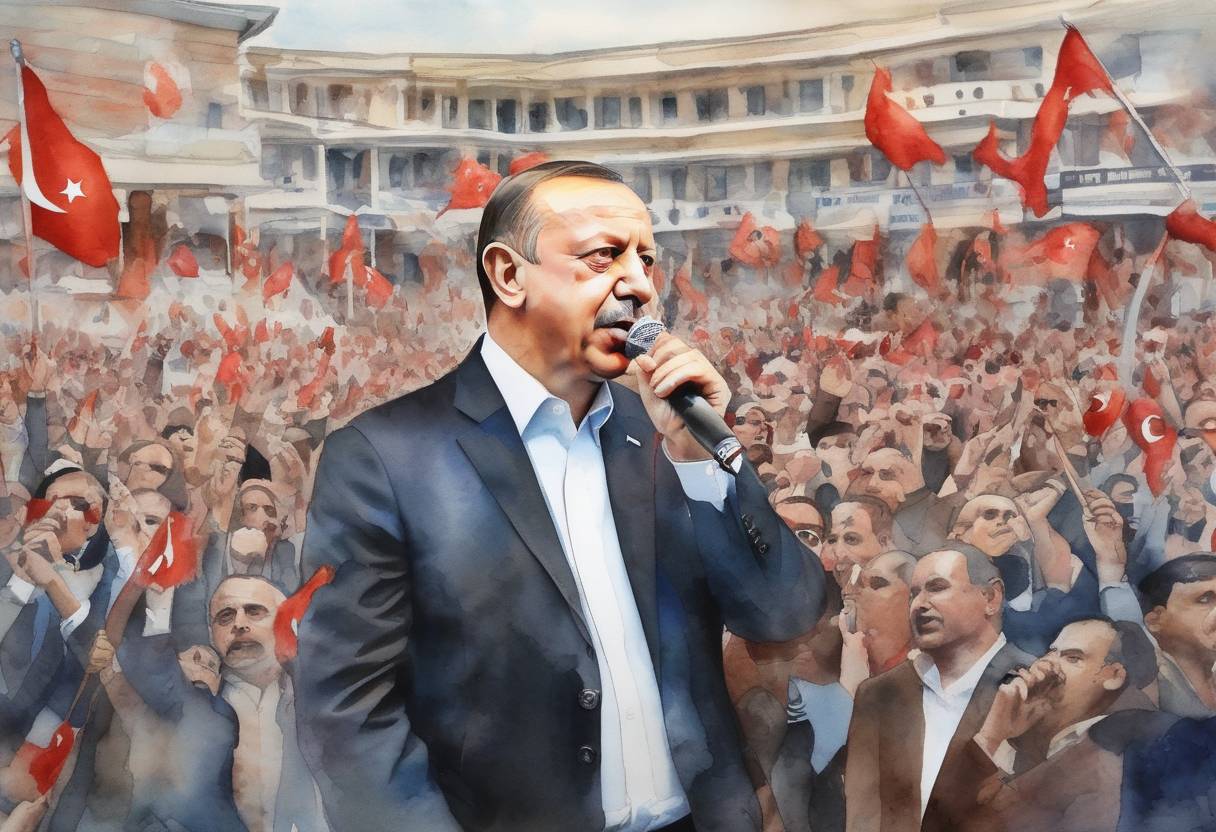
Recep Tayyip Erdoğan Wins Turkey’s First Direct Presidential Election
On August 10, 2014, Recep Tayyip Erdoğan won Turkey’s first direct presidential election, marking a pivotal moment in the nation’s political landscape. This victory represented a significant shift in Turkish politics, as it was the first time in the country’s history that the president was elected by popular vote rather than by parliamentary appointment.
Context and Background
Political Career: Recep Tayyip Erdoğan, a prominent figure in Turkish politics, had served as the Prime Minister of Turkey since 2003. He was the leader of the Justice and Development Party (AKP), which had been in power since 2002.
Constitutional Changes: The move to a direct presidential election was part of a broader set of constitutional changes aimed at increasing the democratic nature of Turkey’s political system. This change was approved in a 2007 referendum, setting the stage for the 2014 election.
The Election
Candidates: Erdoğan was the candidate for the AKP, while his main opponents were Ekmeleddin İhsanoğlu, representing a coalition of opposition parties, and Selahattin Demirtaş from the pro-Kurdish Peoples’ Democratic Party (HDP).
Campaign: Erdoğan’s campaign focused on his track record of economic growth and development during his tenure as Prime Minister. He also emphasized his vision for a “New Turkey,” which included strengthening the presidency’s role.
Results: Erdoğan won the election with approximately 52% of the vote, securing a first-round victory without the need for a runoff. İhsanoğlu received around 38%, and Demirtaş garnered about 10%.
Significance and Aftermath
Presidential Powers: Erdoğan’s victory was seen as a step towards consolidating power, as he sought to transform the traditionally ceremonial role of the presidency into a more executive position.
Political Landscape: This election underscored the deep political divisions within Turkey, with Erdoğan’s supporters praising his leadership and economic policies, while critics expressed concerns over increasing authoritarianism and erosion of democratic institutions.
Legacy: Erdoğan’s presidency marked the beginning of a new era in Turkish politics, characterized by significant political and social changes. His leadership style and policies continued to shape Turkey’s domestic and international relations in the years that followed.
In summary, Recep Tayyip Erdoğan’s victory in the 2014 presidential election was a landmark event in Turkish history, reflecting both the country’s evolving political dynamics and Erdoğan’s enduring influence on its governance.