The Treaty of The Hague (1701)
1701 · The Hague, Dutch Republic
The Treaty of The Hague is signed by England, the Holy Roman Empire, and the Dutch Republic, establishing the Grand Alliance against France.
September 20, 1697
The Treaty of Ryswick was signed, ending the Nine Years' War between France and the Grand Alliance of England, Spain, the Holy Roman Empire, and the Dutch Republic.
Rijswijk, Netherlands | European Powers
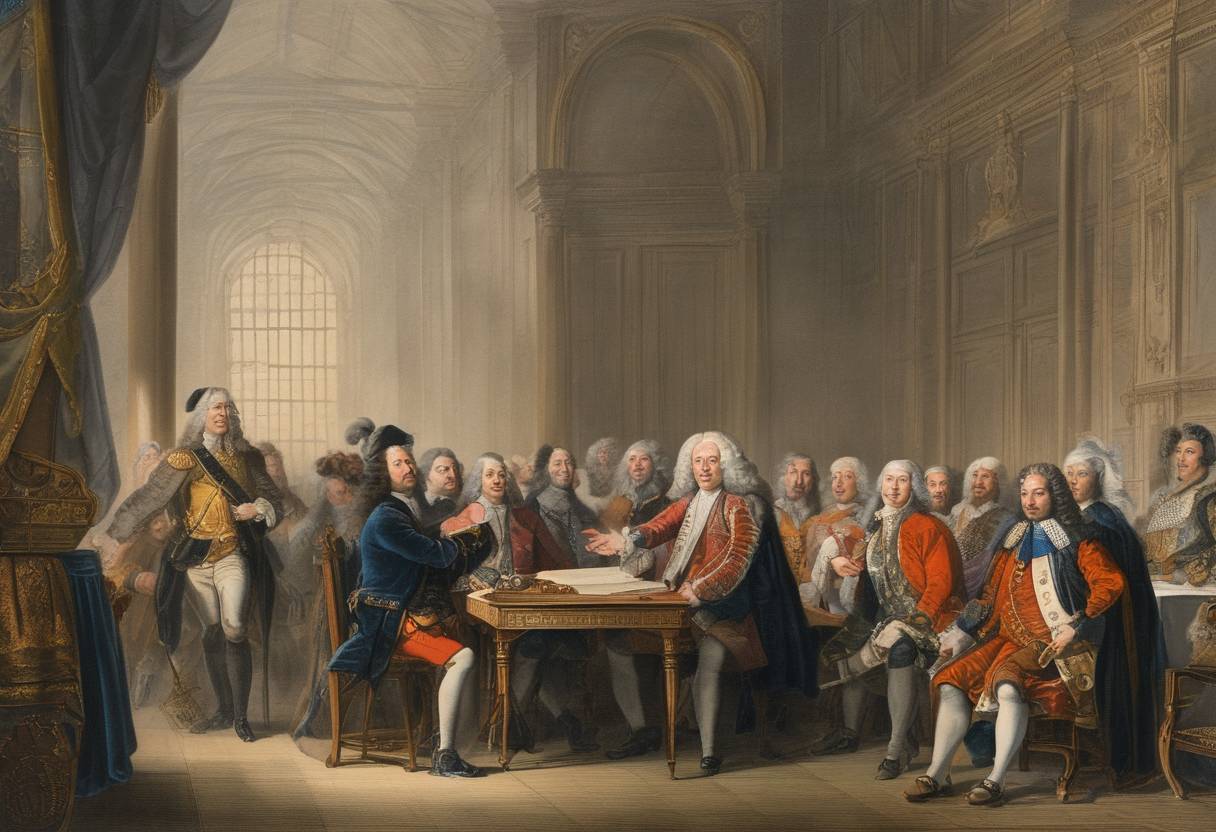
On September 20, 1697, the Treaty of Ryswick was signed, marking the conclusion of the Nine Years’ War, a significant conflict between France and the Grand Alliance comprising England, Spain, the Holy Roman Empire, and the Dutch Republic.
The Nine Years’ War, also known as the War of the Grand Alliance, erupted from territorial disputes and power struggles in Europe. Louis XIV of France sought to expand his influence, clashing with the coalition that aimed to curtail his ambitions. The war, which raged from 1688 to 1697, saw extensive battles across Europe, including the Low Countries, the Rhineland, and Catalonia.
The Treaty of Ryswick resulted in a temporary balance of power in Europe, while also highlighting the shifting alliances and the rising importance of diplomatic negotiations. Although peace was short-lived, as hostilities resumed in the War of the Spanish Succession in 1701, the treaty nonetheless demonstrated the complexities of 17th-century European politics and the intricate balance of power required to maintain peace.
Overall, the Treaty of Ryswick was a pivotal moment in European history, shaping the continental political landscape entering the 18th century.
Source: en.wikipedia.org