The First Boat Race: Oxford vs. Cambridge
1829 · London, United Kingdom
The first Boat Race between the University of Oxford and the University of Cambridge took place on the River Thames in London.
April 29, 1884
Oxford secured a resounding victory against Cambridge in the longest-ever race in the history of the Boat Race, a traditional rowing competition held annually on the River Thames.
London, United Kingdom | Oxford University and Cambridge University
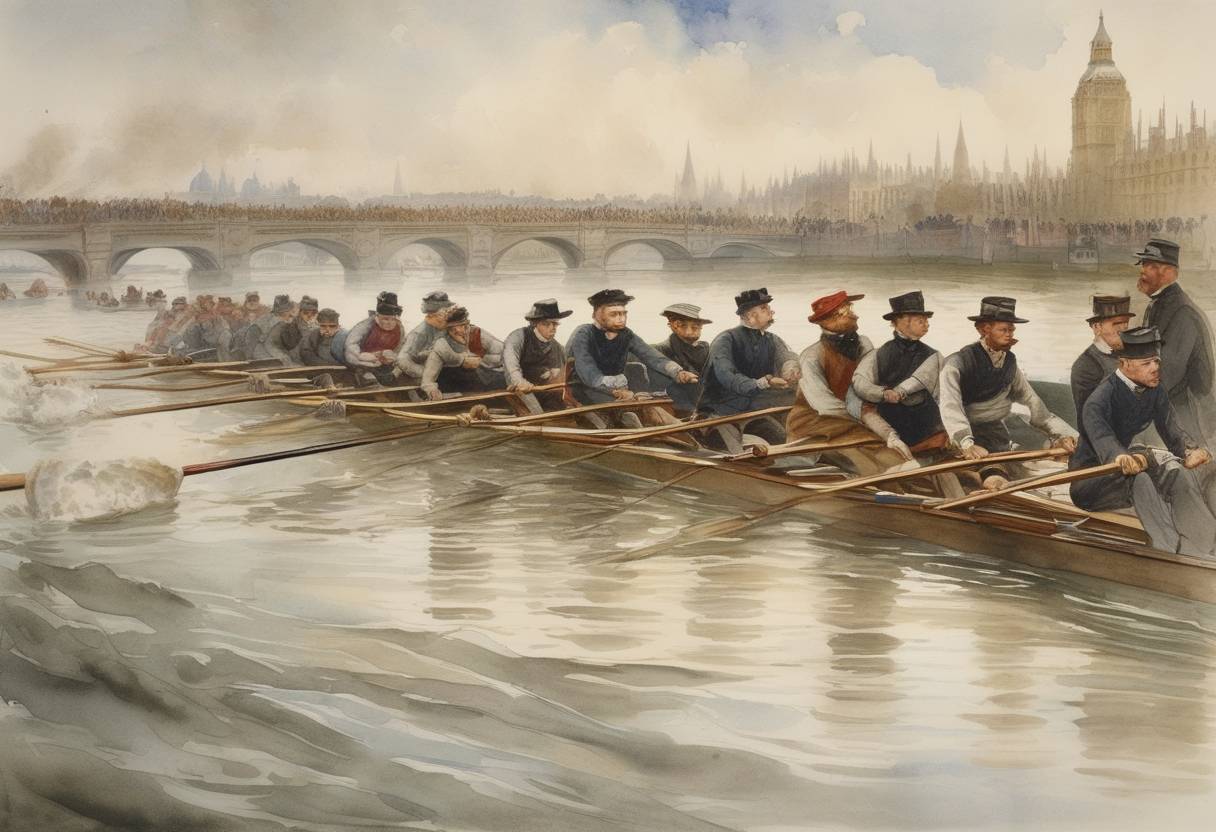
On April 29, 1884, the University of Oxford triumphed over the University of Cambridge in what became the longest race in the history of the annual Boat Race, a traditional rowing competition held on the River Thames in London. This particular race is a noteworthy event in the storied rivalry between the two universities, known for its intense and passionate competition.
The Boat Race, first held in 1829, is one of the oldest and most celebrated sporting events in British history. It typically covers a stretch of the River Thames from Putney to Mortlake, approximately 4.2 miles in distance. By 1884, the annual race had gained significant popularity, drawing large crowds of spectators both on the riverbanks and from around the world.
Before the 1884 race, Oxford and Cambridge were almost evenly matched in terms of victories, with Cambridge narrowly leading. This race’s expectations were high with both teams eager to assert dominance in this prestigious contest.
The 1884 race is well remembered for the sheer length of the contest. Unlike the typical Boat Race that lasts around 20 minutes, this particular event lasted an epic two hours and 45 minutes. The race started as scheduled, but it quickly became clear that weather conditions would heavily influence the outcome. Severe wind and tumultuous waters rendered normal rowing nearly impossible, testing both crews’ perseverance and stamina.
The 1884 race remains the longest in history and is celebrated as a testament to the dedication and sportsmanship of the participants. This event highlighted the unpredictable nature of outdoor sports and further elevated the reputation of the Boat Race as a test of not only skill but also determination and resilience.
As a result of such events, the Boat Race continued to build its legacy, attracting increased attention and drawing larger crowds in subsequent years. This race also influenced future strategies and preparations, with both universities seeking to optimize their crews for any conceivable adverse conditions.
The race of 1884 is remembered as a remarkable chapter in the long-running Oxford-Cambridge tradition, illustrating both the unpredictability and the enduring appeal of this historic competition.
Source: www.theboatrace.org