Birth of Peter Carl Goldmark - December 8, 1894
1894 · Budapest, Hungary
Peter Carl Goldmark, the inventor of the long-playing microgroove phonograph record (LP) was born.
May 12, 1885
The first performance of Franz Liszt's symphonic poem 'From the Cradle to the Grave' took place in Budapest.
Budapest, Hungary | Hungarian National Philharmonic
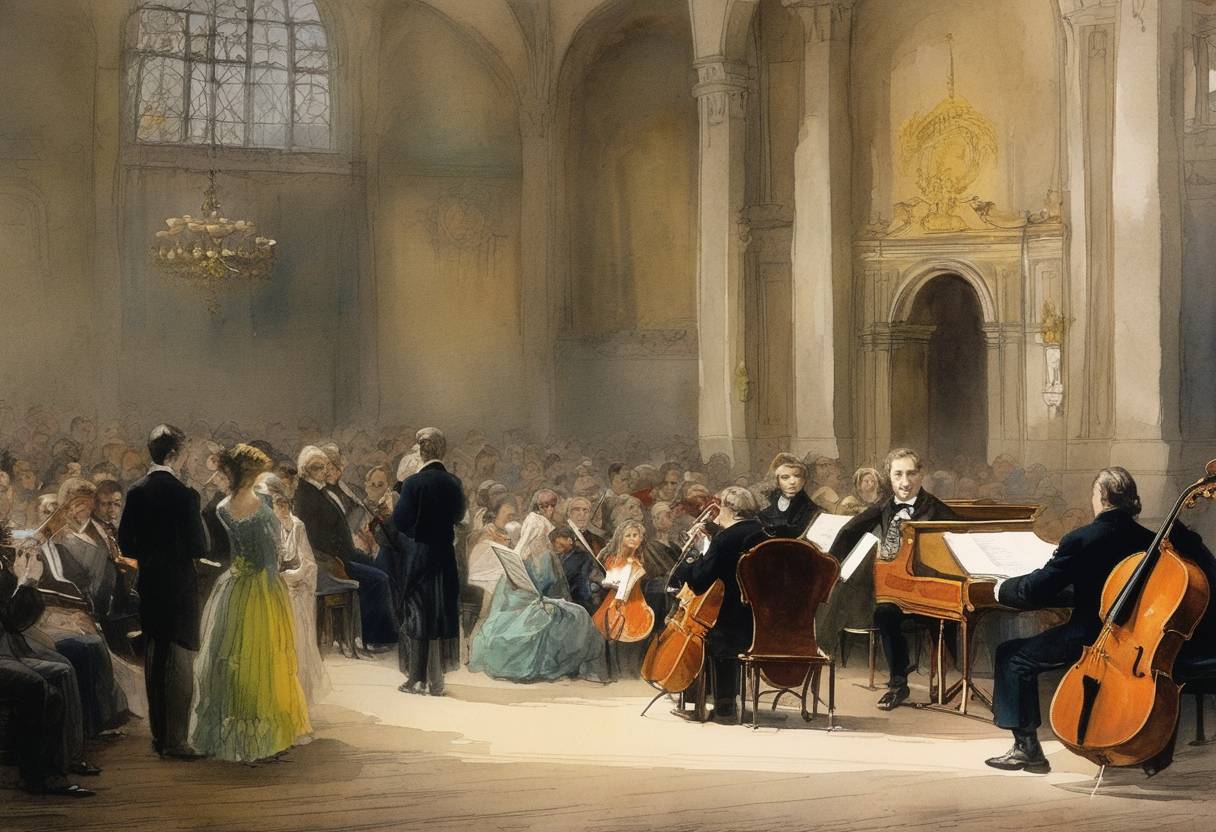
On May 12, 1885, the Hungarian capital city of Budapest witnessed the first performance of Franz Liszt’s symphonic poem “From the Cradle to the Grave” (Von der Wiege bis zum Grabe). This composition stands out as one of Liszt’s later works, reflecting his continued evolution as a composer and his lasting influence on the symphonic poem genre.
“From the Cradle to the Grave” is thematically structured to depict the journey of life, segmented into three parts mirroring its title: The Cradle, The Struggle for Existence, and To the Grave, the Cradle of Future Life. This piece is distinct for its narrative style and philosophical depth, capturing Liszt’s contemplations on life and mortality. The music transitions through varying moods, from the serene opening representing the cradle, to the intense struggles of life, culminating in a reflective conclusion.
By 1885, Franz Liszt was nearing the end of his life, having retired from the demanding lifestyle of touring as a concert pianist to focus on composition and teaching. His works during this period often carried a spiritual or philosophical undertone, influenced by his own personal reflections and interests in theology.
This performance not only showcased Liszt’s mature compositional style but also continued to cement his legacy as a pioneer of the symphonic poem. The piece exemplified his innovative approach to programmatic music, blending orchestral color with a deep thematic narrative. Furthermore, it demonstrated his impact on future generations of composers and musicians.
The premiere in Budapest was a significant cultural event, drawing attention to Liszt’s lasting contributions to music. Although not as frequently performed or recorded as some of his earlier symphonic poems, “From the Cradle to the Grave” remains an essential piece representing Liszt’s late-period creations. It offers insights into his artistic and philosophical evolution, further affirming his status as a transformative force in 19th-century classical music.
Source: www.britannica.com