The Battle of Lechfeld: August 10, 955
955 · Lechfeld, Germany
The Battle of Lechfeld took place, where Otto I, Holy Roman Emperor, decisively defeated the Magyar forces, ending their incursions into Central Europe and solidifying his power.
October 27, 0939
The Battle of Andernach took place where the German forces under King Otto I defeated a rebellion led by Eberhard of Franconia and Gilbert of Lorraine. This victory solidified Otto's power and was a crucial step in the consolidation of the Holy Roman Empire.
Andernach, Germany | Kingdom of East Francia
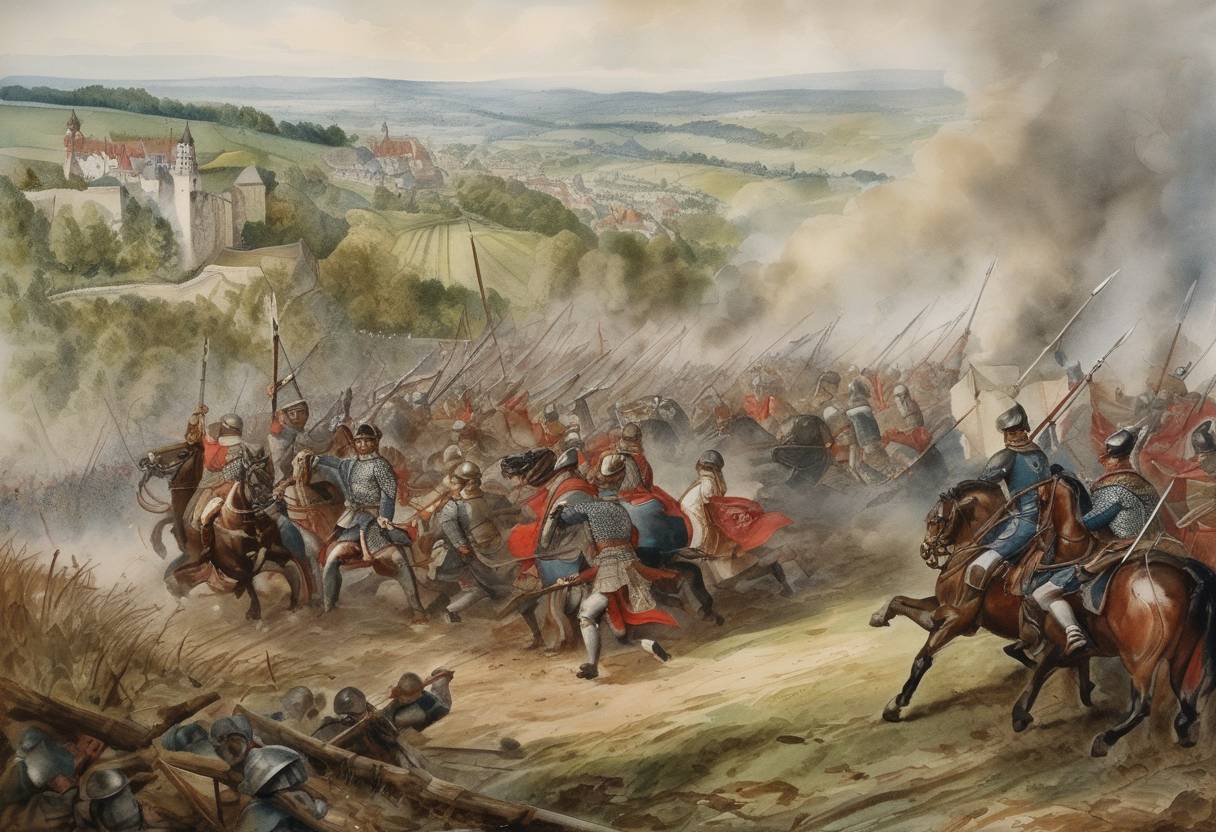
The Battle of Andernach, which took place on October 27, 939, was a pivotal military engagement that solidified the power of King Otto I of Germany and played a significant role in the consolidation of what would become the Holy Roman Empire. This battle saw the forces of Otto I decisively defeat a formidable rebellion led by Eberhard of Franconia and Gilbert of Lorraine.
The conflict arose amid a period of dynastic struggles and territorial disputes within the East Frankish Kingdom, part of the Carolingian Empire’s fragmentation. Otto I, who ascended to the throne in 936, faced significant opposition from rebellious dukes seeking to assert regional autonomy and challenge his authority. Key among the rebels were Eberhard of Franconia and Gilbert, Duke of Lorraine. The fragmentation within the kingdom posed a risk to Otto’s vision of a unified and centralized realm.
The rebellion against Otto I culminated in the Battle of Andernach, located on the left bank of the Rhine River. Otto’s forces, demonstrating superior strategy and tactics, engaged the rebel army, effectively defeating them. The battle is characterized by its decisive nature, with Otto’s well-organized forces ambushing the rebels, taking advantage of their disorganization and complacency.
The victory at Andernach was significant in multiple ways:
The Battle of Andernach was more than just a military victory; it was a strategic triumph that laid the groundwork for Otto’s imperial ambitions and the re-establishment of a sense of unity that had been lost since the fall of Charlemagne’s empire. This battle underscored the importance of centralized power in the political landscape of medieval Europe and the role of military victories in shaping the course of history.
Source: en.wikipedia.org