Scott Carpenter's Orbital Flight on May 24, 1962
1962 · Cape Canaveral, USA
Astronaut Scott Carpenter orbits the Earth three times in the Aurora 7 space capsule, becoming the second American to orbit the Earth.
October 21, 2021
NASA's Lucy spacecraft sends first signal back to Earth as it continues its mission to study the Trojan asteroids orbiting Jupiter.
Cape Canaveral, USA | NASA
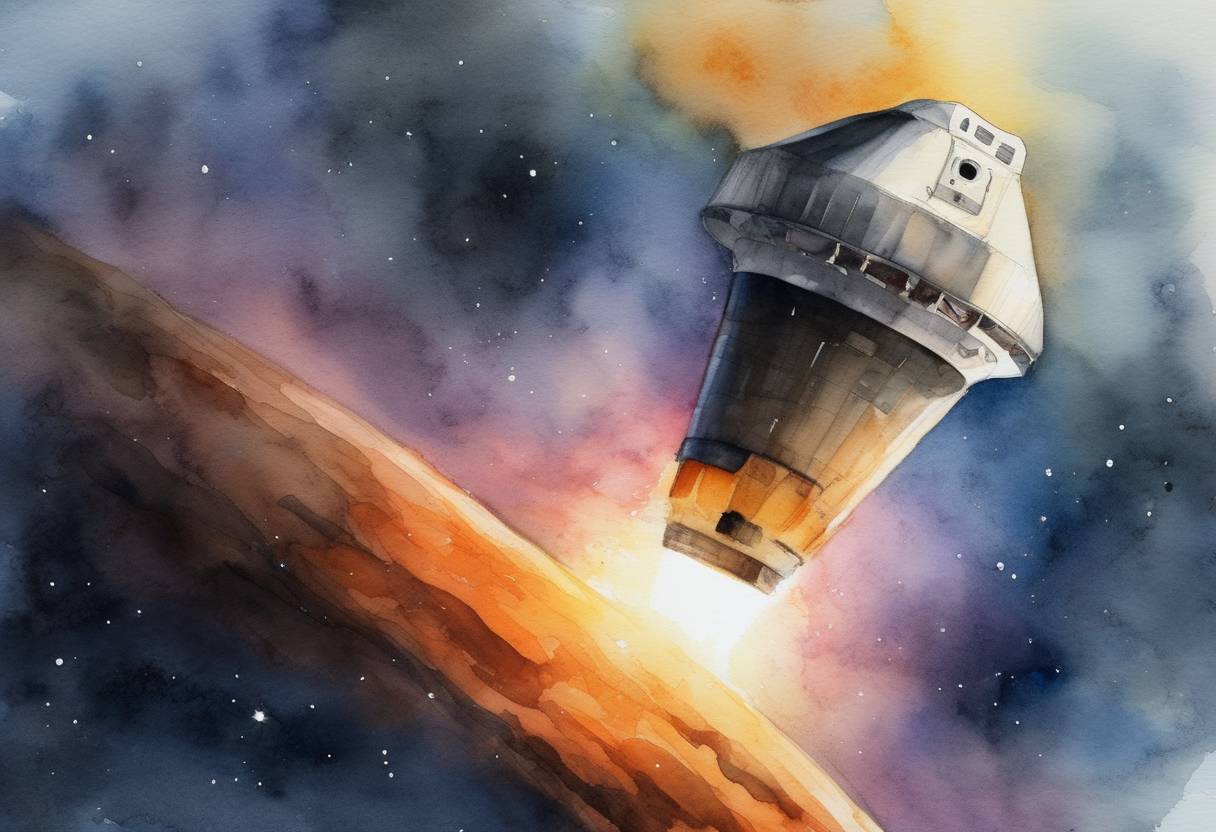
On October 21, 2021, the NASA spacecraft “Lucy” successfully sent its first signal back to Earth, marking a significant milestone in its mission to study the Trojan asteroids that share Jupiter’s orbit around the Sun. This event occurred shortly after Lucy’s launch, which took place from Cape Canaveral Space Force Station in Florida on October 16, 2021.
Lucy is the first space mission launched by NASA to study the Trojan asteroids—ancient remnants of the early solar system. These celestial bodies are located in two swarms: one orbiting ahead of Jupiter and the other trailing behind. By studying these asteroids, scientists aim to gain insights into the processes that shaped the solar system over four billion years ago.
The transmission of the first signal is a crucial step following any spacecraft launch, as it confirms the successful deployment and proper functioning of essential systems. For Lucy, it confirmed the spacecraft had unfurled its solar arrays, which are critical for powering the instruments and maintaining operations throughout its 12-year mission.
Lucy’s path will take it on a six-year journey through space before it begins observing and gathering data from its primary targets. Over the course of the mission, Lucy will study a total of eight different asteroids: one in the main asteroid belt between Mars and Jupiter, and seven Trojan asteroids.
Key objectives for the Lucy mission include:
The Lucy mission extends NASA’s efforts in planetary science, contributing to the broader understanding of planetary formation and evolution. As only the second mission focusing on Trojans, following the Jovian system explorer Galileo, Lucy is expected to yield unprecedented insights that could further illuminate the origins of our solar system and, by extension, the Earth itself.
By sending its first signal successfully on October 21, Lucy ensured that its journey through space began smoothly, bolstering confidence in its ability to fulfill its scientific goals.
Source: www.nasa.gov