Space Shuttle Discovery's Final Mission: STS-133
2011 · Cape Canaveral, United States
The Space Shuttle Discovery completed its final mission, STS-133, and landed at Kennedy Space Center in Florida.
March 13, 2009
NASA's Space Shuttle Discovery launched on mission STS-119, delivering the final set of solar arrays to the International Space Station (ISS), enhancing its power capability.
Cape Canaveral, United States | NASA
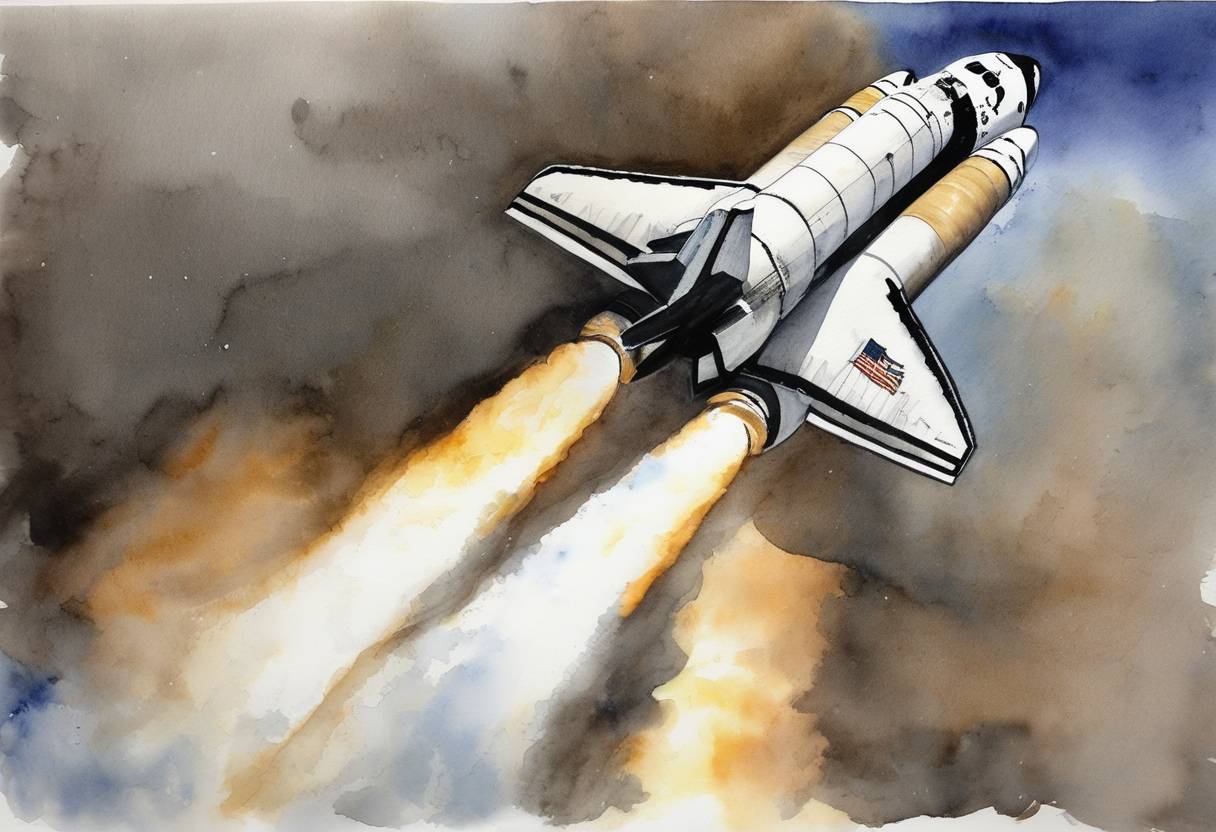
The Space Shuttle Discovery launched on March 15, 2009, from NASA’s Kennedy Space Center in Florida on mission STS-119. This mission’s primary objective was to deliver and install the final set of solar arrays to the International Space Station (ISS), significantly enhancing its power generation capabilities.
Solar Array Installation: The flight delivered the fourth set of solar array wings, known as the S6 truss segment, which completed the ISS’s power generation grid. This addition increased the station’s power output, thereby supporting future scientific experiments and expanding the potential crew size from three to six.
Enhancing ISS Capability: The increased power facilitated expanded research capabilities and supported additional ISS partnerships.
Commander: Lee Archambault led the mission. His leadership ensured the mission’s objectives were met with precision and safety.
Pilot: Dominic “Tony” Antonelli assisted in the shuttle operations and maneuvering necessary for truss installation.
Mission Specialists: The crew included Joseph Acaba, Richard Arnold, John Phillips, Steven Swanson, and Koichi Wakata (JAXA astronaut), who played pivotal roles in spacewalks and onboard ISS operations.
Launch: After a brief delay from the intended March 11 date due to concerns over hydrogen valves, Discovery launched successfully on March 15.
Spacewalks: The mission featured three spacewalks to assist in the installation and activation of the solar arrays by astronauts Acaba, Arnold, and Swanson.
Koichi Wakata’s Stay: This mission marked the debut ISS expedition for Koichi Wakata, the first long-duration mission in space for a Japanese astronaut.
The successful completion of STS-119 marked a major milestone in the ISS assembly stages concluded by establishing a significant infrastructure for future scientific and exploratory missions. It set the stage for increased international collaboration and research output, serving as a foundation for long-term human presence in orbit.
The mission’s success underscored the essential role of the Space Shuttle Program in building the ISS and reinforcing NASA’s commitment to international partnerships, boosting scientific research capabilities, and preparing for future deep-space exploration missions.
This comprehensive account outlines the pivotal actions of the NASA Space Shuttle Discovery’s mission STS-119, reflecting its ongoing legacy in space exploration history.
Source: www.nasa.gov