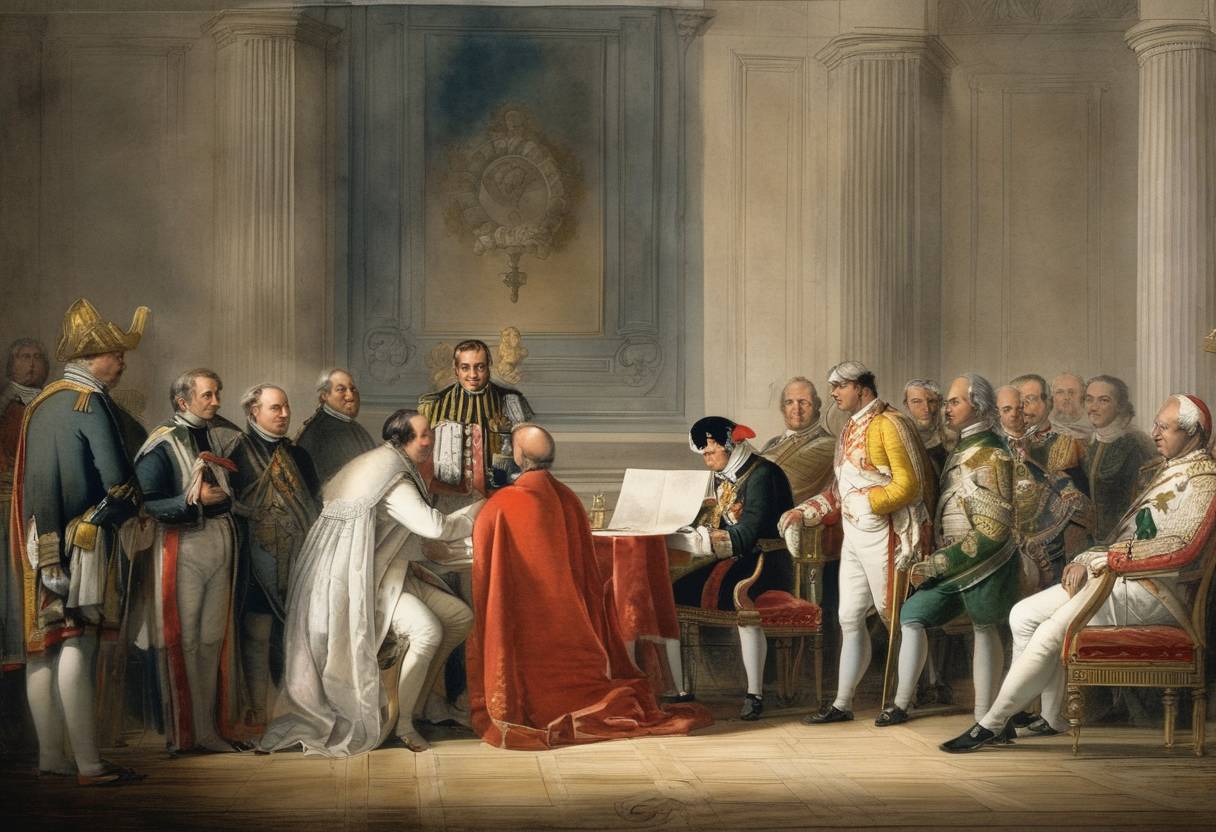
The Treaty of Tolentino
Date and Context
Date: February 19, 1797
On February 19, 1797, the Treaty of Tolentino was signed between Napoleon Bonaparte, representing the French Republic, and representatives from the Papal States. This treaty came in the wake of the rapid French advancements during the Italian campaigns of the French Revolutionary Wars, which had brought the Papal States to the brink of collapse.
Key Provisions
Financial Indemnity: The treaty imposed a substantial financial indemnity on the Papal States, requiring them to pay the French Republic 30 million francs. This was to compensate for the military expenses of the French army in Italy.
Territorial Concessions: The Papal States were compelled to cede several territories to France, including the legations of Bologna and Ferrara, which significantly altered the geopolitical landscape in Italy.
Art and Cultural Losses: The Papal States were also forced to turn over a number of precious artworks and manuscripts to France. This included masterpieces from the Vatican, which further bolstered France’s cultural wealth.
Historical Significance
Weakened Papal Authority: The treaty marked a significant weakening of papal temporal power. The financial strain, coupled with territorial losses, undermined the political influence of the papacy.
Napoleon’s Ascendancy: The Treaty of Tolentino showcased Napoleon’s diplomatic and military prowess. It was a clear demonstration of his ability to exact significant concessions from former European great powers, consolidating his influence in Italy.
Prelude to the Roman Republic: The treaty set the stage for the later proclamation of the Roman Republic in 1798, as the Papal States continued to lose sovereignty and influence under French pressure.
Aftermath and Consequences
The signing of the Treaty of Tolentino further deepened the rift between the Catholic Church and Revolutionary France. The treaty’s impositions, particularly the cultural and territorial concessions, inflamed sentiments within the Papal States and among Catholic monarchies, contributing to ongoing instability in the region. It also entrenched Napoleon’s control over Italy, setting a precedent for subsequent treaties and territorial acquisitions during his military campaigns.