The Maiden Voyage of the RMS Titanic
1912 · Southampton, England
The RMS Titanic set sail on its maiden voyage from Southampton, England, heading towards New York City.
April 12, 1910
The RMS Titanic officially began construction with the laying of its keel. The construction took place at the Harland and Wolff shipyard.
Belfast, Ireland | Harland and Wolff
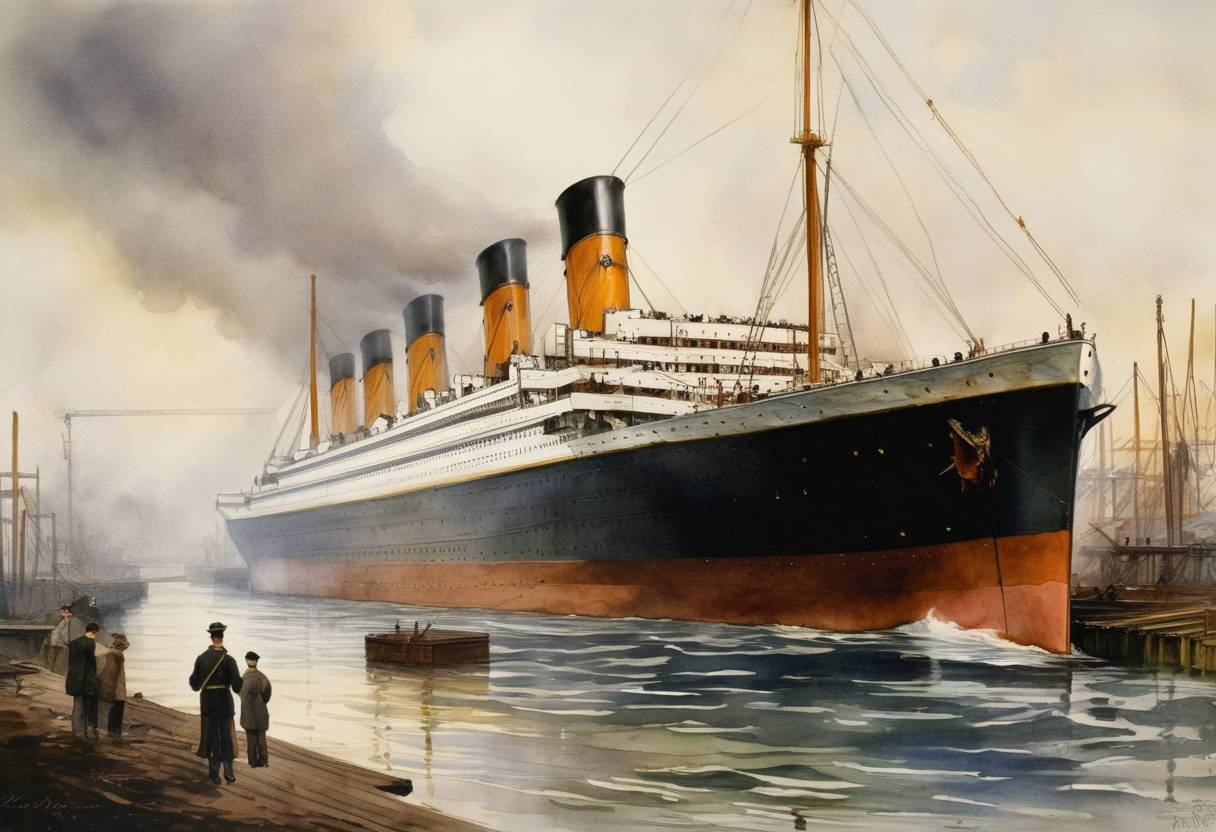
On December 4, 1910, the construction of the RMS Titanic officially commenced with the laying of its keel at the Harland and Wolff shipyard in Belfast, Northern Ireland. This moment marked the beginning of the assembly of what would become one of the most famous ocean liners in history.
The Titanic was part of a trio of Olympic-class liners commissioned by the White Star Line, aiming to dominate the competitive transatlantic passenger market. The ship was designed by J. Bruce Ismay, the chairman of the White Star Line, and Thomas Andrews, the chief naval architect at Harland and Wolff.
The keel-laying is a traditional shipbuilding milestone, signifying the start of the hull’s construction. The Titanic’s keel, a massive central structural component, formed the backbone upon which the ship’s hull and superstructure would be built.
The construction process launched on this date would lead to the completion of one of the early 20th century’s engineering marvels. The Titanic became a symbol of the era’s technological progress and ambition, though it would later gain notoriety following its tragic maiden voyage in April 1912.
The Titanic’s construction spanned nearly three years, involving thousands of skilled workers. Despite its ill-fated first and only voyage, the ship remains an iconic figure in maritime history, prompting significant advancements in maritime safety laws and ship design standards.
By laying the keel on this day, Harland and Wolff set into motion the creation of a vessel that would continue to capture the public’s imagination and historical interest for generations.
Source: en.wikipedia.org