The Republic of Ireland Act 1948: A Historic Transition
1949 · Dublin, Ireland
The Republic of Ireland Act 1948 came into effect, officially declaring Ireland a republic and severing its last ties with the British Commonwealth.
December 6, 1922
The Irish Free State was established as a self-governing dominion of the British Commonwealth of Nations.
Dublin, Ireland | Irish Government
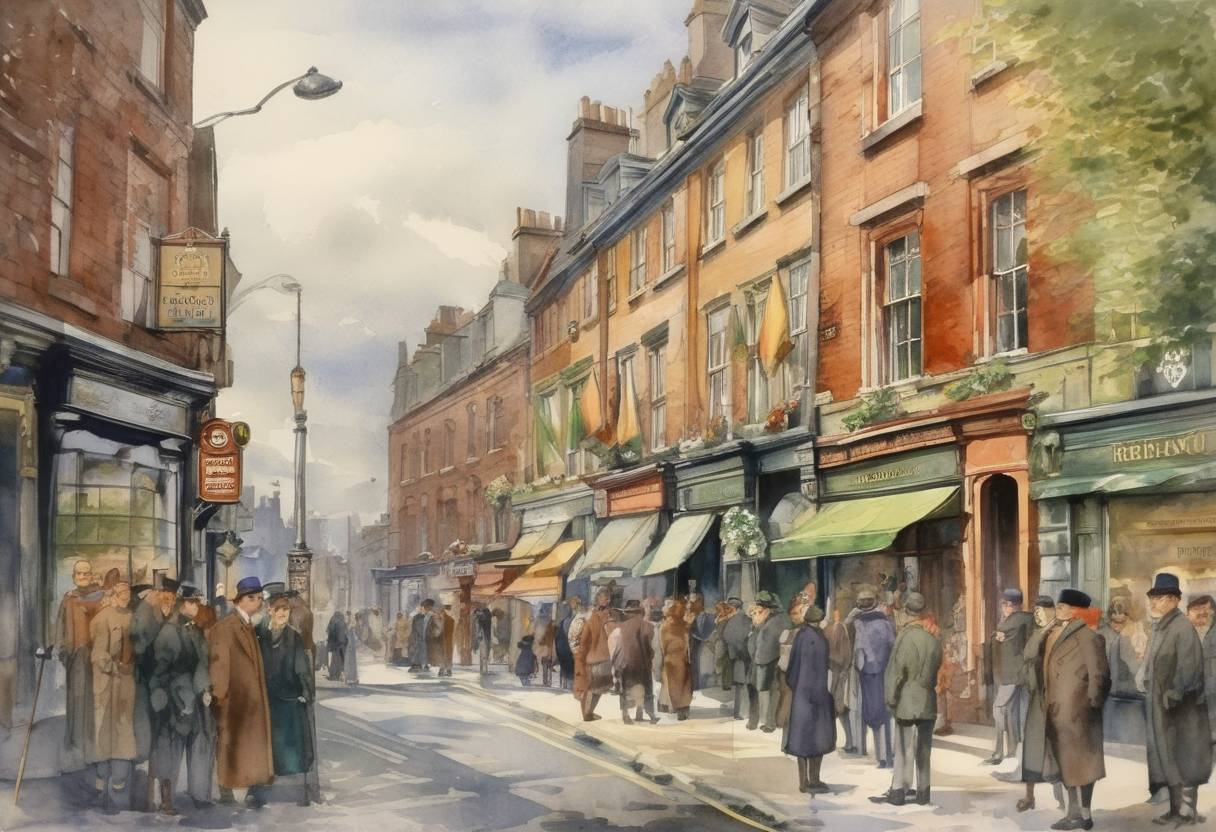
On December 6, 1922, the Irish Free State was officially established as a self-governing dominion within the British Commonwealth of Nations. This marked a significant moment in Irish history, as it represented a major step towards full independence from British rule.
The establishment of the Irish Free State was the culmination of a series of events that began with the Easter Rising of 1916, a pivotal insurrection against British rule in Ireland. Although the uprising was suppressed, it galvanized support for Irish independence. This led to the Irish War of Independence (1919-1921), a guerrilla war fought between the Irish Republican Army (IRA) and British forces.
The conflict concluded with the signing of the Anglo-Irish Treaty on December 6, 1921. The treaty was negotiated between representatives of the British government and Irish leaders, including Michael Collins and Arthur Griffith. It provided for the establishment of the Irish Free State as a dominion, similar in status to Canada and Australia, with its own parliament and a degree of autonomy.
Key provisions of the treaty included:
The treaty was contentious and led to a split in the Irish nationalist movement, with some viewing it as a betrayal of the goal of full independence. This division resulted in the Irish Civil War (1922-1923), fought between pro-treaty forces (led by Michael Collins) and anti-treaty forces (led by Éamon de Valera).
Despite the conflict, the Irish Free State was formally established on December 6, 1922, exactly one year after the signing of the Anglo-Irish Treaty. The new state adopted a constitution and began to build its institutions of governance.
The establishment of the Irish Free State was a crucial step in Ireland’s journey towards full sovereignty. Over time, the Free State evolved, eventually leading to the declaration of the Republic of Ireland in 1949, which severed the remaining constitutional ties with the British monarchy.
The creation of the Irish Free State also had significant implications for Northern Ireland, which opted to remain part of the United Kingdom under the terms of the treaty. This decision laid the groundwork for the complex political landscape in Ireland and Northern Ireland that persists to this day.
In summary, the establishment of the Irish Free State on December 6, 1922, was a landmark event in Irish history, marking a transition from British rule to self-governance and setting the stage for future developments in Ireland’s quest for full independence.
Source: en.wikipedia.org