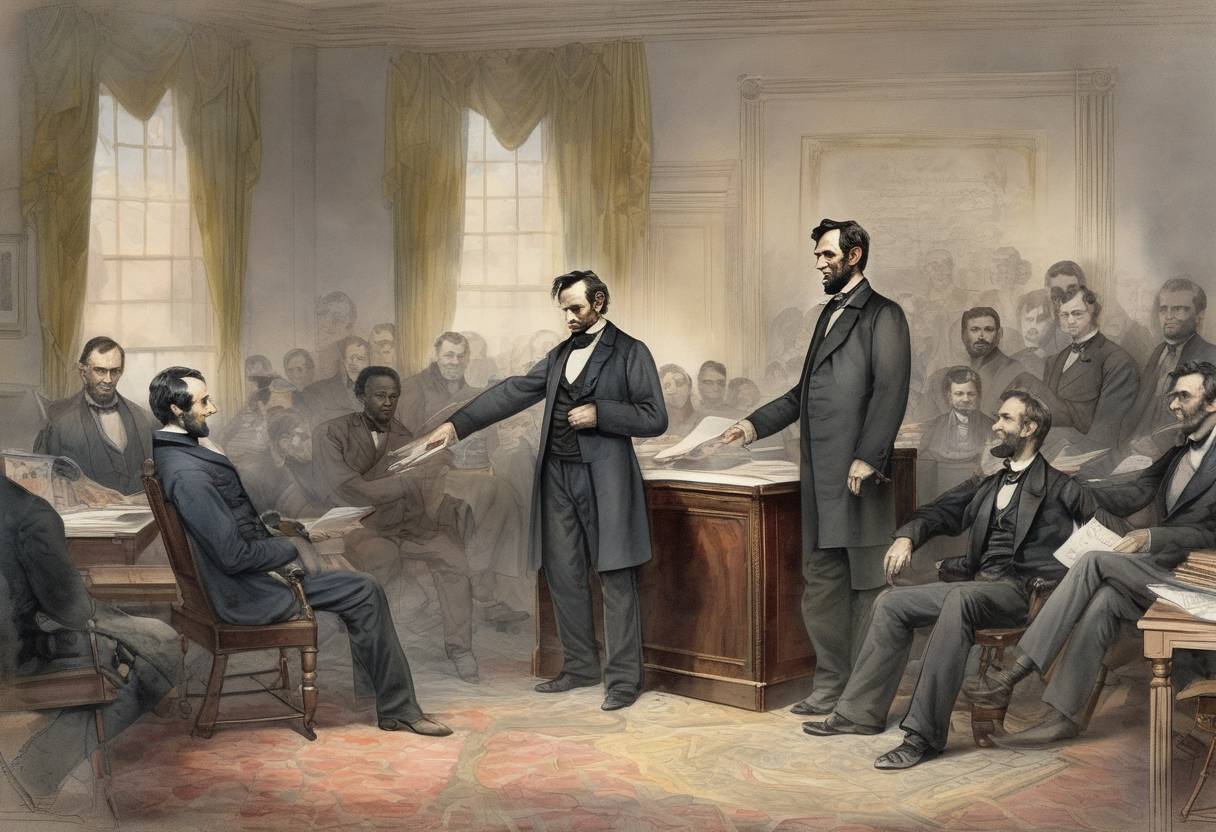
The Preliminary Emancipation Proclamation: September 22, 1862
On September 22, 1862, during the American Civil War, President Abraham Lincoln issued the Preliminary Emancipation Proclamation, a pivotal document in United States history. This announcement marked a significant shift in the Union’s war aims, adding moral force to the Union cause and setting the stage for the eventual abolition of slavery.
Context Leading Up to the Proclamation
- Civil War Background: The Civil War began in April 1861, primarily over issues of states’ rights and slavery. By 1862, the conflict had become increasingly bloody and costly, with no clear end in sight.
- Military Stalemate: The Union had suffered several setbacks, and Lincoln was under pressure to take decisive action that could weaken the Confederacy and bolster the Union’s moral and political standing.
- Antietam: The Battle of Antietam, fought on September 17, 1862, provided the Union with a strategic, though not overwhelming, victory. This battle gave Lincoln the confidence to issue the proclamation from a position of strength.
Key Provisions of the Preliminary Emancipation Proclamation
- Declaration of Freedom: The proclamation declared that as of January 1, 1863, all slaves in Confederate-held territory would be “then, thenceforward, and forever free.”
- Exclusions: It did not apply to slave-holding border states loyal to the Union or areas of the Confederacy already under Union control.
- Military Strategy: By framing the proclamation as a war measure, Lincoln aimed to undermine the Confederacy’s labor force and economy, which relied heavily on enslaved labor.
Broader Historical Significance
- Moral and Political Impact: The proclamation transformed the fight to preserve the nation into a battle for human freedom, garnering support from abolitionists and altering international perceptions of the war.
- Recruitment of Black Soldiers: It paved the way for the enlistment of African American soldiers in the Union Army, adding manpower and moral authority to the Union cause.
- Path to the 13th Amendment: While the proclamation itself did not end slavery, it set the stage for the passage of the 13th Amendment in 1865, which abolished slavery throughout the United States.
Aftermath and Consequences
- Confederate Reaction: The Confederacy denounced the proclamation, viewing it as an incitement to insurrection.
- Union Support: It solidified support for the Union cause among abolitionists and ensured that any negotiated settlement would include the abolition of slavery.
- Legacy: The Emancipation Proclamation remains a landmark in American history, symbolizing a commitment to freedom and equality.
In summary, the Preliminary Emancipation Proclamation was a strategic and moral turning point in the Civil War, redefining the Union’s objectives and laying the groundwork for the eventual abolition of slavery in the United States.