Washington's Admission as the 42nd State of the United States
1889 · Olympia, United States
Washington was admitted as the 42nd state of the United States, expanding the nation's territory in the Pacific Northwest.
February 14, 1859
Oregon was admitted as the 33rd state of the United States.
, United States | United States Congress
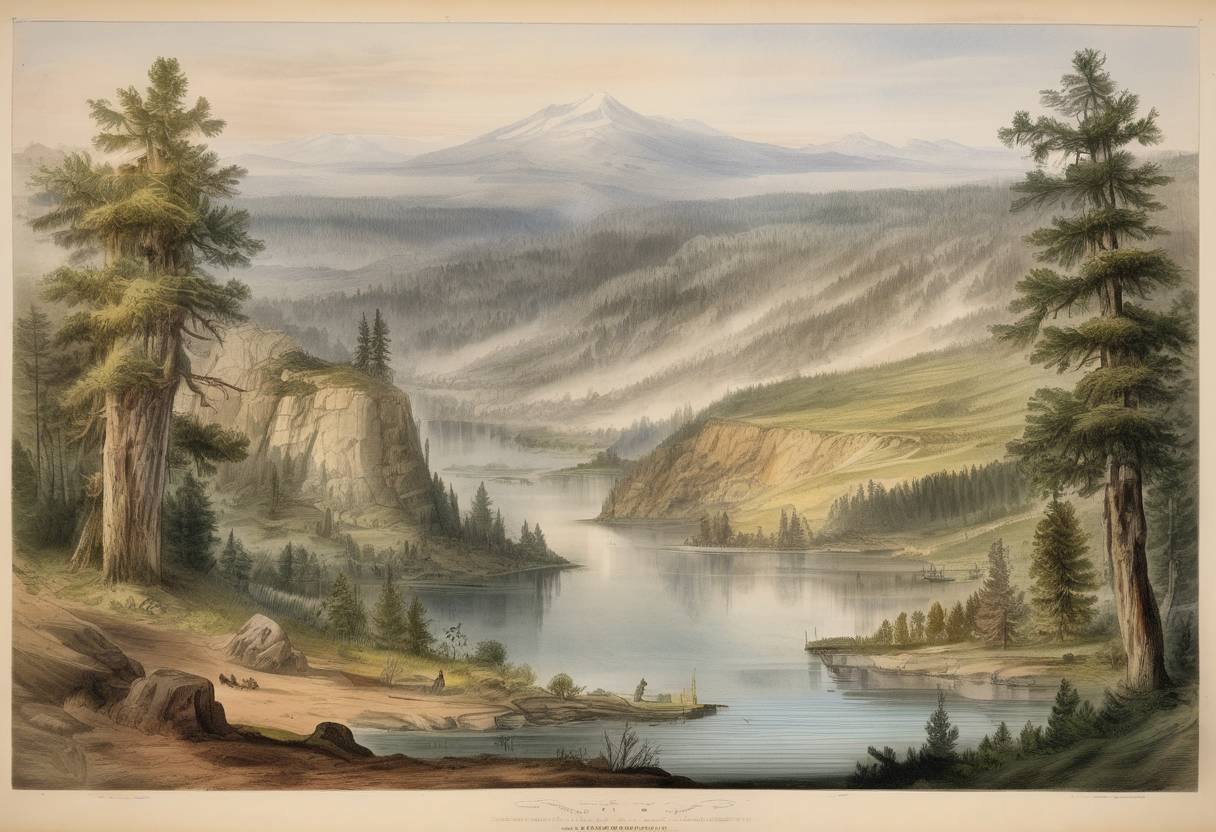
On February 14, 1859, Oregon was officially admitted to the United States as the 33rd state. This significant event marked the culmination of a series of developments in the region and had lasting implications for the expansion of the United States.
Early Exploration and Settlement: The Oregon Territory was initially explored by European powers in the late 18th century, with both Britain and the United States laying claim to the region. The Lewis and Clark Expedition (1804-1806) further spurred American interest in the area.
Oregon Trail: Throughout the 1830s and 1840s, the Oregon Trail became a major route for settlers moving westward. This migration was driven by the promise of fertile land and new opportunities, significantly increasing the American population in the region.
Oregon Treaty of 1846: The boundary dispute between the United States and Britain was resolved with the Oregon Treaty, which established the 49th parallel as the border between British North America and the U.S., thus securing American claims to the territory.
Territorial Status: The Oregon Territory was officially organized in 1848, following the resolution of the boundary dispute. This status allowed for the establishment of a territorial government and laid the groundwork for eventual statehood.
Constitutional Convention: In 1857, a constitutional convention was held in Salem, where delegates drafted a state constitution. This document was notable for its exclusionary clauses, which prohibited African Americans from residing in the state.
Congressional Approval: The U.S. Congress approved Oregon’s statehood in early 1859. The admission was part of a broader pattern of incorporating western territories into the Union, reflecting the nation’s Manifest Destiny ideology.
Political Balance: Oregon’s admission as a free state was significant in the context of the sectional tensions between free and slave states. It contributed to the delicate balance of power in the Senate during a period leading up to the Civil War.
Economic Development: Statehood facilitated economic growth and infrastructure development in Oregon, attracting more settlers and investment to the region.
Cultural Impact: The diverse population of settlers, including Native American tribes, European Americans, and immigrants, contributed to Oregon’s unique cultural landscape.
Oregon’s admission to the Union was a pivotal moment in the westward expansion of the United States, reflecting the nation’s growth and the complex dynamics of its territorial acquisitions.
Source: en.wikipedia.org