Earthquake in the Ryukyu Islands - February 24, 2010
2010 · Ryukyu Islands, Japan
A 7.0 magnitude earthquake struck the Ryukyu Islands in Japan, causing a tsunami warning but resulting in no significant damage or casualties.
September 27, 2014
The eruption of Mount Ontake in Japan resulted in the deaths of 63 people, marking it as the country's deadliest volcanic eruption since 1926.
Mount Ontake, Japan | Japan Meteorological Agency
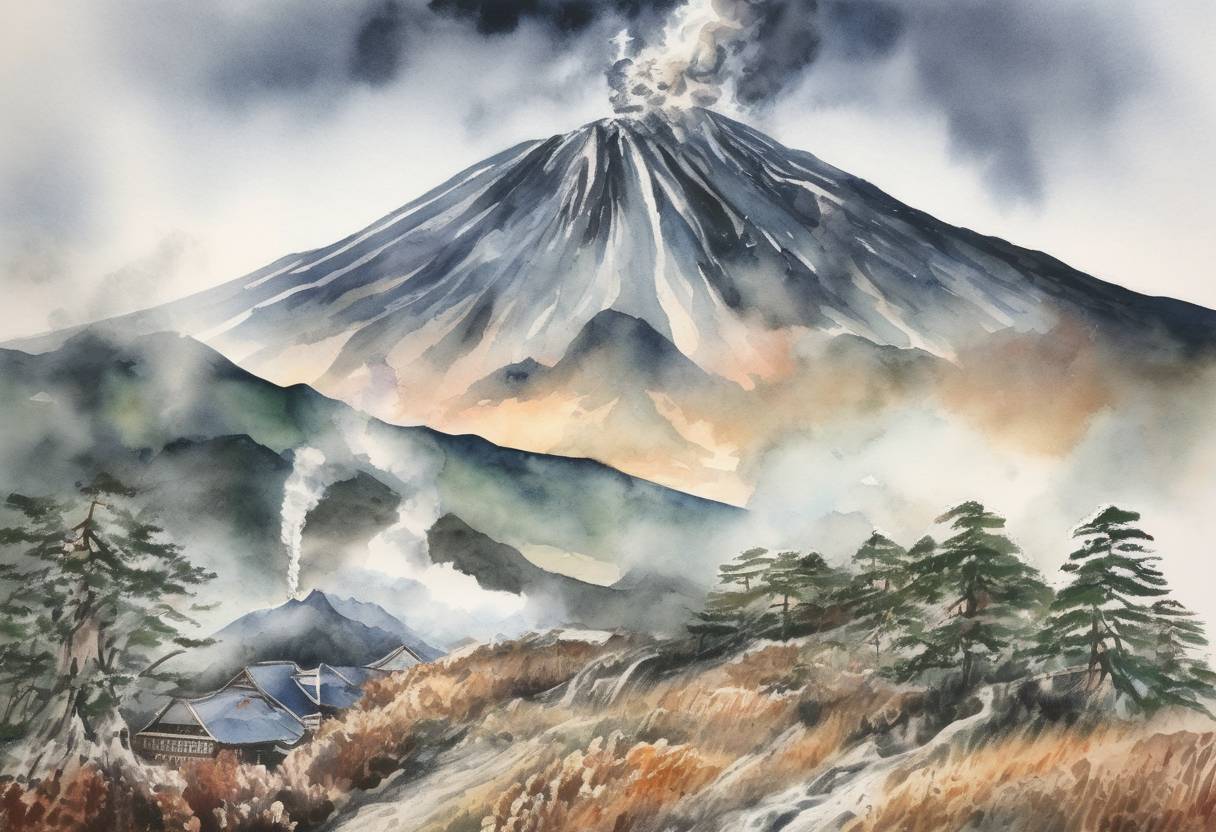
On September 27, 2014, Mount Ontake, a stratovolcano located on the Japanese island of Honshu, erupted unexpectedly, resulting in the tragic deaths of 63 people. This event marked the deadliest volcanic eruption in Japan since the eruption of Mount Tokachi in 1926.
Mount Ontake, standing at 3,067 meters, is Japan’s second-highest volcano and a popular destination for hikers and pilgrims. Known for its scenic beauty and spiritual significance, the mountain had experienced minor eruptions in the past, with the most recent significant activity occurring in 1979, 1991, and 2007. However, these eruptions were relatively mild, and the volcano was not under any immediate threat warning at the time of the 2014 eruption.
The eruption occurred without warning at approximately 11:52 AM local time. It was characterized by a phreatic explosion, which involves the rapid expansion of steam generated by the heating of groundwater. This type of eruption can be particularly dangerous due to its sudden onset and the lack of precursory seismic activity.
The eruption spewed ash, rocks, and volcanic gases into the air, creating a deadly environment for the hundreds of hikers who were on the mountain at the time. The ash plume rose over 3 kilometers into the sky, and pyroclastic flows cascaded down the slopes, trapping many hikers.
Rescue operations were immediately launched, involving the Japanese Self-Defense Forces, police, and fire departments. However, the challenging terrain and continuous volcanic activity hampered efforts. Many of the victims were found near the summit, having succumbed to asphyxiation or injuries from falling debris.
The eruption highlighted the challenges of predicting phreatic eruptions, which often occur with little to no warning. It also led to increased scrutiny of Japan’s volcanic monitoring systems and prompted a review of safety measures for hikers and tourists visiting active volcanic regions.
The Mount Ontake eruption underscored the inherent risks associated with living in a volcanically active region like Japan, which is part of the Pacific “Ring of Fire.” It served as a stark reminder of the need for improved volcanic monitoring and emergency preparedness to mitigate the impact of future eruptions.
In the years following the eruption, Japan has worked to enhance its volcanic observation networks and improve public awareness and safety protocols for those venturing into potentially hazardous areas.
The 2014 Mount Ontake eruption remains a poignant chapter in Japan’s history, reflecting both the awe-inspiring power of nature and the importance of vigilance in the face of natural disasters.
Source: www.bbc.com